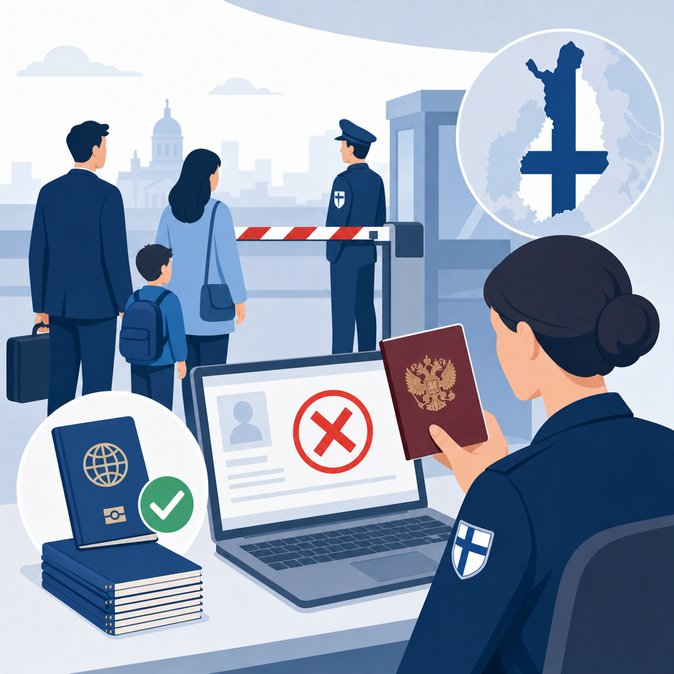
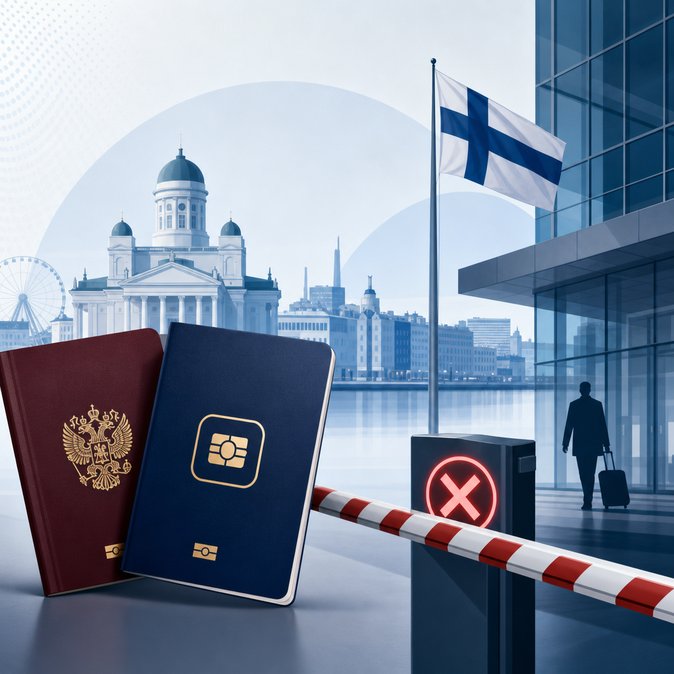
From 00:00 on 1 June 2026, Finnish border guards at all air, sea and land crossing points began turning away Russian travellers holding older, machine-readable passports that do not contain an electronic chip. The measure, announced by the Ministry for Foreign Affairs in March and confirmed in a customer bulletin by the Finnish Immigration Service (Migri) on Monday, is intended to tighten document security and align Finland with the toughest Schengen-area standards. Under the new rules a Russian citizen who presents a non-biometric passport will be refused entry, will not be able to lodge a visa application at a Finnish mission abroad and—crucially for companies—will no longer be able to use that passport in support of a residence-permit application inside Finland. Migri has told employers to check immediately whether any Russian staff or job candidates still rely on the older document type; if so, they must obtain a chip-enabled passport before signing contracts or filing work-based permit applications.
![Finland Starts Enforcing Ban on Russian Non-Biometric Passports]()
For individuals and HR departments navigating these tightened requirements, VisaHQ offers step-by-step guidance on Finnish entry rules, visa options and residence-permit documentation. Their Finland portal (https://www.visahq.com/finland/) lets users verify whether their passports meet biometric standards, calculate processing times and obtain professional assistance in compiling compliant applications—saving companies time and helping travellers avoid costly refusals at the border.
There is a six-month transition window that runs until 31 December 2026. During this period Finland will continue to accept a non-biometric passport if (a) it contains a Schengen visa that was issued before 1 June 2026, (b) the holder already possesses a Finnish residence permit issued before that date, or (c) the Ministry for Foreign Affairs grants an individual derogation for humanitarian or comparable reasons. Minors below 18 may also be exempted. Finnish businesses operating close to the 1 340-kilometre eastern land border say the change will have limited commercial impact because leisure travel collapsed after the crossing points were closed in late 2023. The bigger effect is administrative: HR teams now need to audit existing permit holders, ensure that passport details in Enter Finland are up to date, and budget additional time for onboarding Russian recruits who must first re-document themselves. Logistics companies that still move goods through the Port of Helsinki note that Russian drivers already carry biometric documents, so freight flows should continue normally. For mobility managers the key takeaway is that the passport chip has effectively become a hard compliance requirement in Finland. Failing to anticipate it could delay assignments, invalidate residence-permit extensions, or trigger extra costs if staff have to return to Russia to collect a new passport mid-process.
For individuals and HR departments navigating these tightened requirements, VisaHQ offers step-by-step guidance on Finnish entry rules, visa options and residence-permit documentation. Their Finland portal (https://www.visahq.com/finland/) lets users verify whether their passports meet biometric standards, calculate processing times and obtain professional assistance in compiling compliant applications—saving companies time and helping travellers avoid costly refusals at the border.
There is a six-month transition window that runs until 31 December 2026. During this period Finland will continue to accept a non-biometric passport if (a) it contains a Schengen visa that was issued before 1 June 2026, (b) the holder already possesses a Finnish residence permit issued before that date, or (c) the Ministry for Foreign Affairs grants an individual derogation for humanitarian or comparable reasons. Minors below 18 may also be exempted. Finnish businesses operating close to the 1 340-kilometre eastern land border say the change will have limited commercial impact because leisure travel collapsed after the crossing points were closed in late 2023. The bigger effect is administrative: HR teams now need to audit existing permit holders, ensure that passport details in Enter Finland are up to date, and budget additional time for onboarding Russian recruits who must first re-document themselves. Logistics companies that still move goods through the Port of Helsinki note that Russian drivers already carry biometric documents, so freight flows should continue normally. For mobility managers the key takeaway is that the passport chip has effectively become a hard compliance requirement in Finland. Failing to anticipate it could delay assignments, invalidate residence-permit extensions, or trigger extra costs if staff have to return to Russia to collect a new passport mid-process.