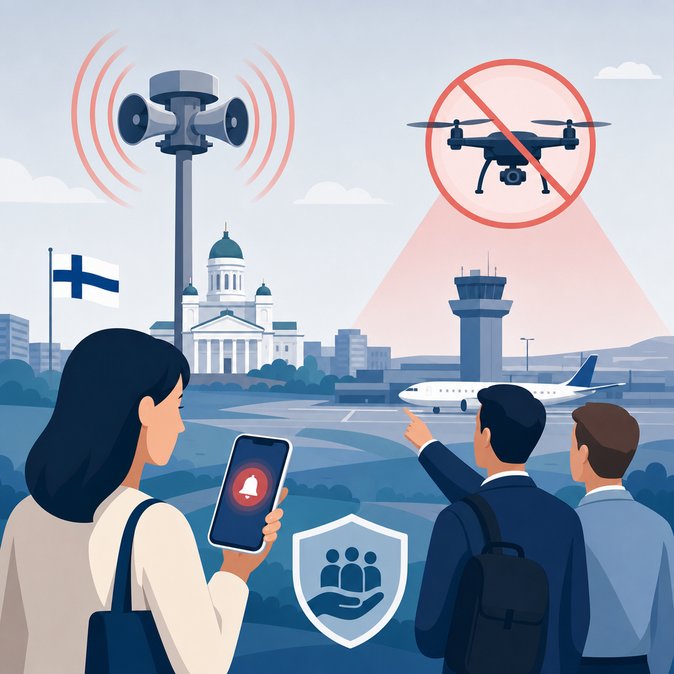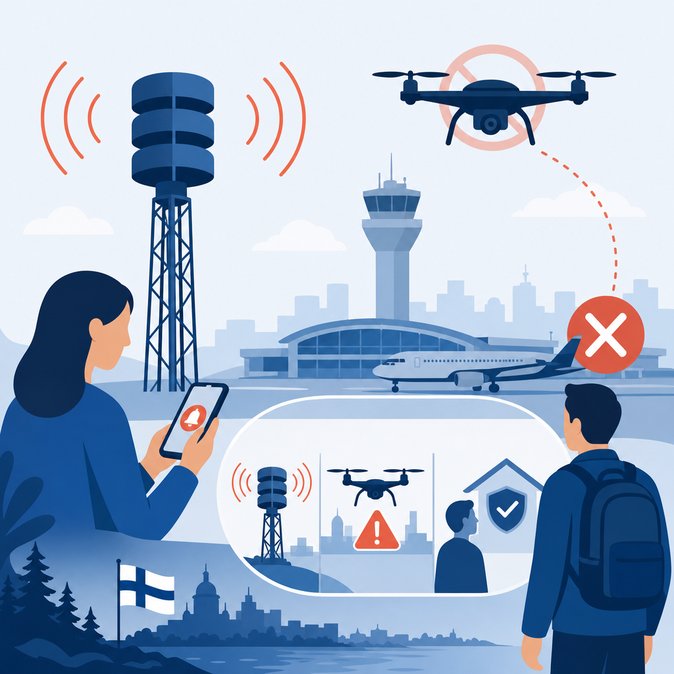
Finns will hear a familiar wail at 12:00 noon on Monday, 1 June, when rescue authorities carry out the country’s routine monthly public-warning siren drill—but this time the test will come with a twist. For the first time, emergency services will explicitly reference unmanned-aerial-vehicle (UAV) threats in the instructions that accompany the alarm. The Interior Ministry decided to integrate the new wording after a spate of suspected cross-border drone incursions forced the temporary closure of Helsinki Airport on 15 May and triggered air-defence scrambles.
![Finland’s 1 June nationwide siren drill will debut new drone-threat warnings]()
Travellers preparing trips to Finland while these new security measures come online can lean on VisaHQ for streamlined visa processing and real-time destination alerts; the service monitors regulatory changes and entry requirements, helping visitors stay compliant and informed. Find more details at https://www.visahq.com/finland/
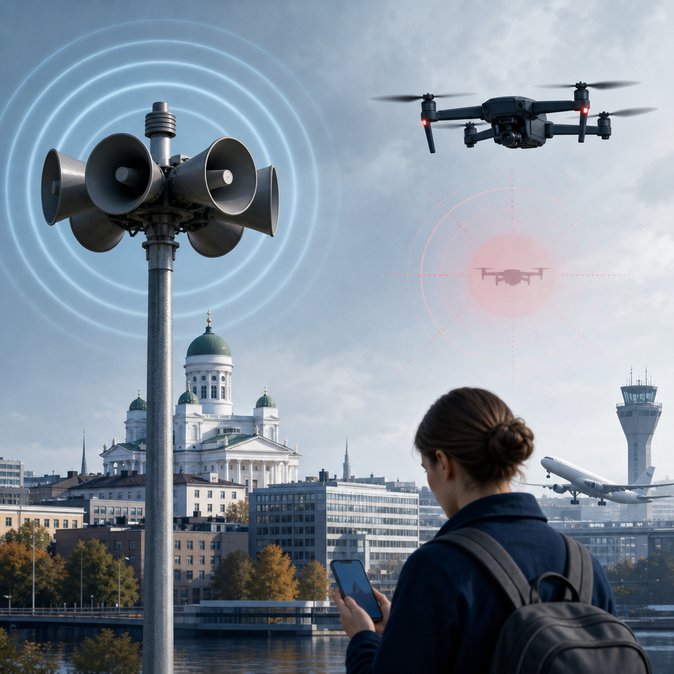
Under the revised protocol, the physical siren signal remains unchanged (a seven-second tone repeated for one minute), but the parallel messages pushed through the 112 Suomi mobile app, radio, teletext page 112 and television will now include guidance on how to react if citizens spot or hear a hostile drone. Officials said the aim is to “normalise” rapid, population-wide responses to asymmetric air threats that can disrupt aviation and critical infrastructure. Estonia last month activated a permanent drone-detection network along its south-eastern border; Finnish policymakers view the harmonised siren wording as one building block in a broader Nordic-Baltic air-security posture. For travel-risk managers and corporate security teams the change matters. Integrating UAV alerts into the public-warning ecosystem means any future drone-related air-space closures—whether over airports, industrial facilities or urban events—should be signalled faster and more consistently nationwide. Employers with expatriate staff or project sites in Finland will want to ensure that company travel policies and “go/no-go” criteria explicitly reference the national siren system. Importantly, visitors who do not have the 112 Suomi app installed may miss critical follow-up instructions in English or other languages; mobility programmes should therefore include pre-arrival briefings and, where possible, push notification capability through corporate duty-of-care platforms. The Interior Ministry emphasises that Monday’s exercise is a *test*—citizens should not take shelter and business should continue as normal. Nevertheless, companies operating drones for inspection, media or logistics purposes should verify their flight approvals, as local police can impose temporary no-fly zones on short notice if the test reveals detection gaps. In the medium term, officials plan to embed the new warning templates into the EU-wide *Cell Broadcast* emergency-alert system that Finland will roll out alongside the Entry/Exit System (EES) and ETIAS traveller screening schemes in 2026-27. With tourism volumes about to peak for the midsummer season and Helsinki Airport expecting its busiest day on 14 June, the siren drill offers a timely reminder that Finland’s risk environment now includes low-altitude drone hazards alongside the more familiar winter-weather and industrial-action disruptions. Travel managers should incorporate the updated guidance into briefing packs and ensure that travellers know the *väestöhälytin* (civil-defence siren) is not merely a relic of the Cold War but an evolving safety tool.
Travellers preparing trips to Finland while these new security measures come online can lean on VisaHQ for streamlined visa processing and real-time destination alerts; the service monitors regulatory changes and entry requirements, helping visitors stay compliant and informed. Find more details at https://www.visahq.com/finland/
Under the revised protocol, the physical siren signal remains unchanged (a seven-second tone repeated for one minute), but the parallel messages pushed through the 112 Suomi mobile app, radio, teletext page 112 and television will now include guidance on how to react if citizens spot or hear a hostile drone. Officials said the aim is to “normalise” rapid, population-wide responses to asymmetric air threats that can disrupt aviation and critical infrastructure. Estonia last month activated a permanent drone-detection network along its south-eastern border; Finnish policymakers view the harmonised siren wording as one building block in a broader Nordic-Baltic air-security posture. For travel-risk managers and corporate security teams the change matters. Integrating UAV alerts into the public-warning ecosystem means any future drone-related air-space closures—whether over airports, industrial facilities or urban events—should be signalled faster and more consistently nationwide. Employers with expatriate staff or project sites in Finland will want to ensure that company travel policies and “go/no-go” criteria explicitly reference the national siren system. Importantly, visitors who do not have the 112 Suomi app installed may miss critical follow-up instructions in English or other languages; mobility programmes should therefore include pre-arrival briefings and, where possible, push notification capability through corporate duty-of-care platforms. The Interior Ministry emphasises that Monday’s exercise is a *test*—citizens should not take shelter and business should continue as normal. Nevertheless, companies operating drones for inspection, media or logistics purposes should verify their flight approvals, as local police can impose temporary no-fly zones on short notice if the test reveals detection gaps. In the medium term, officials plan to embed the new warning templates into the EU-wide *Cell Broadcast* emergency-alert system that Finland will roll out alongside the Entry/Exit System (EES) and ETIAS traveller screening schemes in 2026-27. With tourism volumes about to peak for the midsummer season and Helsinki Airport expecting its busiest day on 14 June, the siren drill offers a timely reminder that Finland’s risk environment now includes low-altitude drone hazards alongside the more familiar winter-weather and industrial-action disruptions. Travel managers should incorporate the updated guidance into briefing packs and ensure that travellers know the *väestöhälytin* (civil-defence siren) is not merely a relic of the Cold War but an evolving safety tool.