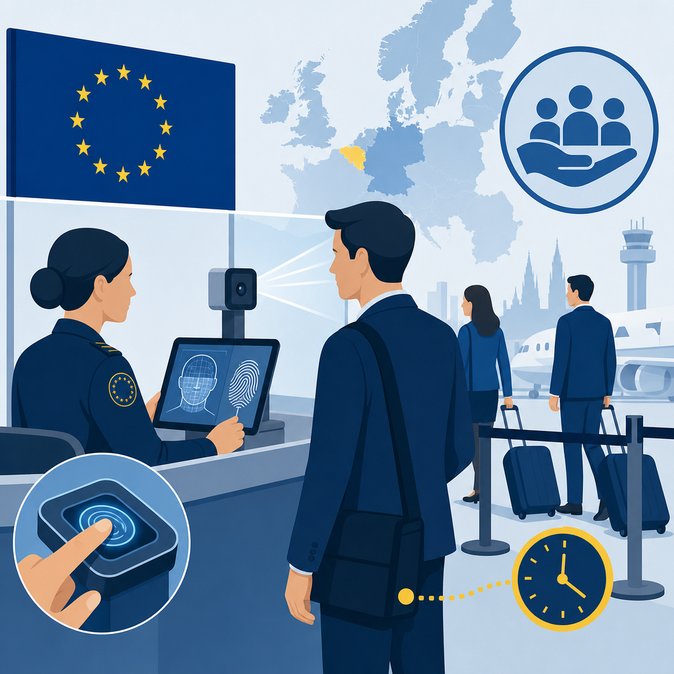
Belgium woke up on Sunday, 31 May 2026 to widespread travel disruption after the country’s three main trade-union confederations staged a 24-hour general strike. Public-sector employees from transport operators SNCB/NMBS (rail), STIB/MIVB (Brussels metro), De Lijn (Flanders) and TEC (Wallonia) walked out alongside airport security staff, air-traffic controllers and ground-handling crews. According to Brussels Airport, more than half of the day’s 640 departures were cancelled or consolidated, while Charleroi Airport suspended all outbound flights until at least Monday morning. Long-distance Thalys and Eurostar services were reduced to emergency timetables and highways into Brussels saw queues of up to 12 km as commuters switched to private cars. Although the strike centred on national pension and wage-indexation reforms, mobility impacts were immediate and wide-ranging. The federal police confirmed that passport-control booths at the country’s external Schengen borders—including Brussels Airport and Zeebrugge ferry terminal—were operating with skeleton staff, forcing carriers to stagger boarding to avoid airside congestion. Bpost’s parcel hubs in Liège and Brussels South were also affected, delaying courier deliveries of residence permits and visa-labelled passports.
![Nationwide Belgian Strike Disrupts Flights, Trains and Border Services on 31 May]()
Travellers caught up in the backlog may find it useful to engage a specialist service such as VisaHQ, which can monitor embassy counter hours, re-route documentation and fast-track visa or permit collections once transport links reopen. The company’s Brussels team (https://www.visahq.com/belgium/) is able to liaise directly with municipal offices and couriers, providing real-time status updates that help employers and assignees rebook travel and avoid further disruption.
For corporate mobility managers the timing could not have been worse: end-of-month assignment rotations and summer project kick-offs typically peak in the last week of May. Several multinationals reported missed start dates for non-EU assignees whose Work Permit B endorsements were still in transit. Deloitte Belgium advised HR teams to “activate contingency accommodation budgets” for employees unable to leave the country and to “re-sequence onboarding plans” for talent waiting to enter. The government has so far ruled out using requisition orders—under which striking aviation or rail staff can be compelled to return to critical posts—but Justice Minister Vincent Van Quickenborne warned unions that “public-order infringements at strategic border-control sites will not be tolerated.” Talks between the cabinet and union leaders are expected early next week; failure to reach a compromise could see further rolling walk-outs in June. Practical take-aways for businesses include: 1) keep travellers on flexible tickets through 7 June, 2) build at least 48 hours of slack into assignee travel and residence-card logistics, and 3) remind expatriates that same-day in-person immigration appointments may be automatically rescheduled if municipal offices cannot guarantee minimum staffing levels.

Travellers caught up in the backlog may find it useful to engage a specialist service such as VisaHQ, which can monitor embassy counter hours, re-route documentation and fast-track visa or permit collections once transport links reopen. The company’s Brussels team (https://www.visahq.com/belgium/) is able to liaise directly with municipal offices and couriers, providing real-time status updates that help employers and assignees rebook travel and avoid further disruption.
For corporate mobility managers the timing could not have been worse: end-of-month assignment rotations and summer project kick-offs typically peak in the last week of May. Several multinationals reported missed start dates for non-EU assignees whose Work Permit B endorsements were still in transit. Deloitte Belgium advised HR teams to “activate contingency accommodation budgets” for employees unable to leave the country and to “re-sequence onboarding plans” for talent waiting to enter. The government has so far ruled out using requisition orders—under which striking aviation or rail staff can be compelled to return to critical posts—but Justice Minister Vincent Van Quickenborne warned unions that “public-order infringements at strategic border-control sites will not be tolerated.” Talks between the cabinet and union leaders are expected early next week; failure to reach a compromise could see further rolling walk-outs in June. Practical take-aways for businesses include: 1) keep travellers on flexible tickets through 7 June, 2) build at least 48 hours of slack into assignee travel and residence-card logistics, and 3) remind expatriates that same-day in-person immigration appointments may be automatically rescheduled if municipal offices cannot guarantee minimum staffing levels.