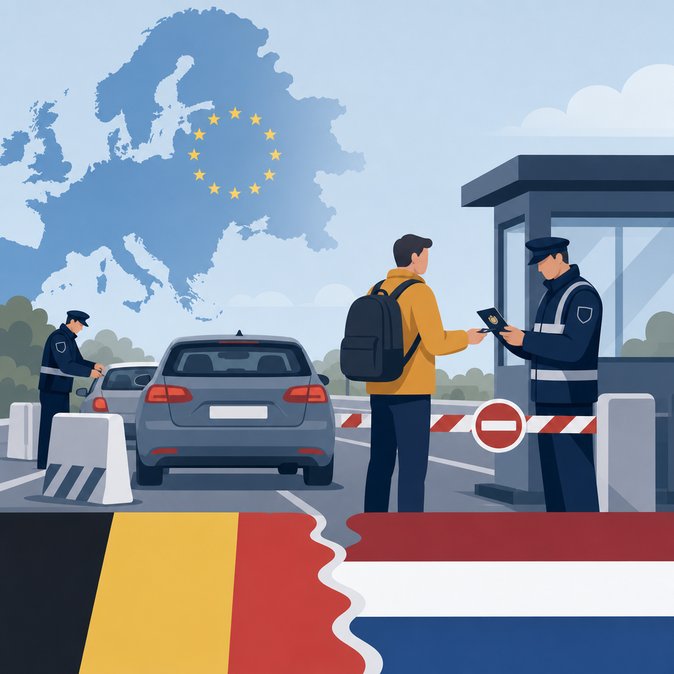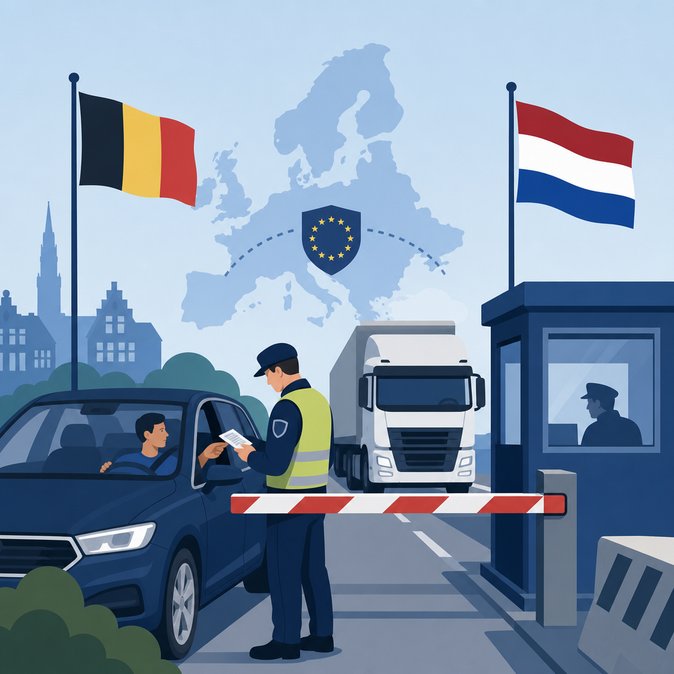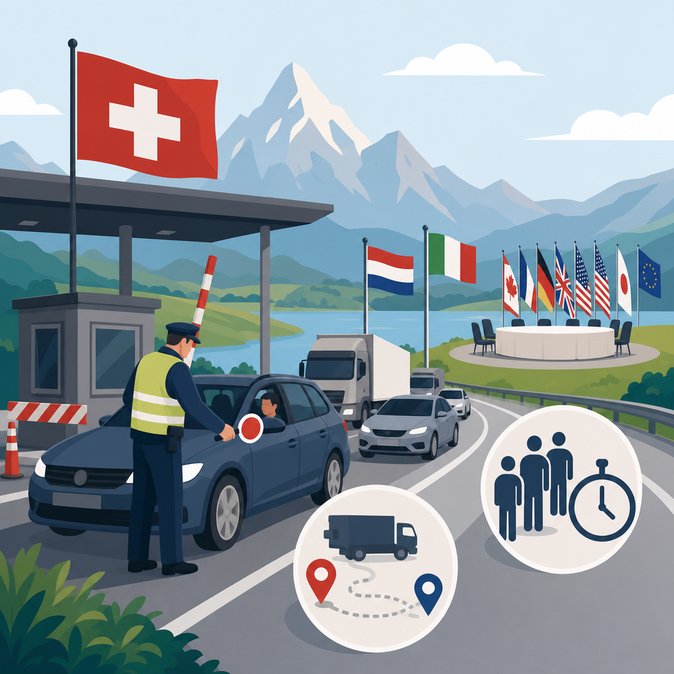
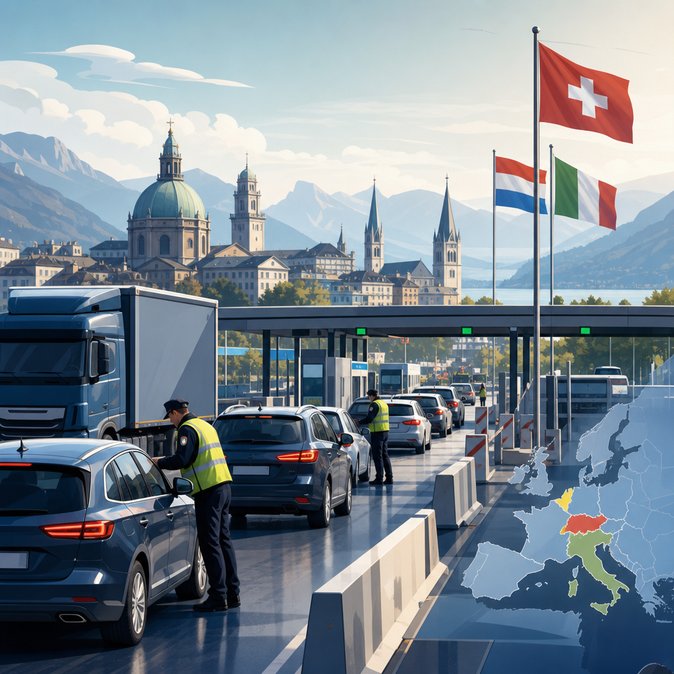
Switzerland confirmed on 27 May 2026 that it will reinstate border controls from 10 to 19 June while hosting the G7 Summit in Évian. Although Switzerland is outside the EU, it is part of Schengen; the move therefore reverberates across continental supply chains. The same announcement highlighted that the Netherlands has prolonged its checks on the Belgian and German borders, and Italy has extended controls with Slovenia until December 2026. For Belgian exporters routing freight through Switzerland toward northern Italy, ad-hoc inspections could add hours to transit times. Forwarders shipping machinery from Liège and pharmaceuticals from Wallonia’s bio-valley have begun re-booking certain loads via Austria to avoid likely bottlenecks at Basel-Weil and Chiasso. Passenger traffic is also affected: Belgian rail operator SNCB-International says Thalys/TGV-Lyria ticket holders must ensure they carry passports, as Swiss police may board trains at Basel SBB.
![Schengen Re-tightens: Switzerland Announces G7 Controls as Netherlands & Italy Prolong Checks—Belgian Firms Should Brace for Delays]()
To streamline the document scramble this summer, Belgian travellers and mobility planners can lean on VisaHQ’s online platform (https://www.visahq.com/belgium/) for real-time visa requirements, Schengen multiple-entry options and courier support, ensuring compliance even when border policies shift at short notice.
Security services justify the temporary controls by pointing to heightened terrorism risk and the need to secure heads of state. Since the 2015 migration crisis, Schengen states have increasingly used Articles 25-28 of the Borders Code to re-introduce checks; critics argue the practice is becoming semi-permanent and undermines free movement. Mobility managers should 1) alert travellers headed to the G7 perimeter to allow extra time; 2) verify that third-country nationals transiting Switzerland carry valid Schengen visas or multiple-entry permits; and 3) reassess delivery schedules for just-in-time supply contracts. Belgian HR teams with cross-border commuters into the Netherlands should also continue to monitor Dutch MTV patrol patterns, as random checks remain in force through at least 30 September 2026. The cluster of extensions signals that 2026 will be another year of fluctuating internal borders. Companies operating pan-European mobility programmes may wish to map alternative routes and keep contingency budgets for driver overtime and accommodation.
To streamline the document scramble this summer, Belgian travellers and mobility planners can lean on VisaHQ’s online platform (https://www.visahq.com/belgium/) for real-time visa requirements, Schengen multiple-entry options and courier support, ensuring compliance even when border policies shift at short notice.
Security services justify the temporary controls by pointing to heightened terrorism risk and the need to secure heads of state. Since the 2015 migration crisis, Schengen states have increasingly used Articles 25-28 of the Borders Code to re-introduce checks; critics argue the practice is becoming semi-permanent and undermines free movement. Mobility managers should 1) alert travellers headed to the G7 perimeter to allow extra time; 2) verify that third-country nationals transiting Switzerland carry valid Schengen visas or multiple-entry permits; and 3) reassess delivery schedules for just-in-time supply contracts. Belgian HR teams with cross-border commuters into the Netherlands should also continue to monitor Dutch MTV patrol patterns, as random checks remain in force through at least 30 September 2026. The cluster of extensions signals that 2026 will be another year of fluctuating internal borders. Companies operating pan-European mobility programmes may wish to map alternative routes and keep contingency budgets for driver overtime and accommodation.