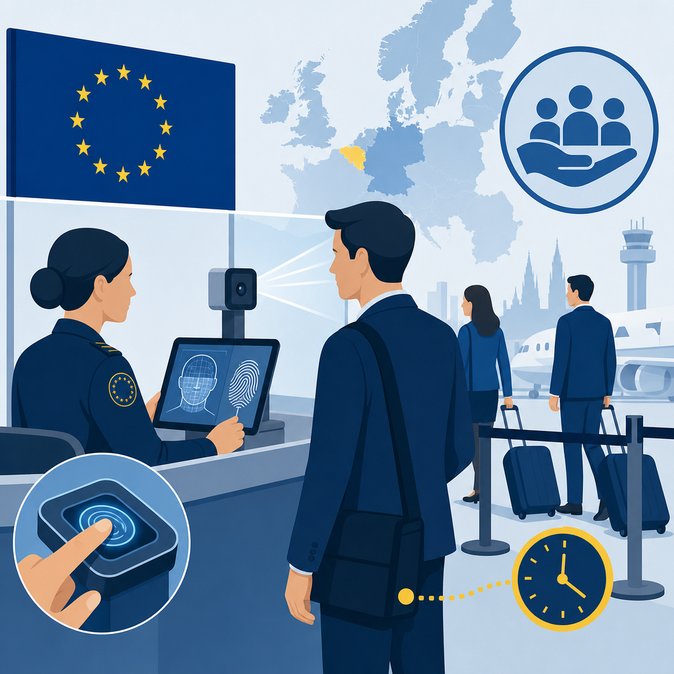
The European Union’s long-awaited Pact on Migration and Asylum will take legal effect on 12 June 2026, and the Belgian government is racing to finalise domestic implementation measures. While the spotlight has fallen on Mediterranean front-line states, the regulation package—confirmed in Brussels-based EU institutions— requires every member state to overhaul screening, registration and return procedures. Belgian officials told The Brussels Times that a draft ‘Alignment Bill’ will be tabled in the Chamber on 3 June, empowering the Immigration Office (DVZ/OE) to run the new five-day pre-entry screening and to upload biometric data to the revamped Eurodac 2.0 system. Under the pact, all third-country nationals intercepted at Belgium’s external borders (Brussels Airport, Zeebrugge seaport and the country’s small number of international coach terminals) must undergo identity verification, security and vulnerability checks before being admitted to the regular asylum channel.
![EU Migration & Asylum Pact Enters Countdown Phase—Belgium Rushes to Align Procedures Before 12 June Launch]()
Companies and individuals who want to stay ahead of these tighter entry rules can turn to VisaHQ for practical help. The online platform—https://www.visahq.com/belgium/—offers document checks, appointment scheduling and step-by-step guidance for Belgian visas, work permits and biometric enrolment, providing a one-stop solution that reduces the risk of delays under the new EU screening regime.
Cases viewed as ‘manifestly unfounded’—for example, applicants from states with historic recognition rates below 20 %—will be fast-tracked in border facilities with decisions due within 12 weeks. The government is converting hangar space at Brussels Airport’s former cargo zone into a 220-bed short-stay processing centre to meet the deadline. Corporate mobility teams need to pay close attention to the pact’s side regulation on talent attraction: starting 12 June, EU Blue-Card applicants will no longer be exempt from Eurodac enrolment. Multinationals bringing in highly skilled workers to the Belgian regions must therefore schedule additional biometric appointments. The three regional employment ministries (Flanders, Wallonia and Brussels-Capital) have agreed to share data feeds so that combined-permit requests can be cross-checked in real time against the Eurodac file to spot previous asylum claims elsewhere in the EU. Legal practitioners warn that accelerated timelines could lead to ‘border rejections’ if supporting documentation (employment contracts, degree equivalence, police clearances) is not perfectly in order at the moment of entry. “We advise clients to send assignees at least two days before their working-time countdown starts, giving room for unexpected holds,” says Katrien De Smet, immigration counsel at the law firm Fragomen in Brussels. Airlines serving long-haul routes to Zaventem are updating check-in systems to ensure Advance Passenger Information (API) files include new data fields requested by Belgian border police. In parallel, Belgium will have to contribute to the pact’s ‘solidarity pool’, either by accepting relocations from overburdened member states or by paying into a common fund. State Secretary for Asylum and Migration Anneleen Van Bossuyt confirmed Belgium prefers a 50-50 split between relocations (about 1 800 people annually) and financial contributions, but final figures will depend on the asylum pressure index published each quarter by the European Commission.

Companies and individuals who want to stay ahead of these tighter entry rules can turn to VisaHQ for practical help. The online platform—https://www.visahq.com/belgium/—offers document checks, appointment scheduling and step-by-step guidance for Belgian visas, work permits and biometric enrolment, providing a one-stop solution that reduces the risk of delays under the new EU screening regime.
Cases viewed as ‘manifestly unfounded’—for example, applicants from states with historic recognition rates below 20 %—will be fast-tracked in border facilities with decisions due within 12 weeks. The government is converting hangar space at Brussels Airport’s former cargo zone into a 220-bed short-stay processing centre to meet the deadline. Corporate mobility teams need to pay close attention to the pact’s side regulation on talent attraction: starting 12 June, EU Blue-Card applicants will no longer be exempt from Eurodac enrolment. Multinationals bringing in highly skilled workers to the Belgian regions must therefore schedule additional biometric appointments. The three regional employment ministries (Flanders, Wallonia and Brussels-Capital) have agreed to share data feeds so that combined-permit requests can be cross-checked in real time against the Eurodac file to spot previous asylum claims elsewhere in the EU. Legal practitioners warn that accelerated timelines could lead to ‘border rejections’ if supporting documentation (employment contracts, degree equivalence, police clearances) is not perfectly in order at the moment of entry. “We advise clients to send assignees at least two days before their working-time countdown starts, giving room for unexpected holds,” says Katrien De Smet, immigration counsel at the law firm Fragomen in Brussels. Airlines serving long-haul routes to Zaventem are updating check-in systems to ensure Advance Passenger Information (API) files include new data fields requested by Belgian border police. In parallel, Belgium will have to contribute to the pact’s ‘solidarity pool’, either by accepting relocations from overburdened member states or by paying into a common fund. State Secretary for Asylum and Migration Anneleen Van Bossuyt confirmed Belgium prefers a 50-50 split between relocations (about 1 800 people annually) and financial contributions, but final figures will depend on the asylum pressure index published each quarter by the European Commission.