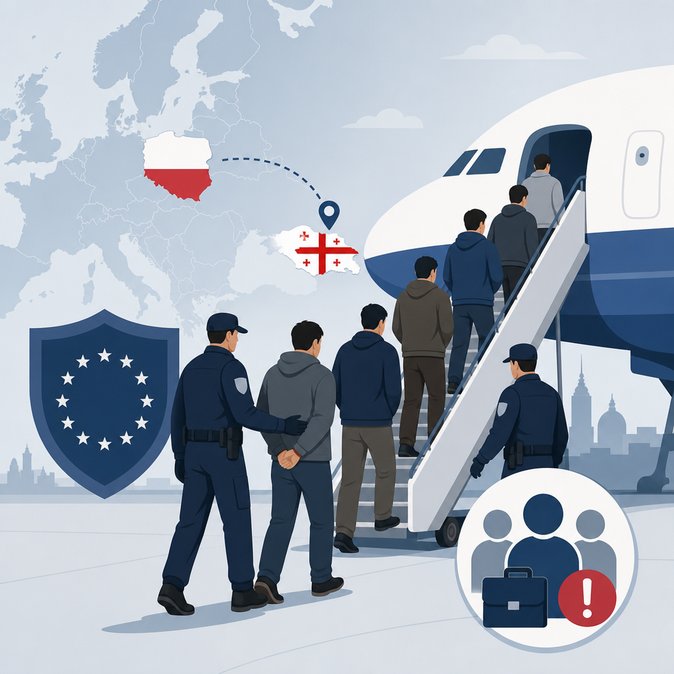
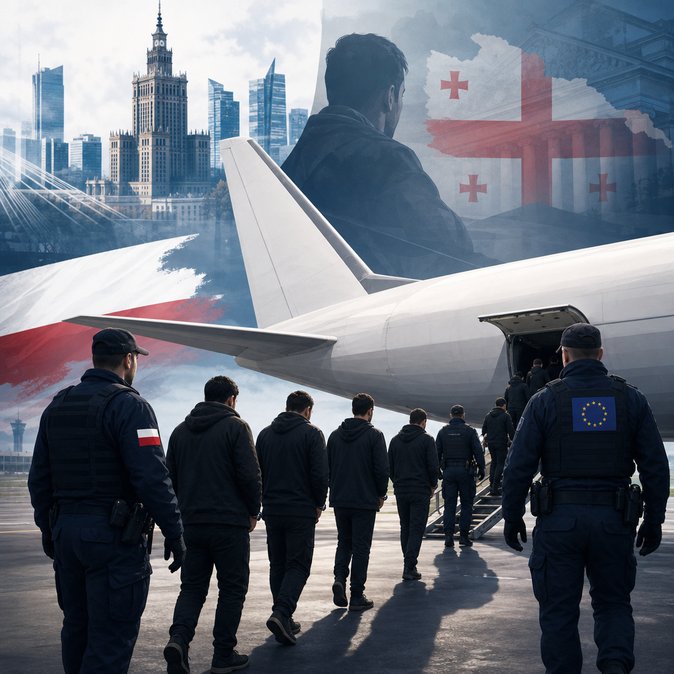
In the early hours of Friday, 29 May, a chartered aircraft took off from Łódź airport carrying ten Georgian citizens who were subject to final return orders. The operation was coordinated by Poland’s Border Guard and the EU’s border agency Frontex under the Collecting Return Operation (CRO) framework, which pools resources to remove non-EU nationals with enforceable expulsion decisions. Seven of the passengers had been ordered to leave on public-security grounds, while the remaining three had overstayed or violated the terms of their residence. Poland has stepped up forced-return activity since new migration-governance rules entered into force in March, requiring regional commanders to prioritise cases involving threats to state security or serious criminal convictions. According to official figures, more than 1,200 third-country nationals have been repatriated so far in 2026—a 35 % increase over the same period last year. Georgian nationals account for the second-largest share of removals after citizens of the Russian Federation. For employers, the message is clear: overstaying staff or contractors are at heightened risk of detention, particularly if they lack up-to-date work-permit annotations or PESEL numbers. Mobility teams should audit residence cards and visa validity dates, ensure renewals are lodged no later than 30 days before expiry, and maintain searchable records in case of workplace inspections.
![Poland carries out Frontex-assisted deportation of 10 Georgian nationals]()
For companies and individual assignees seeking practical support in keeping those documents current, VisaHQ can streamline the process: its Poland desk (https://www.visahq.com/poland/) offers online application tools, renewal reminders, and expert review so that residency and work-permission paperwork stays compliant.
The operation also signals closer cooperation between Warsaw and Frontex. By pooling flights, member states cut costs and free up escort personnel. Businesses relocating talent from high-risk countries should therefore anticipate quicker turnaround on negative decisions and less chance of last-minute humanitarian appeals succeeding. Georgian authorities, for their part, have urged citizens to respect EU visa rules, warning that a surge in overstays could jeopardise the visa-free regime enjoyed since 2017. Any suspension would have a domino effect on intra-company transfers, especially in Poland’s booming construction and logistics sectors.
For companies and individual assignees seeking practical support in keeping those documents current, VisaHQ can streamline the process: its Poland desk (https://www.visahq.com/poland/) offers online application tools, renewal reminders, and expert review so that residency and work-permission paperwork stays compliant.
The operation also signals closer cooperation between Warsaw and Frontex. By pooling flights, member states cut costs and free up escort personnel. Businesses relocating talent from high-risk countries should therefore anticipate quicker turnaround on negative decisions and less chance of last-minute humanitarian appeals succeeding. Georgian authorities, for their part, have urged citizens to respect EU visa rules, warning that a surge in overstays could jeopardise the visa-free regime enjoyed since 2017. Any suspension would have a domino effect on intra-company transfers, especially in Poland’s booming construction and logistics sectors.