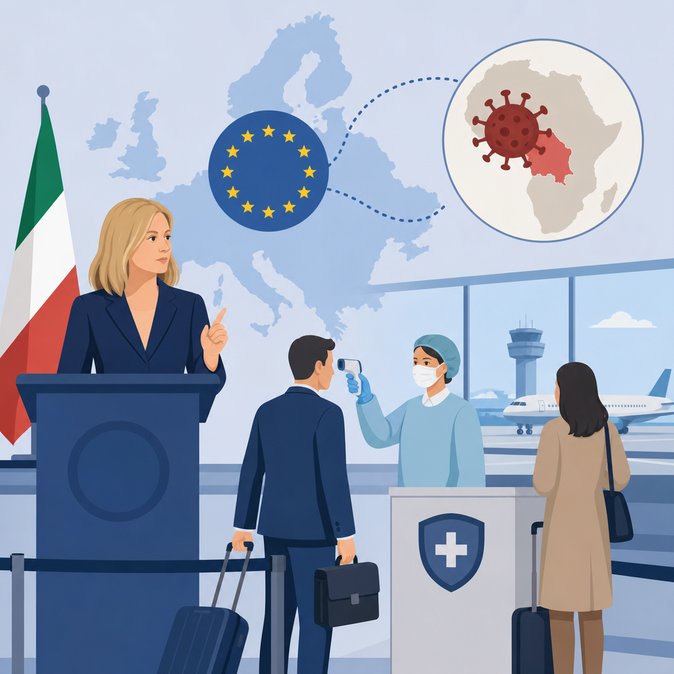
Italian Prime Minister Giorgia Meloni has written to European Commission President Ursula von der Leyen and Council President António Costa urging ‘enhanced coordination of border surveillance’ in response to the rapidly evolving Ebola outbreak in the Democratic Republic of Congo and neighbouring Uganda. The letter, sent on 29 May, asks that the topic be placed on the agenda of the 18-19 June European Council and proposes an extraordinary video conference of EU Health Ministers next week.
![Meloni Calls for EU-Wide Border Health Checks as Ebola Outbreak Spreads in Congo]()
For companies and individual travelers suddenly facing new screening obligations, VisaHQ can help streamline the paperwork. Through its dedicated Italy portal (https://www.visahq.com/italy/), the service offers real-time updates on entry requirements, quick online visa applications, and personalized support—valuable tools for mobility managers who must react quickly when health measures tighten without warning.
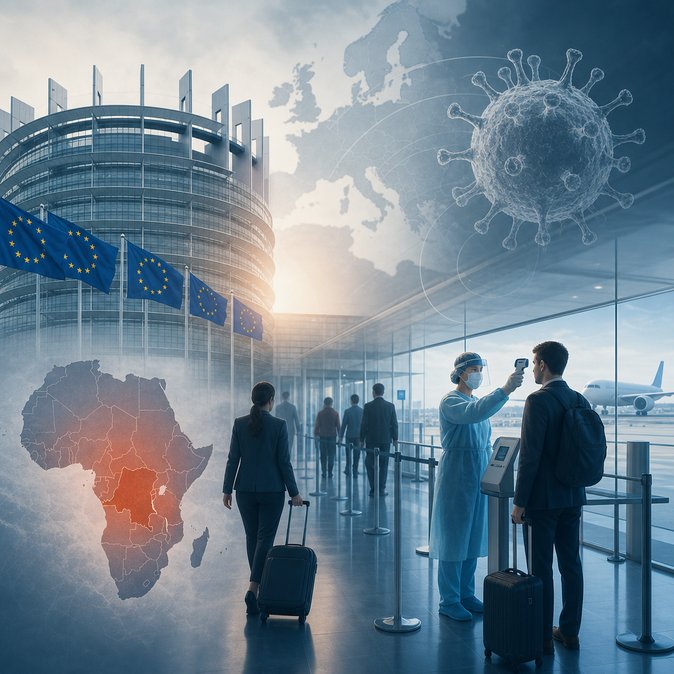
Domestically, Italy’s Ministry of Health has already circulated guidance to regional authorities and airport medical units, activating temperature-screening protocols and tracing requirements for arrivals who have visited affected regions within the previous 21 days. The Spallanzani Institute—Italy’s leading infectious-disease hospital—will dispatch an expert team to Kinshasa this weekend to assist local authorities and gather epidemiological data. For mobility managers the stakes are high. If Brussels endorses Meloni’s proposal, the Schengen area could see temporary reinforced health checks similar to those imposed during COVID-19, potentially slowing processing at external borders and lengthening transfer times for connecting passengers. Companies moving personnel in and out of Central Africa should also track possible flight-schedule adjustments as carriers assess crew-safety risks. Legal advisers note that any EU-level decision would likely rely on Article 6 of the Schengen Borders Code, which permits member states to impose proportionate health measures provided they are non-discriminatory and time-limited. Employers are advised to refresh contingency plans, update traveller health-screening questionnaires and verify that insurance policies still cover Ebola-related medical evacuation.
For companies and individual travelers suddenly facing new screening obligations, VisaHQ can help streamline the paperwork. Through its dedicated Italy portal (https://www.visahq.com/italy/), the service offers real-time updates on entry requirements, quick online visa applications, and personalized support—valuable tools for mobility managers who must react quickly when health measures tighten without warning.
Domestically, Italy’s Ministry of Health has already circulated guidance to regional authorities and airport medical units, activating temperature-screening protocols and tracing requirements for arrivals who have visited affected regions within the previous 21 days. The Spallanzani Institute—Italy’s leading infectious-disease hospital—will dispatch an expert team to Kinshasa this weekend to assist local authorities and gather epidemiological data. For mobility managers the stakes are high. If Brussels endorses Meloni’s proposal, the Schengen area could see temporary reinforced health checks similar to those imposed during COVID-19, potentially slowing processing at external borders and lengthening transfer times for connecting passengers. Companies moving personnel in and out of Central Africa should also track possible flight-schedule adjustments as carriers assess crew-safety risks. Legal advisers note that any EU-level decision would likely rely on Article 6 of the Schengen Borders Code, which permits member states to impose proportionate health measures provided they are non-discriminatory and time-limited. Employers are advised to refresh contingency plans, update traveller health-screening questionnaires and verify that insurance policies still cover Ebola-related medical evacuation.