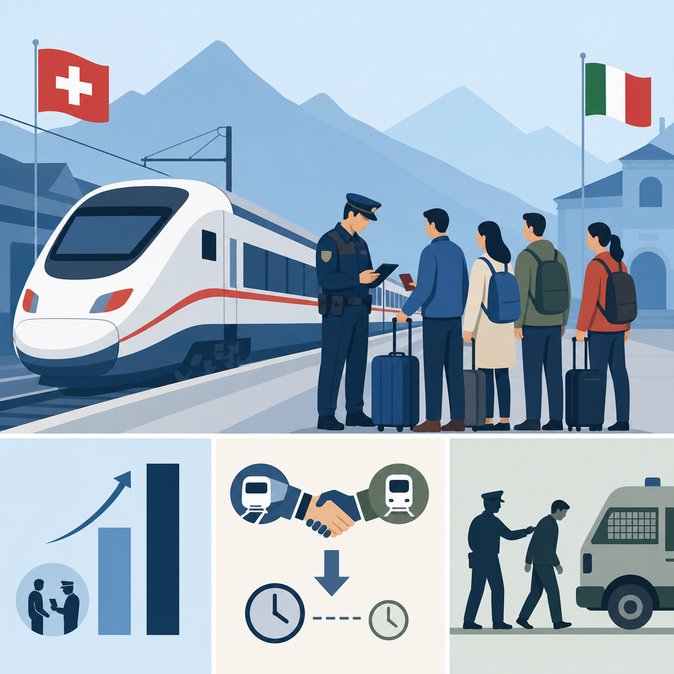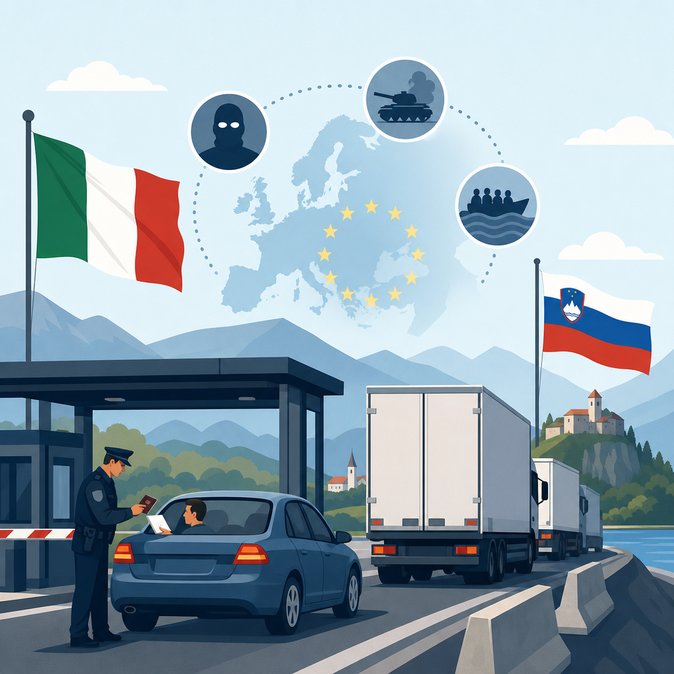
The Italian Ministry of the Interior has formally notified the European Commission that the temporary controls it re-introduced at the land border with Slovenia in October 2023 will remain in force until at least 18 December 2026. The 26 May announcement, published via the Schengen notification portal and detailed by logistics news outlet Trans Info, places Italy among a small group of Schengen members—alongside the Netherlands and, for the G7 summit period, Switzerland—that continue to rely on the exceptional clause in Article 25 of the Schengen Borders Code. Rome cites three converging risk drivers: the possibility that terrorist networks exploit Balkan migration routes; the instability created by the conflicts in Ukraine and the Middle East; and persistently high levels of irregular migration facilitated by organised smuggling groups.
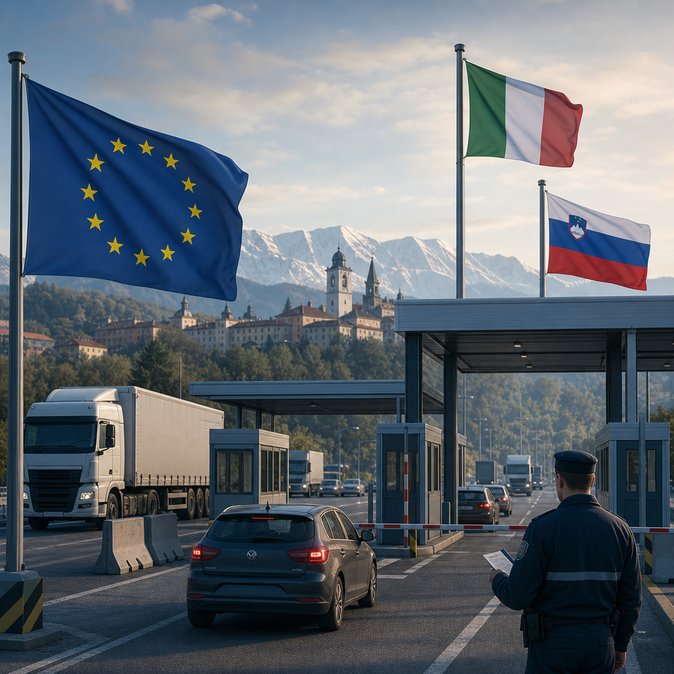
Operationally, the extension means that police checkpoints, document inspections and random vehicle searches will continue on the Slovenian frontier, particularly along the busy A23/A34 corridor that links Trieste, Gorizia and Udine to Ljubljana. While basic cross-border travel remains possible, business travellers, logistics operators and commuters must allow additional time for inspections and should ensure that identity documents, vehicle papers and (where applicable) work permits are readily available.
![Italy extends Slovenia border checks until December 2026 amid migration and security concerns]()
For anyone who finds that the tighter scrutiny triggers questions about visas, residency proofs or other supporting paperwork, VisaHQ can provide a fast reality-check. Its dedicated Italy page (https://www.visahq.com/italy/) lets travellers and mobility managers confirm requirements, generate application packs and tap live support, reducing the risk of being turned back at an unexpected checkpoint.
Industry bodies representing Friuli-Venezia Giulia exporters warn that even five-minute stops can snowball into sizeable delays when truck flows are heavy, adding hidden costs for “just-in-time” deliveries to Austria, Croatia and beyond. Tour operators running summer charter coaches between Istria and the Veneto have already adjusted itineraries, adding rest-break buffers to avoid missed ferry and hotel slots. Legally, the move tests the durability of the Court of Justice ruling in joined cases C-368/20 and C-369/20, which underscored that internal checks must be truly exceptional and time-limited. By stretching controls into a third straight year, Italy risks criticism from Brussels and from civil-liberty groups that view the measure as a creeping re-bordering of the Schengen area. For corporations moving staff or goods through north-eastern Italy, continued vigilance—and clear contingency planning—remain essential.
Operationally, the extension means that police checkpoints, document inspections and random vehicle searches will continue on the Slovenian frontier, particularly along the busy A23/A34 corridor that links Trieste, Gorizia and Udine to Ljubljana. While basic cross-border travel remains possible, business travellers, logistics operators and commuters must allow additional time for inspections and should ensure that identity documents, vehicle papers and (where applicable) work permits are readily available.
For anyone who finds that the tighter scrutiny triggers questions about visas, residency proofs or other supporting paperwork, VisaHQ can provide a fast reality-check. Its dedicated Italy page (https://www.visahq.com/italy/) lets travellers and mobility managers confirm requirements, generate application packs and tap live support, reducing the risk of being turned back at an unexpected checkpoint.
Industry bodies representing Friuli-Venezia Giulia exporters warn that even five-minute stops can snowball into sizeable delays when truck flows are heavy, adding hidden costs for “just-in-time” deliveries to Austria, Croatia and beyond. Tour operators running summer charter coaches between Istria and the Veneto have already adjusted itineraries, adding rest-break buffers to avoid missed ferry and hotel slots. Legally, the move tests the durability of the Court of Justice ruling in joined cases C-368/20 and C-369/20, which underscored that internal checks must be truly exceptional and time-limited. By stretching controls into a third straight year, Italy risks criticism from Brussels and from civil-liberty groups that view the measure as a creeping re-bordering of the Schengen area. For corporations moving staff or goods through north-eastern Italy, continued vigilance—and clear contingency planning—remain essential.
More From Italy
View all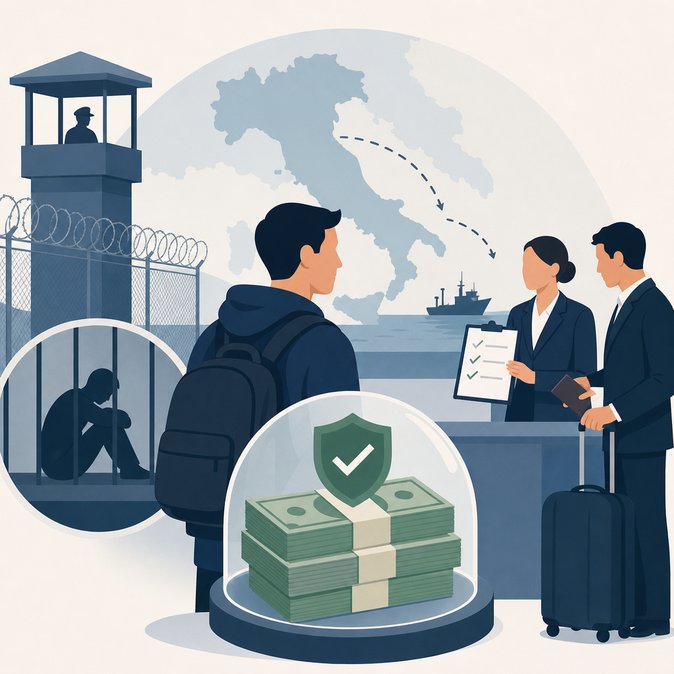
€4,938 bank guarantee required for asylum seekers to avoid border-zone detention under Italy’s new fast-track procedure
Unions warn travellers: 24-hour general strike on 29 May will ground flights and snarl Italian transport