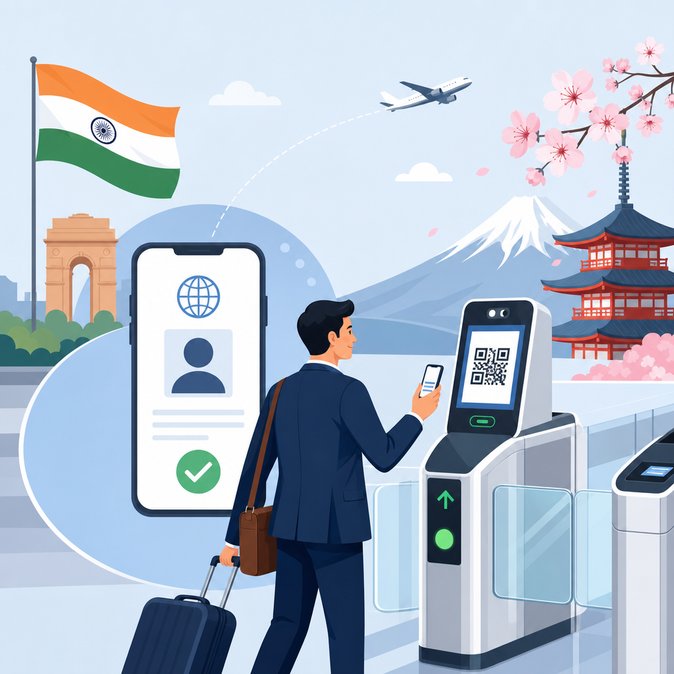
South Korea’s Ministry of Justice has fine-tuned its Korea Electronic Travel Authorisation (K-ETA) programme, doubling validity to three years for most Indian passport holders and ironing out long-standing grey zones around Jeju-only travel. The update, published in Seoul on 30 May, takes effect immediately for new applications and retroactively upgrades still-valid approvals issued since January. The K-ETA replaces a conventional short-term C-3 visa for tourists and business visitors staying up to 90 days. Applicants complete a quick online form, upload a passport photo and pay a KRW 10,000 fee; approvals typically arrive within 72 hours.
The longer validity means Indian consultants who shuttle frequently between Bengaluru and Seoul’s Pangyo Tech Valley will no longer need to reapply every year.
Seoul also clarified that direct charter or seasonal flights to Jeju continue to enjoy the island’s visa-free policy, but travellers transiting via Incheon or Busan must still obtain a K-ETA before boarding.
For Indians holding a valid US or Canadian visa, the popular 30-day transit-without-visa concession via Incheon is maintained.
![South Korea Extends K-ETA Validity to 3 Years for Indians and Clarifies Jeju-Island Exemption]()
Behind the policy tweak is Korea’s drive to capture a larger slice of India’s outbound market, which hit 27 million trips last year. Korea Tourism Organization data show Indian arrivals rising 42 % year-on-year, fuelled by K-pop, gaming and semiconductor supply-chain visits.
If the new rules still feel daunting, VisaHQ can simplify the process. The agency’s India portal (https://www.visahq.com/india/) offers a guided K-ETA application service, checks documentation for accuracy, and provides real-time status updates—valuable peace of mind for both first-time visitors and frequent flyers planning multi-country itineraries.
Airlines are responding: Korean Air will up-gauge its Delhi-Seoul route to a 787-10 from July, while Vistara has applied for slots into Busan.
Advisory for companies: ensure staff apply at least 96 hours before travel to cover potential system outages. Carry print-outs of hotel bookings and a KRW 100,000 cash equivalent or credit card statement to satisfy random checks.
Jeju visa-free travellers must present a confirmed return ticket and remain on the island or face hefty fines.
The longer validity means Indian consultants who shuttle frequently between Bengaluru and Seoul’s Pangyo Tech Valley will no longer need to reapply every year.
Seoul also clarified that direct charter or seasonal flights to Jeju continue to enjoy the island’s visa-free policy, but travellers transiting via Incheon or Busan must still obtain a K-ETA before boarding.
For Indians holding a valid US or Canadian visa, the popular 30-day transit-without-visa concession via Incheon is maintained.

Behind the policy tweak is Korea’s drive to capture a larger slice of India’s outbound market, which hit 27 million trips last year. Korea Tourism Organization data show Indian arrivals rising 42 % year-on-year, fuelled by K-pop, gaming and semiconductor supply-chain visits.
If the new rules still feel daunting, VisaHQ can simplify the process. The agency’s India portal (https://www.visahq.com/india/) offers a guided K-ETA application service, checks documentation for accuracy, and provides real-time status updates—valuable peace of mind for both first-time visitors and frequent flyers planning multi-country itineraries.
Airlines are responding: Korean Air will up-gauge its Delhi-Seoul route to a 787-10 from July, while Vistara has applied for slots into Busan.
Advisory for companies: ensure staff apply at least 96 hours before travel to cover potential system outages. Carry print-outs of hotel bookings and a KRW 100,000 cash equivalent or credit card statement to satisfy random checks.
Jeju visa-free travellers must present a confirmed return ticket and remain on the island or face hefty fines.