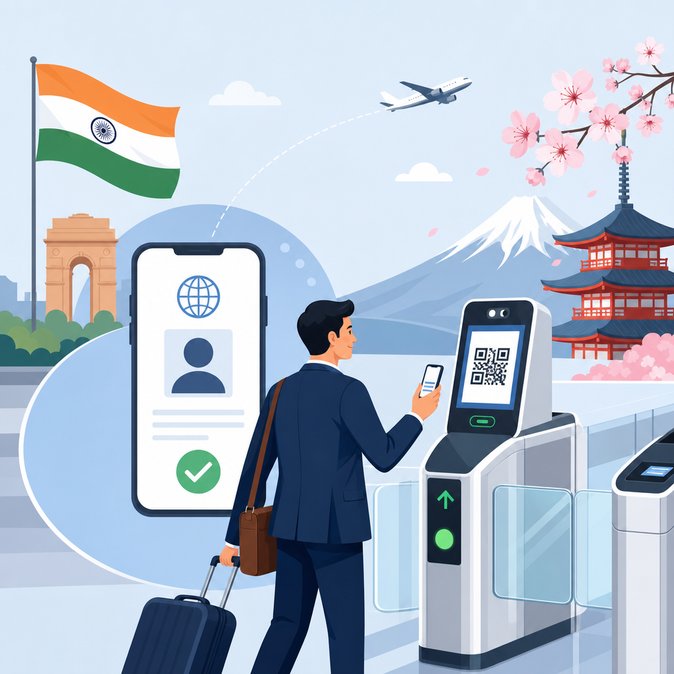
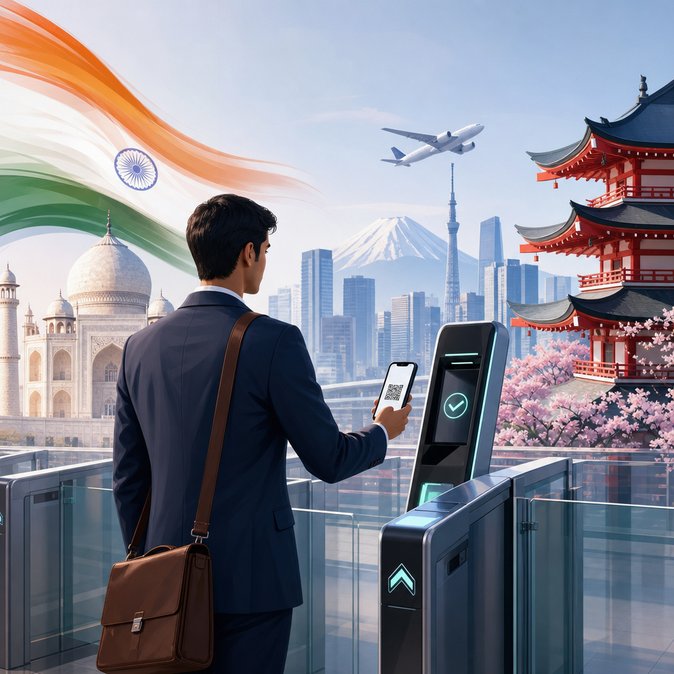
Japan has become the latest major economy to overhaul its visa policy for India, rolling out a fully digital short-term e-Visa platform that promises decisions in as little as five working days. Published in the official gazette overnight and confirmed by Japan’s Immigration Services Agency, the reform covers tourism, family visits and short business trips of up to 90 days. For Indian applicants the change is a game-changer. Until now, most travellers had to lodge paper applications via VFS Global centres and wait up to three weeks for a visa sticker. From 30 May, all documentation—including passports, photos and flight details—can be uploaded to a new multilingual portal. Once approved, the e-Visa is linked to the passport and displayed as a QR code on a smartphone, eliminating any need for a physical label or in-person collection. Behind the scenes Tokyo has invested heavily in biometric and watch-list databases to make the process faster without compromising security. The system runs automated checks against INTERPOL and Japan’s own overstayer records before issuing clearance. Immigration gates at Narita, Haneda, Kansai and the new Chubu e-channels will scan the e-Visa QR code and a live facial-recognition image, completing entry in under 15 seconds. For Indian corporates the timing is ideal. Bilateral trade crossed USD 20 billion last year, and Japan’s semiconductor and green-hydrogen investors increasingly shuttle teams between Bengaluru, Chennai and Tokyo. A faster visa removes a long-standing friction point that forced companies to build extra lead time into project timelines.
![Japan Launches Streamlined e-Visa for Indian Travellers, Cutting Approval Time to 5 Days]()
If you’d prefer expert assistance with the new Japanese e-Visa—or any other travel document—VisaHQ’s India team can manage the entire application for you, from compressing photos to tracking approvals in real time. Begin your request or browse additional visa services at https://www.visahq.com/india/
Tour operators also expect a rebound: Japan wants to attract five million Indian tourists a year by 2030 and is negotiating additional slots for direct Delhi–Tokyo and Mumbai–Osaka flights. Practical tips: applicants must create an account on the official e-Visa portal, upload a 350-KB photo on a white background, and pay a ¥3,000 fee by international credit card. Biometrics are captured on arrival, so no fingerprints are required during the application. Travellers should still carry a printed itinerary and hotel confirmation, as border officers may ask for proof of funds during random secondary inspections.
If you’d prefer expert assistance with the new Japanese e-Visa—or any other travel document—VisaHQ’s India team can manage the entire application for you, from compressing photos to tracking approvals in real time. Begin your request or browse additional visa services at https://www.visahq.com/india/
Tour operators also expect a rebound: Japan wants to attract five million Indian tourists a year by 2030 and is negotiating additional slots for direct Delhi–Tokyo and Mumbai–Osaka flights. Practical tips: applicants must create an account on the official e-Visa portal, upload a 350-KB photo on a white background, and pay a ¥3,000 fee by international credit card. Biometrics are captured on arrival, so no fingerprints are required during the application. Travellers should still carry a printed itinerary and hotel confirmation, as border officers may ask for proof of funds during random secondary inspections.