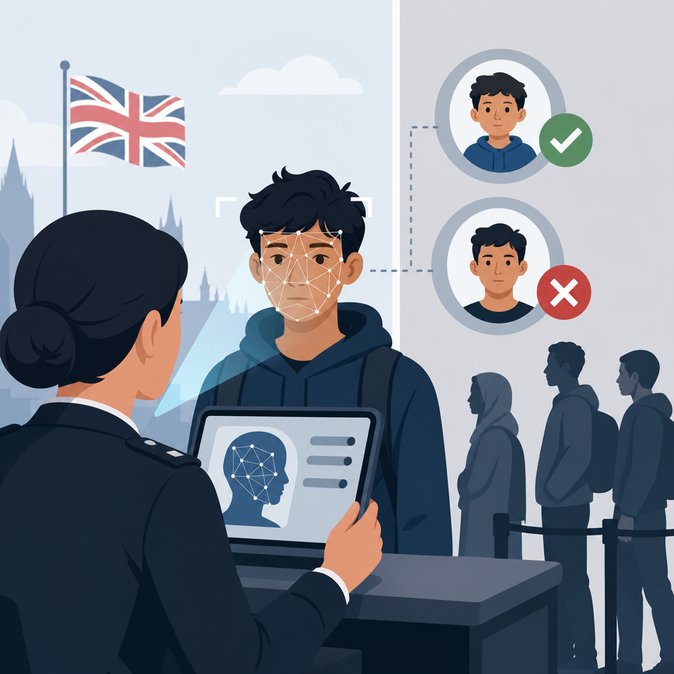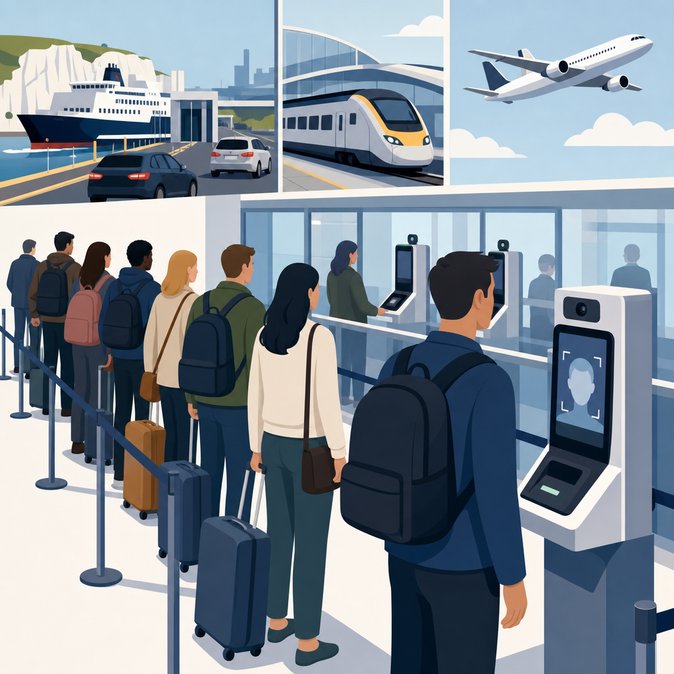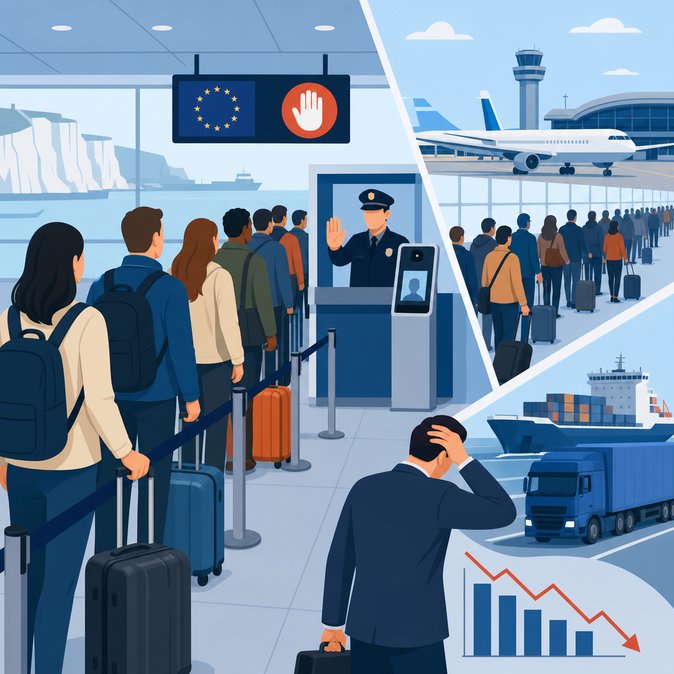
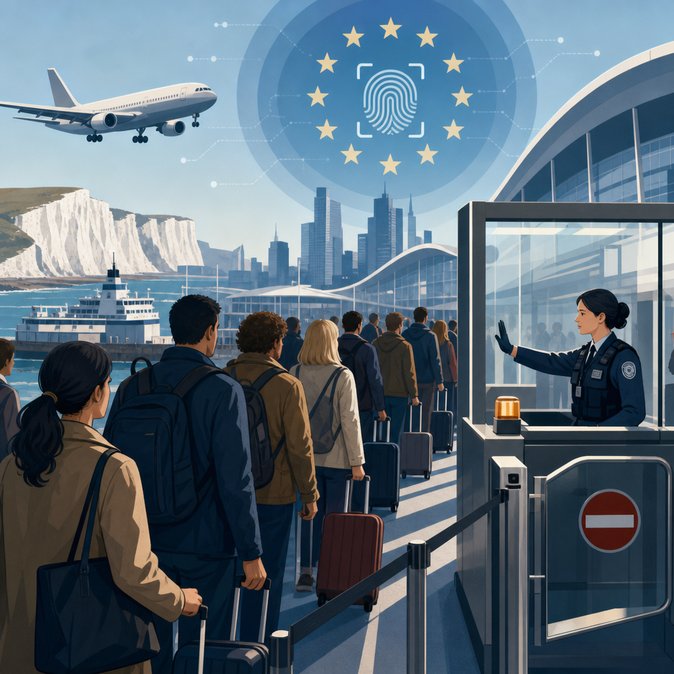
British travel agents and tour operators are warning that the European Union’s new biometric Entry/Exit System (EES) is beginning to bite just as the UK heads into the peak summer season. The system, which became fully operational on 10 April, replaces manual passport stamping with digital records backed by facial and fingerprint biometrics for all “third-country” visitors—including Britons. During the late-May bank-holiday getaway, French police temporarily switched off EES registration at the Port of Dover after traffic tailed back for more than two hours.
Port chief executive Doug Bannister told reporters that 84 self-service kiosks remained out of action owing to software issues, leaving border officers to process passengers manually.
Airports are suffering too. The European airport trade body ACI Europe told Travel Weekly it had surveyed 45 airports in 20 EU states and found peak-time queues of up to 3½ hours, a situation it bluntly described as “deteriorating”.
Agents say the anxiety is feeding through to customers: Judith Alderson, commercial director at Dawson & Sanderson, said frontline staff now spend “as much time explaining border delays as we do discussing destinations”.
![UK travel industry urges pause to EU biometric border checks as Dover queues mount]()
Travellers looking for practical support in navigating these new border formalities can turn to specialists such as VisaHQ. The firm’s UK portal (https://www.visahq.com/united-kingdom/) offers real-time updates on entry requirements across the EU, step-by-step application assistance and optional courier services, giving both holidaymakers and corporate travellers a single dashboard to track paperwork and avoid last-minute surprises.
Advantage Travel Partnership chief Julia Lo-Bue-Said added that members now recommend travellers arrive “at least an hour earlier” for continental departures. Industry leaders are lobbying Brussels for an immediate summer suspension. Lo-Bue-Said warned that small Mediterranean airports “simply cannot have elderly people and families queuing on a baking hot apron to give fingerprints”.
Ryanair and easyJet have echoed the call, while the Association of ATOL Companies says consumer confidence is being dented. Yet the European Commission insists the new regime is essential to security and over-stay control. Officials point out that the regulation already allows member states to switch off biometric capture temporarily if queues become unmanageable—as happened at Dover and Le Shuttle in Folkestone at the weekend.
Brussels is also banking on the self-service kiosks—once operational—to speed repeat visits because biometrics need be captured only once every three years.
For UK corporates the message is clear: build extra slack into travel itineraries, brief mobile employees about possible holdups, and monitor operator and government alerts. The Confederation of British Industry (CBI) said delays have “obvious cost implications—missed meetings, rescheduled freight, disrupted supply chains,” urging members to factor EES risk into planning until at least the end of the summer.
Port chief executive Doug Bannister told reporters that 84 self-service kiosks remained out of action owing to software issues, leaving border officers to process passengers manually.
Airports are suffering too. The European airport trade body ACI Europe told Travel Weekly it had surveyed 45 airports in 20 EU states and found peak-time queues of up to 3½ hours, a situation it bluntly described as “deteriorating”.
Agents say the anxiety is feeding through to customers: Judith Alderson, commercial director at Dawson & Sanderson, said frontline staff now spend “as much time explaining border delays as we do discussing destinations”.
Travellers looking for practical support in navigating these new border formalities can turn to specialists such as VisaHQ. The firm’s UK portal (https://www.visahq.com/united-kingdom/) offers real-time updates on entry requirements across the EU, step-by-step application assistance and optional courier services, giving both holidaymakers and corporate travellers a single dashboard to track paperwork and avoid last-minute surprises.
Advantage Travel Partnership chief Julia Lo-Bue-Said added that members now recommend travellers arrive “at least an hour earlier” for continental departures. Industry leaders are lobbying Brussels for an immediate summer suspension. Lo-Bue-Said warned that small Mediterranean airports “simply cannot have elderly people and families queuing on a baking hot apron to give fingerprints”.
Ryanair and easyJet have echoed the call, while the Association of ATOL Companies says consumer confidence is being dented. Yet the European Commission insists the new regime is essential to security and over-stay control. Officials point out that the regulation already allows member states to switch off biometric capture temporarily if queues become unmanageable—as happened at Dover and Le Shuttle in Folkestone at the weekend.
Brussels is also banking on the self-service kiosks—once operational—to speed repeat visits because biometrics need be captured only once every three years.
For UK corporates the message is clear: build extra slack into travel itineraries, brief mobile employees about possible holdups, and monitor operator and government alerts. The Confederation of British Industry (CBI) said delays have “obvious cost implications—missed meetings, rescheduled freight, disrupted supply chains,” urging members to factor EES risk into planning until at least the end of the summer.