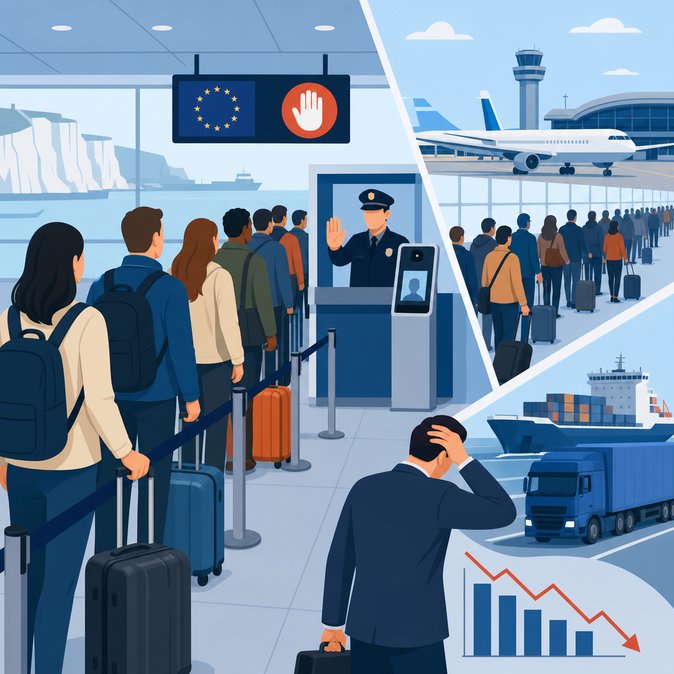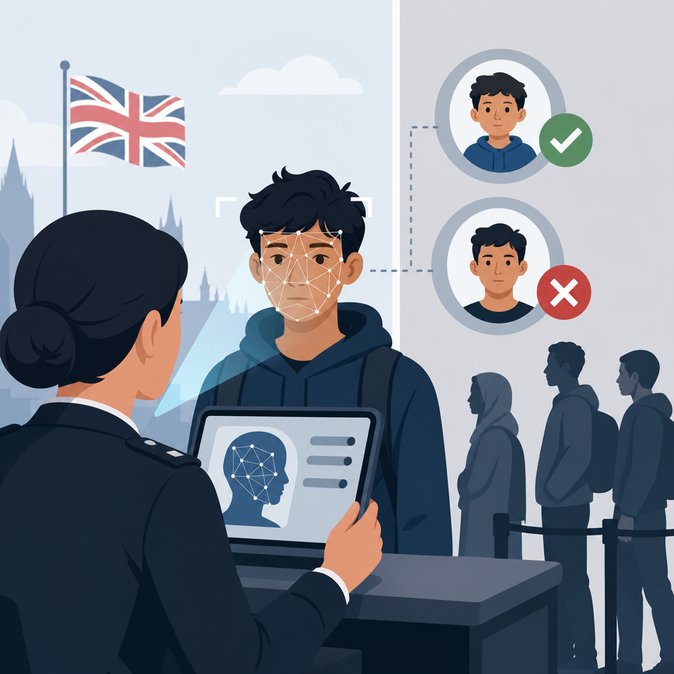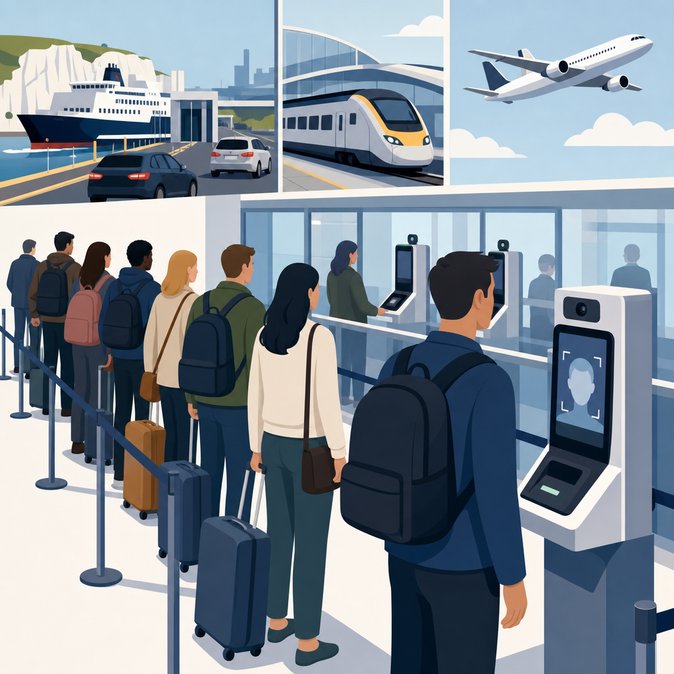
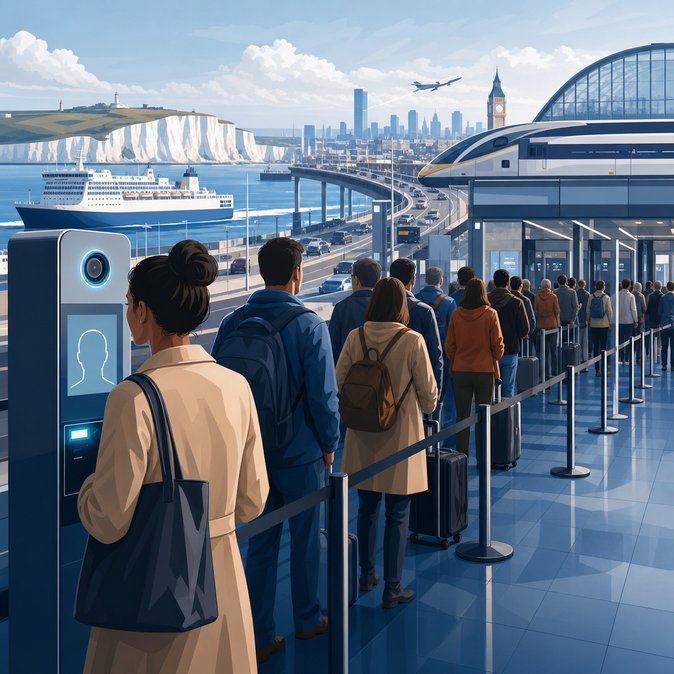
Consumer travel site The Traveler has issued new guidance warning UK holiday-makers and business travellers to allow “significant additional time” for border checks across Europe after multiple reports of airport and ferry-terminal congestion linked to the EU’s Entry/Exit System (EES). The article, published late on 28 May, notes that Britons—now classed as third-country nationals—must register fingerprints and a facial image the first time they enter the Schengen area after 10 April. That initial enrolment is adding several minutes per passenger; when thousands arrive within short waves, queues escalate rapidly. Pressure points include the juxtaposed French controls at Dover, Folkestone and London St Pancras, where every car, coach and Eurostar passenger must clear Schengen exit formalities before departure. Parliamentary briefings seen by The Traveler suggest vehicle processing times could quadruple at peak moments, raising the spectre of tailbacks on Kent roads similar to the Easter 2025 disruption. Airports from Lisbon to Düsseldorf are also reporting hour-plus waits, according to data compiled by airline and airport associations.
![UK travellers told to budget extra time as EU smart-border rollout lengthens queues]()
Amid the uncertainty, specialist visa service VisaHQ can help UK travellers get ahead of the paperwork curve. Its easy-to-use portal (https://www.visahq.com/united-kingdom/) details current Schengen entry rules, tracks the rollout of EES and the upcoming ETIAS authorisation, and offers reminder tools so holiday-makers and corporate road-warriors alike avoid last-minute surprises—potentially shaving hours off their journey.
Smaller regional hubs in the Mediterranean are deemed most vulnerable because space constraints limit the installation of biometric kiosks. The guide recommends that travellers with tight onward connections build in extra buffers and that corporate travel managers review minimum connecting-time settings in booking tools. Although the EU says enrolment will speed up after the first trip and that data remain valid for three years, experts interviewed by the site caution that a second layer of pre-travel authorisation—ETIAS—is due in late 2026, meaning the smart-border learning curve for UK citizens is far from over.
Amid the uncertainty, specialist visa service VisaHQ can help UK travellers get ahead of the paperwork curve. Its easy-to-use portal (https://www.visahq.com/united-kingdom/) details current Schengen entry rules, tracks the rollout of EES and the upcoming ETIAS authorisation, and offers reminder tools so holiday-makers and corporate road-warriors alike avoid last-minute surprises—potentially shaving hours off their journey.
Smaller regional hubs in the Mediterranean are deemed most vulnerable because space constraints limit the installation of biometric kiosks. The guide recommends that travellers with tight onward connections build in extra buffers and that corporate travel managers review minimum connecting-time settings in booking tools. Although the EU says enrolment will speed up after the first trip and that data remain valid for three years, experts interviewed by the site caution that a second layer of pre-travel authorisation—ETIAS—is due in late 2026, meaning the smart-border learning curve for UK citizens is far from over.