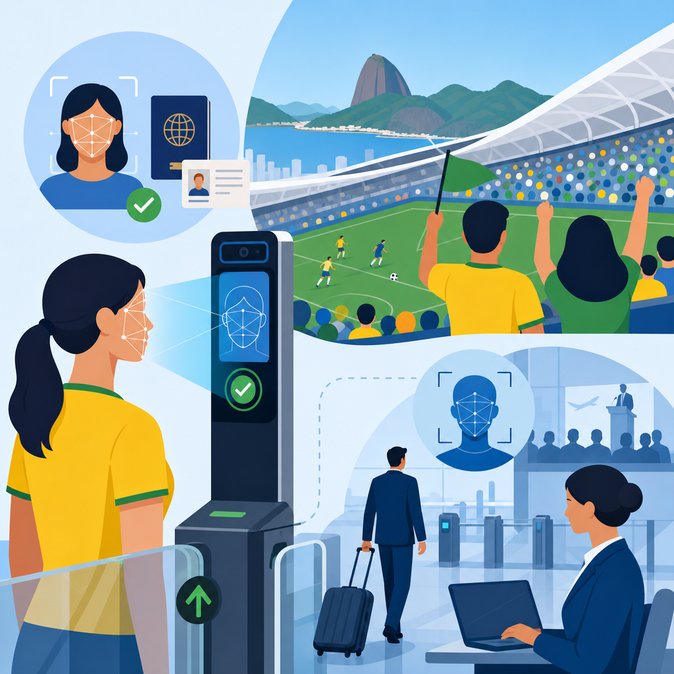
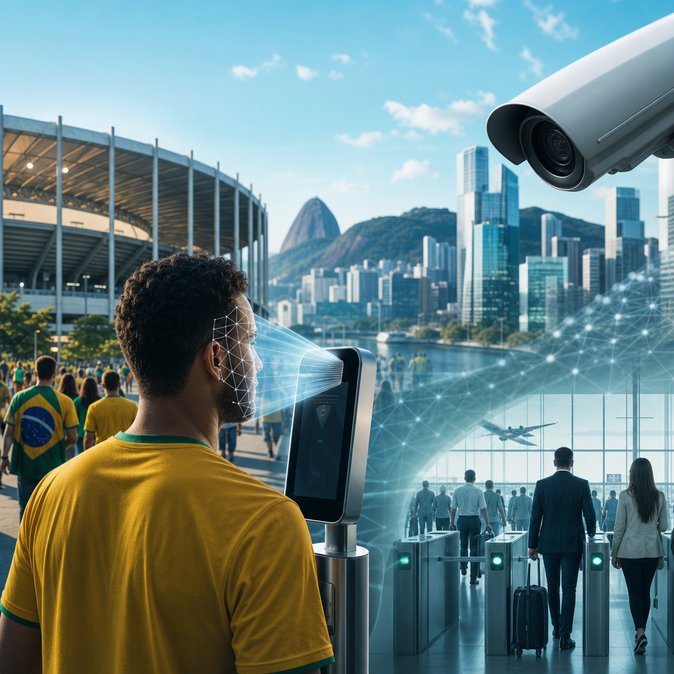
Fans heading to the sold-out Brazil v Panama pre-World-Cup friendly on 31 May will be the first to experience a new biometric access system that the Rio de Janeiro state government quietly confirmed in its Daily City Brief of 28 May. Entry to the Maracanã now requires prior enrolment on BePass, a platform that matches each ticket to the holder’s face using a live photo, RG or CNH number for locals, or passport data for foreign nationals. The pilot, coordinated by the Ministry of Justice’s Public Security Secretariat and the Brazilian Football Confederation (CBF), aims to stamp out ticket fraud and hooliganism ahead of high-profile sporting events—including the 2026 World Cup warm-up fixtures and the 2027 Copa América, for which Brazil has submitted a hosting bid. More than 65,000 domestic spectators and an estimated 3,500 international visitors (many arriving from Panama and the United States) completed remote registration during the first 48 hours before allocation closed.
![Brazil pilots mandatory facial-recognition ticketing for Brazil x Panama friendly at the Maracanã]()
Need to make sure your travelers have the right documents before they even get to the BePass stage? VisaHQ can streamline the visa and passport process for Brazil, guiding corporate mobility teams and individual fans through requirements, application forms and appointment scheduling. Our dedicated Brazil portal (https://www.visahq.com/brazil/) consolidates the latest consular updates, saves digital copies of approvals and syncs with trip itineraries so that travellers hit the facial-recognition gates with confidence.
For corporate mobility teams the implications extend beyond football. BePass uses the same FaceID engine that powers Brazil’s new e-Gates at Rio-Galeão and São Paulo–Guarulhos airports. Authorities see stadium deployments as a stress test before expanding the technology to border crossings, cruise terminals and large-scale business events such as Web Summit Rio. Companies planning incentive trips or conferences should therefore expect facial-biometric enrolment to become a standard pre-arrival requirement. Travellers who fail to register in advance will be denied stadium access; on-site booths are limited and require original passports. Data protection remains a concern: although BePass states that images are encrypted and stored for 60 days, privacy NGOs have called for an independent audit. Event organisers, meanwhile, praise the system’s speed—entry lanes process up to 400 people per minute, halving previous queuing times. If the friendly proceeds without major glitches, the CBF is expected to mandate BePass for all international matches played in Brazil from August onward, and the Ministry of Ports and Airports is considering linking the database with the federal traveller-declaration app. Mobility managers should monitor forthcoming regulations and update traveller briefings accordingly.
Need to make sure your travelers have the right documents before they even get to the BePass stage? VisaHQ can streamline the visa and passport process for Brazil, guiding corporate mobility teams and individual fans through requirements, application forms and appointment scheduling. Our dedicated Brazil portal (https://www.visahq.com/brazil/) consolidates the latest consular updates, saves digital copies of approvals and syncs with trip itineraries so that travellers hit the facial-recognition gates with confidence.
For corporate mobility teams the implications extend beyond football. BePass uses the same FaceID engine that powers Brazil’s new e-Gates at Rio-Galeão and São Paulo–Guarulhos airports. Authorities see stadium deployments as a stress test before expanding the technology to border crossings, cruise terminals and large-scale business events such as Web Summit Rio. Companies planning incentive trips or conferences should therefore expect facial-biometric enrolment to become a standard pre-arrival requirement. Travellers who fail to register in advance will be denied stadium access; on-site booths are limited and require original passports. Data protection remains a concern: although BePass states that images are encrypted and stored for 60 days, privacy NGOs have called for an independent audit. Event organisers, meanwhile, praise the system’s speed—entry lanes process up to 400 people per minute, halving previous queuing times. If the friendly proceeds without major glitches, the CBF is expected to mandate BePass for all international matches played in Brazil from August onward, and the Ministry of Ports and Airports is considering linking the database with the federal traveller-declaration app. Mobility managers should monitor forthcoming regulations and update traveller briefings accordingly.