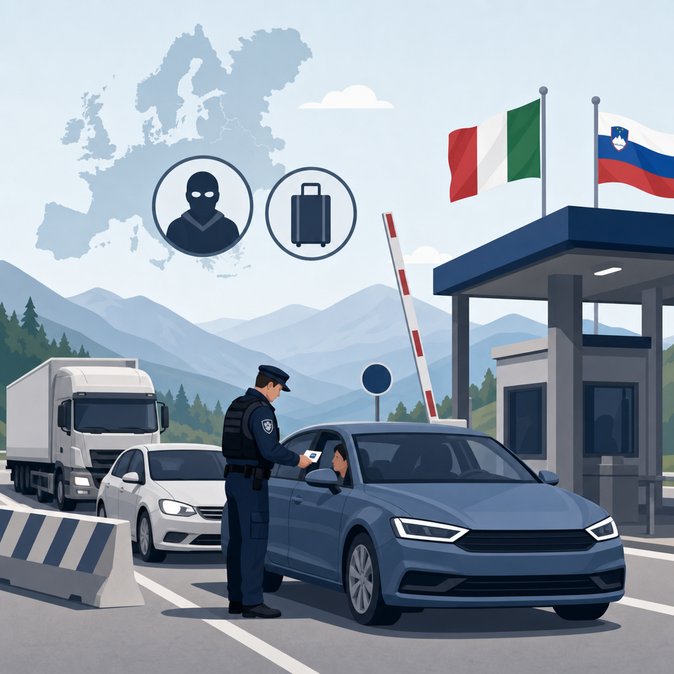
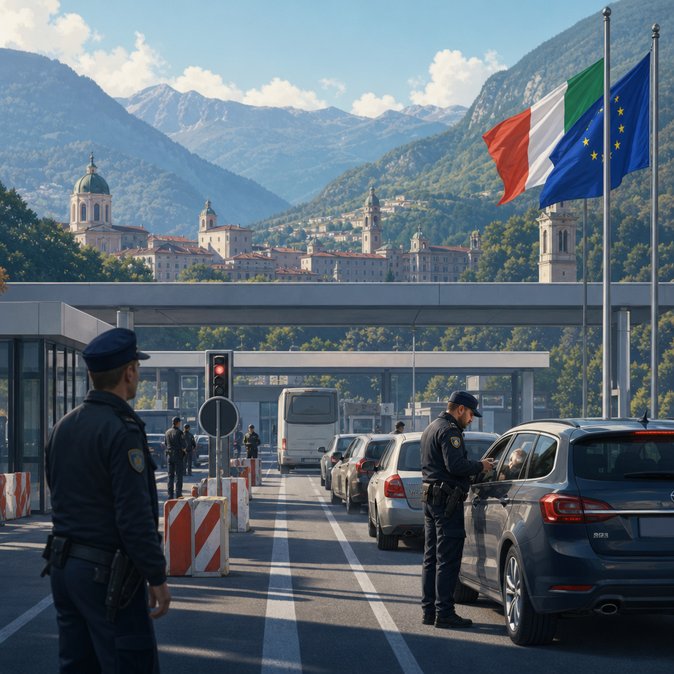
The Italian government has notified the European Commission that it will prolong temporary border controls on its land frontier with Slovenia until 18 December 2026. The decision, disclosed on 26 May, cites continuing risks linked to terrorism, organised migrant-smuggling networks and wider instability in the Middle East and Ukraine. Italy first re-introduced controls on the previously check-free Schengen border in October 2023 after an increase in irregular crossings along the Balkan route. Under Schengen rules, such checks are meant to be exceptional and time-limited, but member states can renew them in six-month increments if security threats persist. The latest extension keeps Italian police and customs officers in place at key crossings such as Fernetti and Gorizia-Nova Gorica.
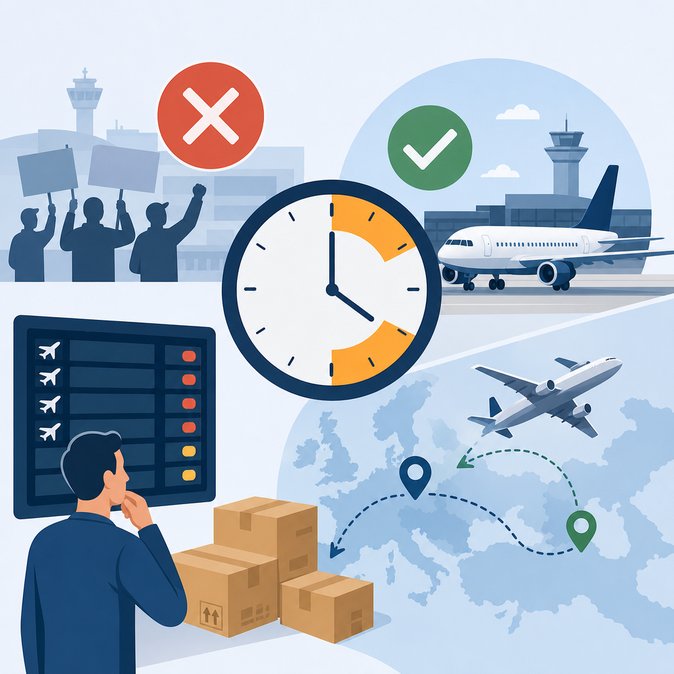
For freight and passenger transport, the practical impact remains moderate: the crossings stay open, but drivers should expect spot ID inspections and occasional queues, especially for coaches and vans. Logistics operators moving “just-in-time” components between northern Italy and Central Europe report average delays of 15-20 minutes, but warn that congestion can spike during holiday peaks or security alerts.
![Italy Extends Border Checks with Slovenia until 18 December amid Security Concerns]()
For individual travellers and corporate mobility managers seeking clarity on documentation requirements during the prolonged controls, VisaHQ’s Italian portal (https://www.visahq.com/italy/) offers up-to-date guidance on Schengen visa categories, residence permits and transit rules. The platform can also arrange expedited courier submission and real-time status tracking, helping minimise the risk of border delays associated with incomplete paperwork.
Business-immigration advisers note that the extension could affect third-country nationals who rely on visa-free onward travel within the Schengen Area. Travellers should keep passports and, where applicable, valid residence permits readily available and build extra buffer time into itineraries that include the Italy–Slovenia border. The move aligns Italy with several other Schengen states—such as the Netherlands and Austria—that have recently renewed internal checks citing migration pressure. Companies with cross-border staff rotations should continue to monitor advisories from both Italian and Slovenian authorities and maintain flexible routing options.
For freight and passenger transport, the practical impact remains moderate: the crossings stay open, but drivers should expect spot ID inspections and occasional queues, especially for coaches and vans. Logistics operators moving “just-in-time” components between northern Italy and Central Europe report average delays of 15-20 minutes, but warn that congestion can spike during holiday peaks or security alerts.
For individual travellers and corporate mobility managers seeking clarity on documentation requirements during the prolonged controls, VisaHQ’s Italian portal (https://www.visahq.com/italy/) offers up-to-date guidance on Schengen visa categories, residence permits and transit rules. The platform can also arrange expedited courier submission and real-time status tracking, helping minimise the risk of border delays associated with incomplete paperwork.
Business-immigration advisers note that the extension could affect third-country nationals who rely on visa-free onward travel within the Schengen Area. Travellers should keep passports and, where applicable, valid residence permits readily available and build extra buffer time into itineraries that include the Italy–Slovenia border. The move aligns Italy with several other Schengen states—such as the Netherlands and Austria—that have recently renewed internal checks citing migration pressure. Companies with cross-border staff rotations should continue to monitor advisories from both Italian and Slovenian authorities and maintain flexible routing options.