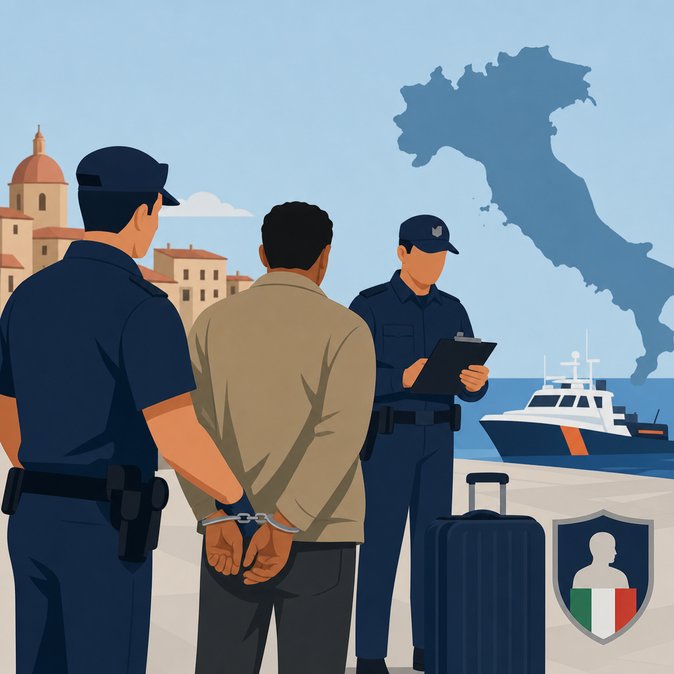
Italian authorities in the southern region of Calabria intensified street-level immigration inspections over the weekend, leading to the arrest and expulsion of a 40-year-old Moroccan man found to be living and working in the country without documentation. The operation, announced on 24 May 2026 by the Crotone Police Headquarters, is part of a broader Interior-Ministry push to verify the status of foreign nationals in provinces that have seen a rise in informal agricultural and logistics work. Officers conducted checks at roadblocks on routes linking the port city to inland farming communes and along coastal areas frequently used by small boats arriving from Turkey and North Africa. The man, who had a previous expulsion order dating from 2024, was discovered without identity papers and, according to police, was considered a flight-risk. The prefect issued an immediate removal decree, and he has been transferred to the Ponte Galeria detention centre near Rome pending deportation. The sweep reflects tougher enforcement following passage of Decree-Law 23/2026 on security and migration earlier this spring, which grants prefects wider powers to detain irregular migrants for up to 18 months and accelerates procedures for repatriation when bilateral agreements exist.
![Calabria steps up irregular-migration checks; Moroccan national expelled from Crotone]()
At a time when documentation rules are under such close scrutiny, VisaHQ can simplify the process for both individuals and employers by providing step-by-step guidance on Italian visas, work permits and residence titles. Their dedicated Italy page (https://www.visahq.com/italy/) consolidates the latest requirements, application forms and processing times, helping applicants avoid costly mistakes and ensuring companies stay compliant during hiring or renewal cycles.
Employers found harbouring or hiring undocumented workers now face fines of up to €10,000 per employee and temporary closure orders. For companies that rely on seasonal labour in Calabria’s citrus and olive sectors, the crackdown underscores the importance of using legal hiring channels under the ‘decreto flussi’ quota system or the EU Blue Card scheme. Human-resources teams should audit subcontractors’ compliance and ensure that foreign assignees carry valid permits at all times, as roadside ID checks are likely to continue through the summer harvest. Foreign residents awaiting renewal appointments are advised to keep copies of expired permits along with the receipt of renewal application (‘cedolino’) to avoid detention during spot checks. Legal-aid organisations in Crotone report a surge in requests for assistance since the new decree came into force, suggesting that processing backlogs persist despite digitalisation efforts at local immigration desks.

At a time when documentation rules are under such close scrutiny, VisaHQ can simplify the process for both individuals and employers by providing step-by-step guidance on Italian visas, work permits and residence titles. Their dedicated Italy page (https://www.visahq.com/italy/) consolidates the latest requirements, application forms and processing times, helping applicants avoid costly mistakes and ensuring companies stay compliant during hiring or renewal cycles.
Employers found harbouring or hiring undocumented workers now face fines of up to €10,000 per employee and temporary closure orders. For companies that rely on seasonal labour in Calabria’s citrus and olive sectors, the crackdown underscores the importance of using legal hiring channels under the ‘decreto flussi’ quota system or the EU Blue Card scheme. Human-resources teams should audit subcontractors’ compliance and ensure that foreign assignees carry valid permits at all times, as roadside ID checks are likely to continue through the summer harvest. Foreign residents awaiting renewal appointments are advised to keep copies of expired permits along with the receipt of renewal application (‘cedolino’) to avoid detention during spot checks. Legal-aid organisations in Crotone report a surge in requests for assistance since the new decree came into force, suggesting that processing backlogs persist despite digitalisation efforts at local immigration desks.