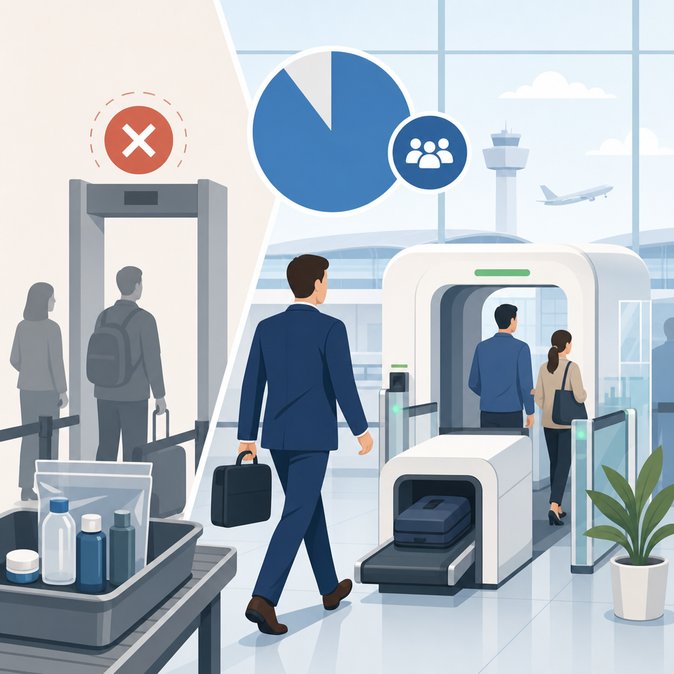
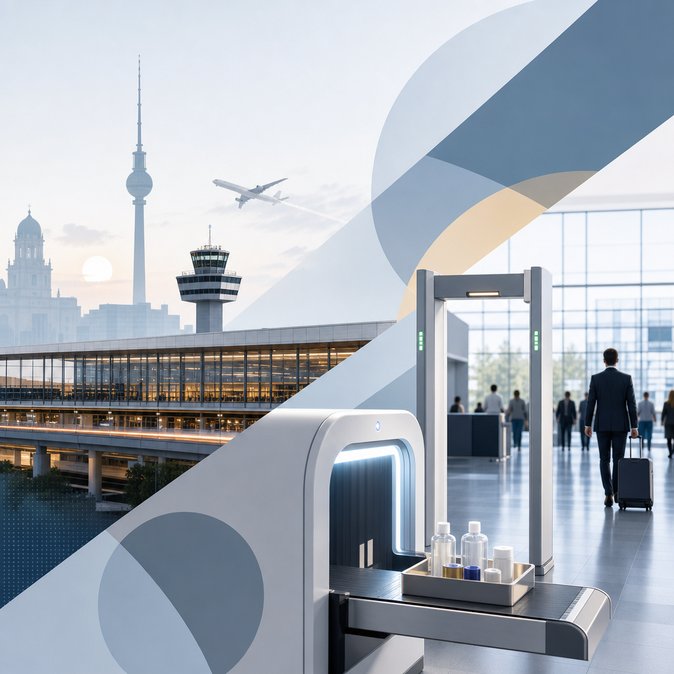
Business travellers passing through Berlin Brandenburg Airport (BER) will notice a quiet but important change from 26 May 2026: the free “BER Runway” fast-lane reservation service has been switched off indefinitely. Airport management told the Berliner Zeitung that demand for the pre-booked time slots collapsed after Terminals 1 and 2 completed the roll-out of next-generation computed-tomography (CT) scanners at 24 security lanes. The CT machines allow passengers to leave laptops and liquids (up to two litres) inside cabin bags, cutting average screening times to well under a minute. In April, nine out of ten travellers who had reserved a Runway slot simply abandoned it and queued at a CT-equipped lane instead. With five million slots booked since the system’s launch in 2022 but utilisation now in free-fall, the airport concluded that the dedicated Runway checkpoint no longer offered a meaningful advantage.
![Berlin Brandenburg Airport Scraps ‘BER Runway’ Fast-Lane Booking as CT Scanners Speed Security]()
Whether your team is travelling frequently to Germany or only connecting through Berlin, having the correct documentation remains vital. VisaHQ’s streamlined platform (https://www.visahq.com/germany/) can verify passport validity, identify any visa requirements and manage applications end-to-end, letting business travellers breeze through immigration just as quickly as they now move through BER’s CT-equipped security lanes.
For corporate mobility planners the change removes the need to pre-register executives for specific security windows – a welcome simplification during tight connection schedules. Travel managers should, however, brief staff that the former Runway area still operates conventional X-ray machines until at least autumn 2026; anyone accidentally directed there will face the old 100-ml liquid rule and longer bin-loading times. The decision also signals a broader shift in German airport operations. Hamburg and Düsseldorf confirmed that they too will phase out premium security booking once CT coverage exceeds 80 percent of lanes. Munich is piloting a mixed model that keeps paid fast-track but reduces its footprint as CT scanners expand. Looking forward, BER says it will revisit the Runway concept once all lanes use CT technology. A relaunch could transform the former fast-lane corridor into a pop-up checkpoint for peak-season surges or large MICE (Meetings, Incentives, Conferences, Exhibitions) delegations. Until then, travellers should check live wait-time dashboards on the BER app and factor in the usual morning peaks for UK and U.S. departures, where additional interview questions can still cause brief delays despite the faster scanners.
Whether your team is travelling frequently to Germany or only connecting through Berlin, having the correct documentation remains vital. VisaHQ’s streamlined platform (https://www.visahq.com/germany/) can verify passport validity, identify any visa requirements and manage applications end-to-end, letting business travellers breeze through immigration just as quickly as they now move through BER’s CT-equipped security lanes.
For corporate mobility planners the change removes the need to pre-register executives for specific security windows – a welcome simplification during tight connection schedules. Travel managers should, however, brief staff that the former Runway area still operates conventional X-ray machines until at least autumn 2026; anyone accidentally directed there will face the old 100-ml liquid rule and longer bin-loading times. The decision also signals a broader shift in German airport operations. Hamburg and Düsseldorf confirmed that they too will phase out premium security booking once CT coverage exceeds 80 percent of lanes. Munich is piloting a mixed model that keeps paid fast-track but reduces its footprint as CT scanners expand. Looking forward, BER says it will revisit the Runway concept once all lanes use CT technology. A relaunch could transform the former fast-lane corridor into a pop-up checkpoint for peak-season surges or large MICE (Meetings, Incentives, Conferences, Exhibitions) delegations. Until then, travellers should check live wait-time dashboards on the BER app and factor in the usual morning peaks for UK and U.S. departures, where additional interview questions can still cause brief delays despite the faster scanners.