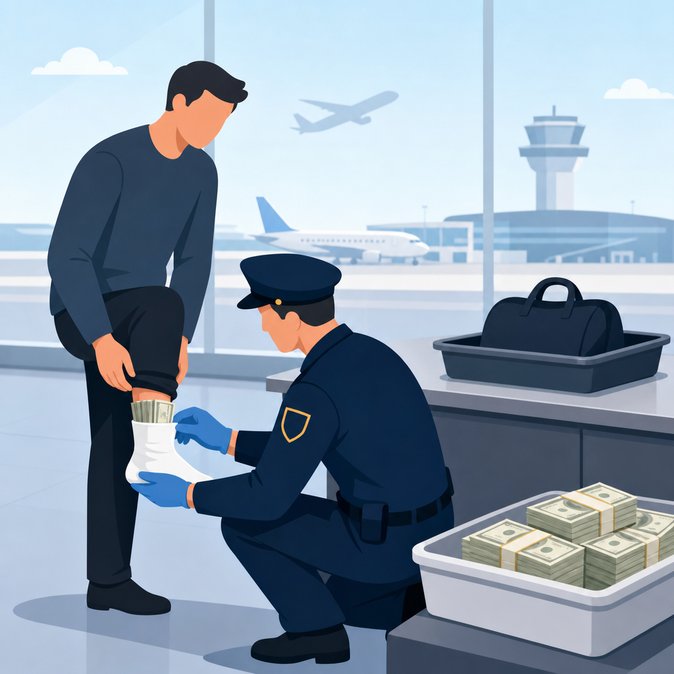
Cyprus’s Customs & Excise Department has reminded travellers that cash controls are very much alive after officers at Paphos International Airport confiscated €199,950 from a Ukrainian passenger arriving from Dublin on 24 May. According to an official statement released on 26 May, X-ray screening revealed 13 socks stuffed with €50 and €100 notes hidden inside pairs of shoes. The passenger failed to declare the sum, breaching EU Regulation 2018/1672 on cash entering or leaving the Union. Under Cypriot and EU law, travellers must declare amounts of €10,000 or more in cash (or equivalent assets such as bearer cheques and gold) when crossing the external border. Non-declaration allows customs officers to seize the full amount pending investigation; administrative fines can reach 30 % of the undeclared funds, and criminal charges are possible if money-laundering is suspected.
![Cyprus customs officers seize nearly €200,000 of undeclared cash concealed in passenger’s socks at Paphos Airport]()
Need extra help navigating these rules? VisaHQ’s dedicated Cyprus page (https://www.visahq.com/cyprus/) centralises the latest customs guidance, lets you submit electronic cash declarations in advance, and offers one-to-one support so your employees land fully compliant and stress-free.
The case is a timely warning for business travellers who routinely carry expenses or high-value equipment into Cyprus. Although the island is not yet part of Schengen, its cash-control rules mirror the bloc’s regulations and enforcement has tightened in the run-up to expected accession in 2026-27. Corporate mobility teams should brief employees—especially project managers paid in cash-heavy sectors such as construction or maritime services—on declaration thresholds and keep supporting documents (invoices, contracts, proof of salary withdrawals) ready for inspection. Beyond the immediate compliance lesson, the incident underscores the growing role of data-driven risk profiling at Cypriot airports. Customs officials confirmed that they acted on intelligence from the Drug Law Enforcement Unit rather than random selection, highlighting increased inter-agency cooperation. Travellers arriving from or transiting via high-risk routes should therefore expect more targeted searches—including for undeclared tech devices after recent export-control updates. For companies relocating staff to Cyprus or routing teams through Irish and UK hubs into Paphos and Larnaca, the practical advice is simple: file online cash declarations in advance where possible, factor potential inspection delays into schedules, and maintain written policies that align with both Cypriot and EU regulations to avoid reputational and financial penalties.

Need extra help navigating these rules? VisaHQ’s dedicated Cyprus page (https://www.visahq.com/cyprus/) centralises the latest customs guidance, lets you submit electronic cash declarations in advance, and offers one-to-one support so your employees land fully compliant and stress-free.
The case is a timely warning for business travellers who routinely carry expenses or high-value equipment into Cyprus. Although the island is not yet part of Schengen, its cash-control rules mirror the bloc’s regulations and enforcement has tightened in the run-up to expected accession in 2026-27. Corporate mobility teams should brief employees—especially project managers paid in cash-heavy sectors such as construction or maritime services—on declaration thresholds and keep supporting documents (invoices, contracts, proof of salary withdrawals) ready for inspection. Beyond the immediate compliance lesson, the incident underscores the growing role of data-driven risk profiling at Cypriot airports. Customs officials confirmed that they acted on intelligence from the Drug Law Enforcement Unit rather than random selection, highlighting increased inter-agency cooperation. Travellers arriving from or transiting via high-risk routes should therefore expect more targeted searches—including for undeclared tech devices after recent export-control updates. For companies relocating staff to Cyprus or routing teams through Irish and UK hubs into Paphos and Larnaca, the practical advice is simple: file online cash declarations in advance where possible, factor potential inspection delays into schedules, and maintain written policies that align with both Cypriot and EU regulations to avoid reputational and financial penalties.
More From Cyprus
View all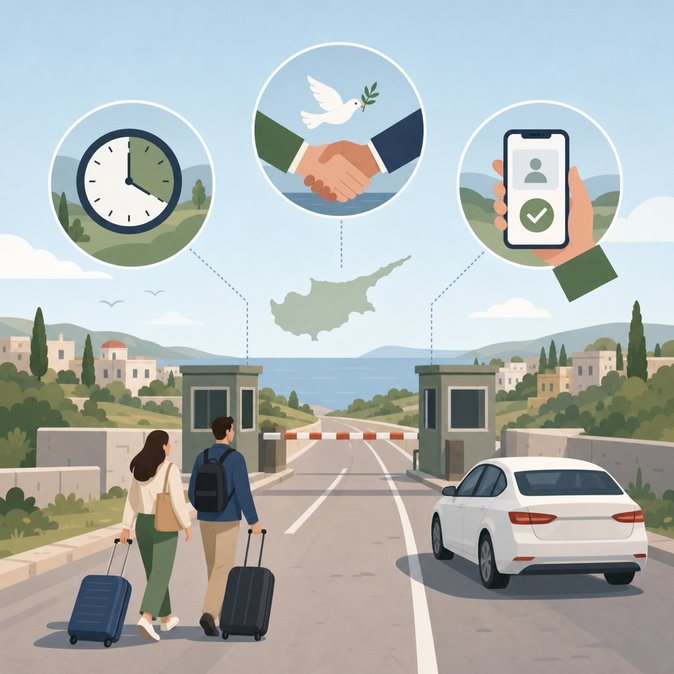
UN envoy’s June visit aims at new confidence-building steps that could ease daily crossings on divided island

Far-right ELAM surge in Cypriot elections raises prospect of tougher migration and visa rules