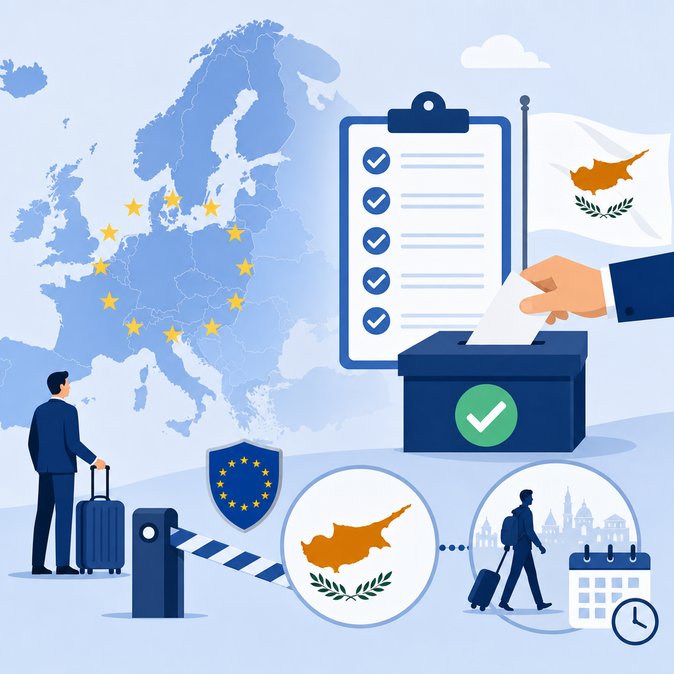
The European Commission’s fifth State of Schengen report, published on 18 May 2026 and presented publicly on 20 May 2026, puts Cyprus firmly back on the fast track toward joining Europe’s passport-free travel zone. Brussels notes that a December 2025 monitoring mission confirmed that Cyprus has deployed all core IT platforms—-including the Schengen Information System (SIS) and the biometric Entry/Exit System (EES)—-and has upgraded immigration-control infrastructure at Larnaca and Paphos airports as well as the main seaports. For multinational companies and their mobility departments, the endorsement is significant.
![Brussels Praises Cyprus’ Schengen Readiness in 2026 State of Schengen Report]()
At this juncture, organisations seeking practical help with Cyprus travel paperwork can lean on VisaHQ. The firm’s portal (https://www.visahq.com/cyprus/) simplifies visa applications, tracks processing in real time and offers expert updates on the shifting Schengen landscape—ensuring both corporate mobility teams and individual travellers stay ahead of compliance changes.
Once Cyprus formally joins Schengen, EU-based assignees will be able to relocate to the island without internal border checks, while Cyprus-based staff will gain seamless access to 25 other Schengen states for meetings, training and short-term projects. In the interim, employers must continue to navigate a dual regime: Schengen-style checks already operate for EU travellers at Cypriot airports, but third-country nationals still require a national visa or residence permit until accession is completed. The Commission’s report also links Cyprus’ accession to wider digital reforms such as the rollout of the European Travel Information and Authorisation System (ETIAS) for visa-exempt visitors in late 2026. Companies planning cross-border travel should therefore align internal systems with the new EES/ETIAS data fields—-especially passport chip and biometric requirements—-to avoid last-minute disruptions once Cyprus’ Schengen timetable is announced. Politically, a unanimous vote of existing Schengen members is still required, but Brussels signals that the decision is now less about technical compliance and more about calendar management and regional security consultations. Analysts in Nicosia expect the Council to schedule the vote after final EES stress tests this autumn, paving the way for a launch window in early 2027 at the latest. For global mobility managers, the key take-away is clear: Cyprus is likely to become an integral part of the borderless zone within the strategic planning horizon for 2027 assignments. Now is the time to update policy manuals, cost projections and traveller-tracking tools so that corporate programmes can capitalise on a friction-free Eastern Mediterranean hub once the green light is given.

At this juncture, organisations seeking practical help with Cyprus travel paperwork can lean on VisaHQ. The firm’s portal (https://www.visahq.com/cyprus/) simplifies visa applications, tracks processing in real time and offers expert updates on the shifting Schengen landscape—ensuring both corporate mobility teams and individual travellers stay ahead of compliance changes.
Once Cyprus formally joins Schengen, EU-based assignees will be able to relocate to the island without internal border checks, while Cyprus-based staff will gain seamless access to 25 other Schengen states for meetings, training and short-term projects. In the interim, employers must continue to navigate a dual regime: Schengen-style checks already operate for EU travellers at Cypriot airports, but third-country nationals still require a national visa or residence permit until accession is completed. The Commission’s report also links Cyprus’ accession to wider digital reforms such as the rollout of the European Travel Information and Authorisation System (ETIAS) for visa-exempt visitors in late 2026. Companies planning cross-border travel should therefore align internal systems with the new EES/ETIAS data fields—-especially passport chip and biometric requirements—-to avoid last-minute disruptions once Cyprus’ Schengen timetable is announced. Politically, a unanimous vote of existing Schengen members is still required, but Brussels signals that the decision is now less about technical compliance and more about calendar management and regional security consultations. Analysts in Nicosia expect the Council to schedule the vote after final EES stress tests this autumn, paving the way for a launch window in early 2027 at the latest. For global mobility managers, the key take-away is clear: Cyprus is likely to become an integral part of the borderless zone within the strategic planning horizon for 2027 assignments. Now is the time to update policy manuals, cost projections and traveller-tracking tools so that corporate programmes can capitalise on a friction-free Eastern Mediterranean hub once the green light is given.