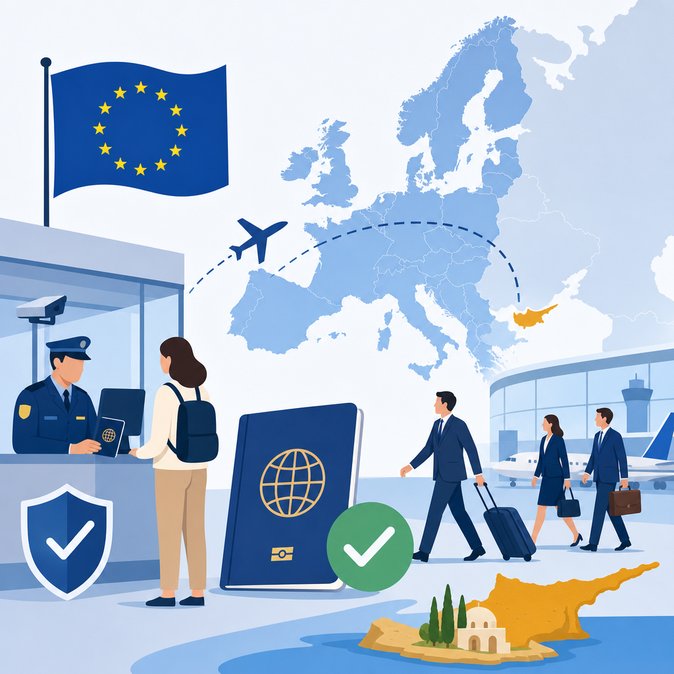
Cyprus has inched closer to joining the passport-free Schengen area after receiving a favourable assessment in the European Commission’s 2026 “State of Schengen” report. The document, released in Brussels on 20 May, singles out Nicosia’s reforms to border management, visa processing and police-database connectivity as “substantial” and “on schedule”. Inspectors who visited Larnaca and Paphos airports in December 2025 reported that new biometric kiosks, API/PNR data links and upgraded watch-list vetting are already operating at near-Schengen standards. Schengen accession would abolish systematic checks for travellers arriving from the other 27 Schengen states, a change with big implications for business mobility. Companies based in Cyprus—especially shipping, fintech and energy firms that move staff frequently between EU capitals—stand to save both time and legal fees once employees no longer need a separate Cypriot entry stamp. Airlines and tour operators are also lobbying for rapid accession, arguing that smoother transfers will help the island rebuild tourist numbers after a difficult spring.
Whether you’re an employer managing international assignees or a tourist planning a Mediterranean getaway, VisaHQ can streamline the paperwork ahead of these impending changes. The company’s Cyprus page (https://www.visahq.com/cyprus/) tracks the latest requirements in real time and lets users submit visa or residence-permit applications online—services that will seamlessly transition to the new Schengen rules the moment they take effect, ensuring travellers stay compliant without the administrative headache.
![Brussels hails Cyprus’ progress toward Schengen membership]()
Still, several hurdles remain. The Commission asked Cyprus to finalise its automated entry–exit database by October and to expand joint patrols along the Green Line to prevent irregular crossings from the north. In Brussels, some member states—including Germany and Austria—want clearer data on deportations and asylum-backlogs before giving the final green light. Diplomats say a political decision could come as early as the Justice and Home Affairs Council in December, but only if technical milestones are met.
For HR and mobility managers, the message is to prepare early. Employers will need to update posted-worker notifications and reassess which staff might benefit from visa-free short-term travel versus longer-term permits that remain national in scope. Relocation providers also advise reviewing assignee handbooks: once Cyprus joins Schengen, day-to-day compliance (for example, registration deadlines and address notifications) will change, as will permissible stay limits under the 90/180-day rule. Companies should start mapping these workflows now so they can flip the switch quickly when accession is officially announced.
In the wider geopolitical context, Brussels views Cyprus as a strategic southern surveillance hub. The report praises the island’s intelligence feeds on Eastern Mediterranean migration routes and calls its e-gate rollout “a model for other future Schengen entrants”. With Romania and Bulgaria finally joining earlier this year, Cyprus could soon complete the EU’s long-delayed enlargement of the free-movement zone. That would cap almost a decade of reforms and firmly anchor the republic at the heart of Europe’s mobility architecture.
Whether you’re an employer managing international assignees or a tourist planning a Mediterranean getaway, VisaHQ can streamline the paperwork ahead of these impending changes. The company’s Cyprus page (https://www.visahq.com/cyprus/) tracks the latest requirements in real time and lets users submit visa or residence-permit applications online—services that will seamlessly transition to the new Schengen rules the moment they take effect, ensuring travellers stay compliant without the administrative headache.

Still, several hurdles remain. The Commission asked Cyprus to finalise its automated entry–exit database by October and to expand joint patrols along the Green Line to prevent irregular crossings from the north. In Brussels, some member states—including Germany and Austria—want clearer data on deportations and asylum-backlogs before giving the final green light. Diplomats say a political decision could come as early as the Justice and Home Affairs Council in December, but only if technical milestones are met.
For HR and mobility managers, the message is to prepare early. Employers will need to update posted-worker notifications and reassess which staff might benefit from visa-free short-term travel versus longer-term permits that remain national in scope. Relocation providers also advise reviewing assignee handbooks: once Cyprus joins Schengen, day-to-day compliance (for example, registration deadlines and address notifications) will change, as will permissible stay limits under the 90/180-day rule. Companies should start mapping these workflows now so they can flip the switch quickly when accession is officially announced.
In the wider geopolitical context, Brussels views Cyprus as a strategic southern surveillance hub. The report praises the island’s intelligence feeds on Eastern Mediterranean migration routes and calls its e-gate rollout “a model for other future Schengen entrants”. With Romania and Bulgaria finally joining earlier this year, Cyprus could soon complete the EU’s long-delayed enlargement of the free-movement zone. That would cap almost a decade of reforms and firmly anchor the republic at the heart of Europe’s mobility architecture.