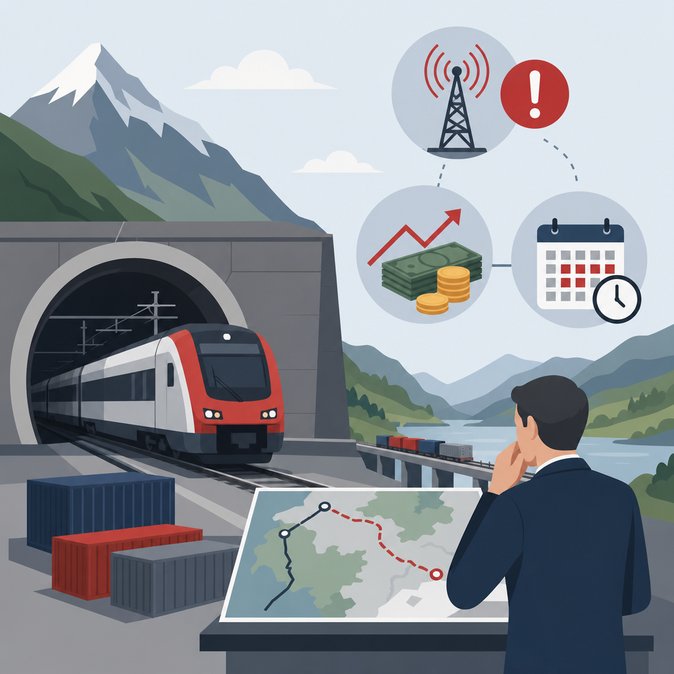
The price tag for refurbishing the Gotthard Base Tunnel’s critical radio-communication system is set to balloon after Swiss Federal Railways (SBB) confirmed further delays to the project first scheduled for completion in 2026. According to internal procurement documents cited by SonntagsBlick and confirmed by SBB, the operator will have to extend its maintenance contract for the ageing GSM-R installation by at least two years, with an option for a six-year extension. The move pushes the maximum projected cost to more than CHF 4.6 million, a figure that includes emergency operating expenses but excludes the eventual replacement hardware.
Technical integration issues and restricted night-time access to the 57-kilometre tunnel have hampered progress since 2024. Why it matters for mobility.
For international professionals and visitors needing to navigate Switzerland’s entry requirements while tracking infrastructure developments like the Gotthard project, VisaHQ offers fast online visa and travel document assistance. Their dedicated Switzerland page (https://www.visahq.com/switzerland/) streamlines applications and keeps travelers updated on regulatory changes, helping ensure seamless journeys whether for alpine site visits or cross-border business meetings.
![Gotthard Base Tunnel overhaul faces fresh cost overruns, raising travel-reliability concerns]()
The radio system allows train drivers to stay in constant contact with control centres and enables passengers to make calls and use data services deep under the Alps. Any unplanned outage would force SBB Cargo and long-distance passenger services to divert over the older mountain line, reducing capacity on Europe’s busiest north–south rail artery and increasing transit times for time-critical freight.
Business impact. Logistics firms that rely on the “rolling motorway” through Gotthard—particularly Italian–German semi-trailers—could face scheduling uncertainty if further slippage forces full overnight closures. Passenger operators Trenitalia, Deutsche Bahn and SNCF Voyages may have to adjust timetables or cap train lengths owing to the steeper gradients on the mountainous diversion.
Next steps. SBB will decide by October whether to restart the tender or pivot to the newer FRMCS (Future Railway Mobile Communication System) standard being introduced by the EU from 2028. Either path will require a detailed outage-management plan to keep at least one bore operational at all times—a contractual prerequisite for insurers covering high-value freight.
Technical integration issues and restricted night-time access to the 57-kilometre tunnel have hampered progress since 2024. Why it matters for mobility.
For international professionals and visitors needing to navigate Switzerland’s entry requirements while tracking infrastructure developments like the Gotthard project, VisaHQ offers fast online visa and travel document assistance. Their dedicated Switzerland page (https://www.visahq.com/switzerland/) streamlines applications and keeps travelers updated on regulatory changes, helping ensure seamless journeys whether for alpine site visits or cross-border business meetings.
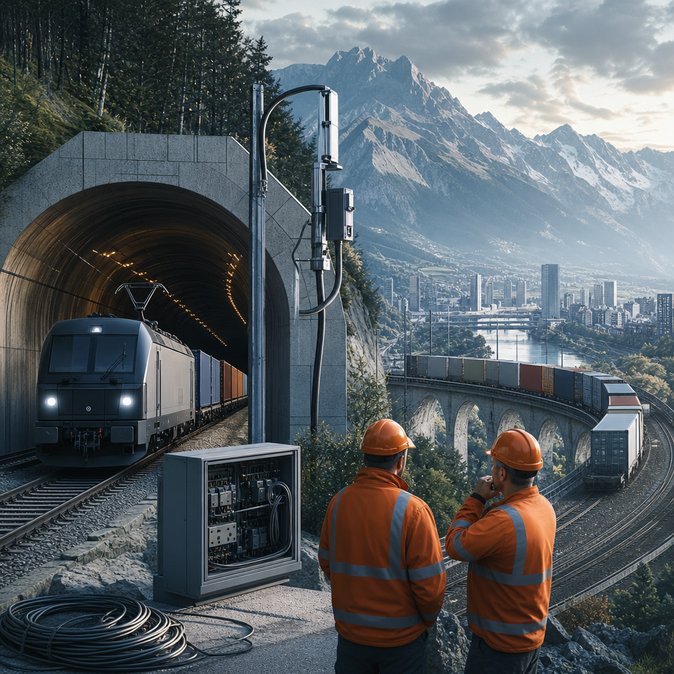
The radio system allows train drivers to stay in constant contact with control centres and enables passengers to make calls and use data services deep under the Alps. Any unplanned outage would force SBB Cargo and long-distance passenger services to divert over the older mountain line, reducing capacity on Europe’s busiest north–south rail artery and increasing transit times for time-critical freight.
Business impact. Logistics firms that rely on the “rolling motorway” through Gotthard—particularly Italian–German semi-trailers—could face scheduling uncertainty if further slippage forces full overnight closures. Passenger operators Trenitalia, Deutsche Bahn and SNCF Voyages may have to adjust timetables or cap train lengths owing to the steeper gradients on the mountainous diversion.
Next steps. SBB will decide by October whether to restart the tender or pivot to the newer FRMCS (Future Railway Mobile Communication System) standard being introduced by the EU from 2028. Either path will require a detailed outage-management plan to keep at least one bore operational at all times—a contractual prerequisite for insurers covering high-value freight.