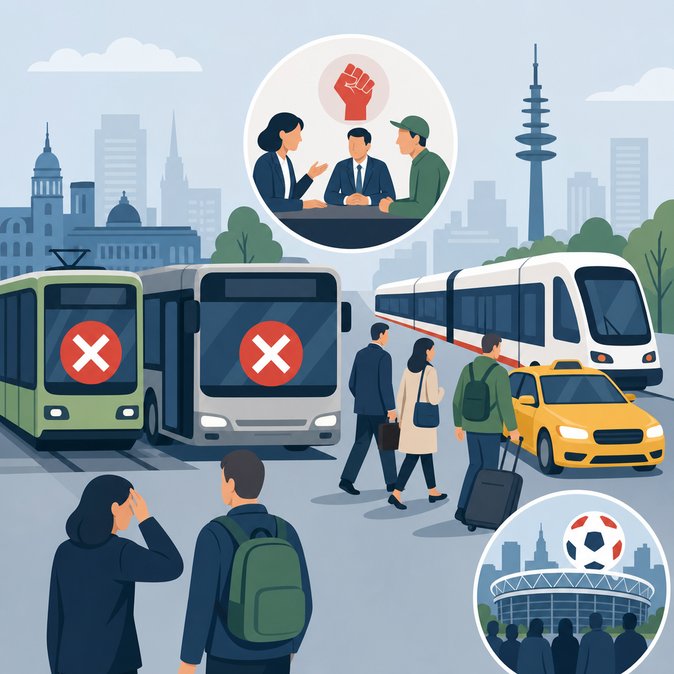
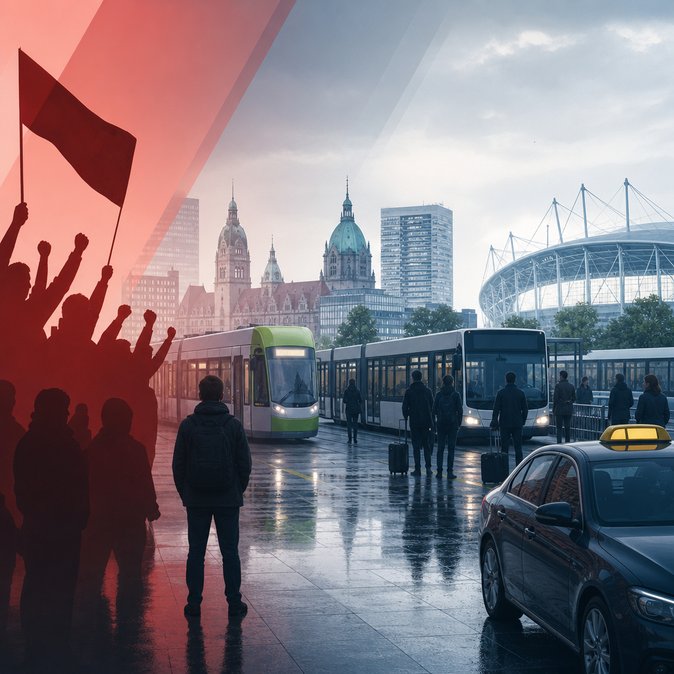
Commuters and international visitors to Hannover faced a complete shutdown of the city’s trams and buses on 20 and 21 May 2026 after public-sector union ver.di called a 48-hour warning strike at ÜSTRA and its regional partner Regiobus. From the first scheduled departure (≈03:00) until close of service each day, none of the 12 Stadtbahn lines and more than 150 bus routes operated, forcing travellers onto limited S-Bahn, regional rail and on-demand sprinti shuttles. Impact on global mobility. The walkout hit several corporate hotspots: Hannover Messe’s south gate recorded a 62 % drop in badge swipes, while the Medical School (MHH) chartered its own shuttle between Karl-Wiechert-Allee station and the campus to ensure access for staff, patients and international researchers. Expat families reported 90-minute school runs, and ride-hail surge pricing reached €78 for a 7-km city-centre trip at peak time. Employer response. Multinationals including Continental and TUI switched critical meetings online and activated mobility allowances under their Betriebsvereinbarungen, reimbursing taxis and e-bike rentals for posted staff and long-term contractors. Several relocation providers sent real-time advisories to newly arrived assignees, reminding them that residence-permit collection at Ausländerbehörde appointments could be re-scheduled without penalty. Negotiation context. Ver.di is pushing for a €650 flat-rate monthly pay rise or 15 % over 12 months for the 2 600 employees at ÜSTRA, citing staff shortages and inflation. Management offered 8 % plus a one-off €1 000 payment. Talks resume on 27 May; further strikes remain possible, with ver.di threatening to target the Euro 2026 group-stage matches hosted in Hannover next month. Travel advice. Mobility managers with employees in Hannover should: 1) maintain contingency budgets for alternative transport; 2) brief visa applicants and Blue-Card holders that biometrics appointments may be disrupted; 3) monitor ÜSTRA channels for the 48-hour strike notice required by Lower-Saxony mediation rules.
![Two-day ÜSTRA and Regiobus strike paralyses Hannover public transport]()
For assignees who need to rearrange residence-permit or visa appointments because of transport disruptions, VisaHQ can help streamline the process. Its dedicated Germany portal (https://www.visahq.com/germany/) offers real-time slot monitoring, document pre-check and expedited courier options, ensuring that delayed biometrics or pick-up dates don’t derail project timelines.
For now, Deutsche Bahn regional services and long-distance ICE operations continue as scheduled, but capacity is tight – booking seats is strongly recommended.
For assignees who need to rearrange residence-permit or visa appointments because of transport disruptions, VisaHQ can help streamline the process. Its dedicated Germany portal (https://www.visahq.com/germany/) offers real-time slot monitoring, document pre-check and expedited courier options, ensuring that delayed biometrics or pick-up dates don’t derail project timelines.
For now, Deutsche Bahn regional services and long-distance ICE operations continue as scheduled, but capacity is tight – booking seats is strongly recommended.
More From Germany
View all
Bundestag votes to cut Germany’s air-travel tax from 1 July 2026
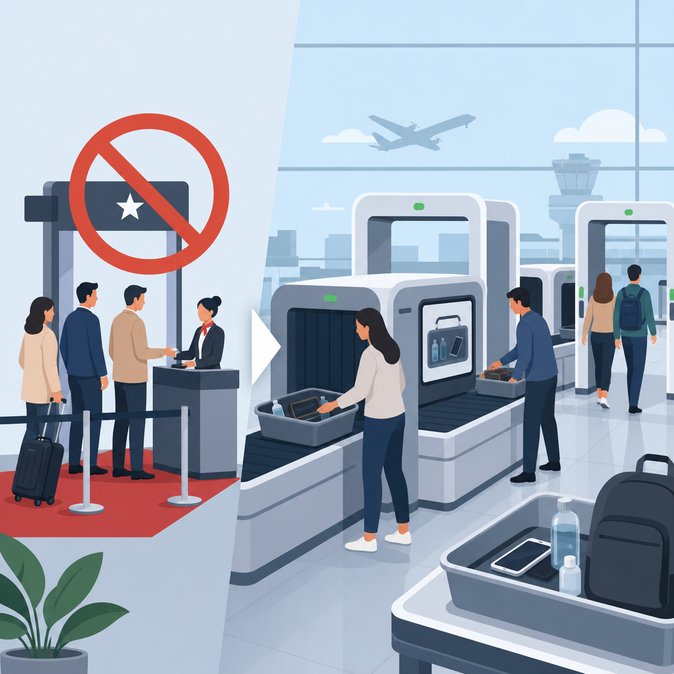
Berlin Brandenburg Airport drops “BER Runway” time-slot service as CT scanners reshape security flow