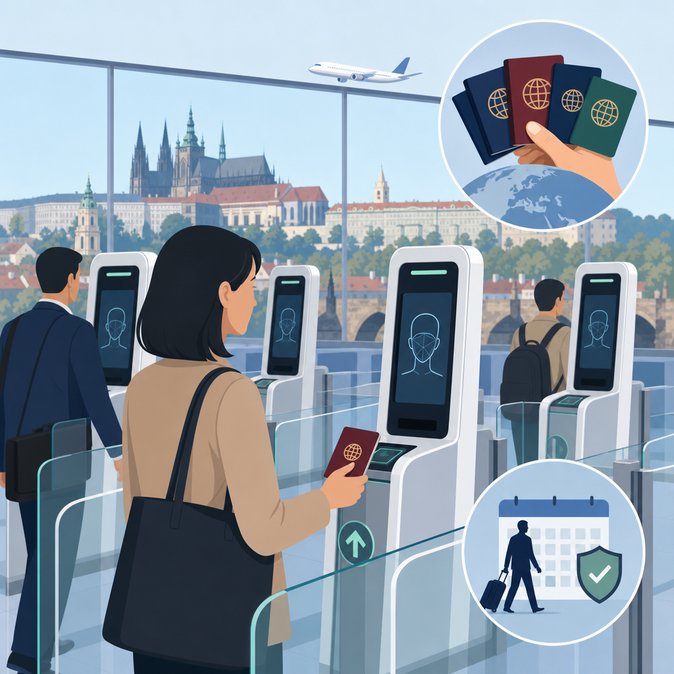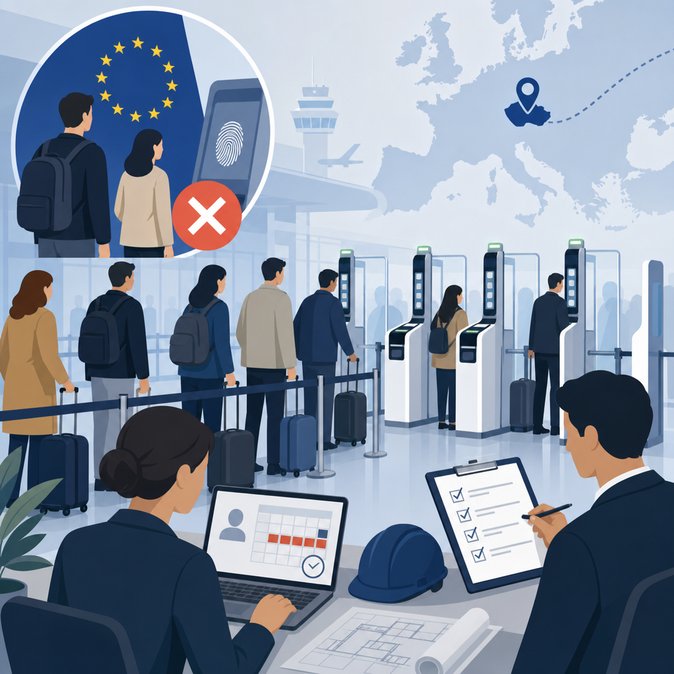
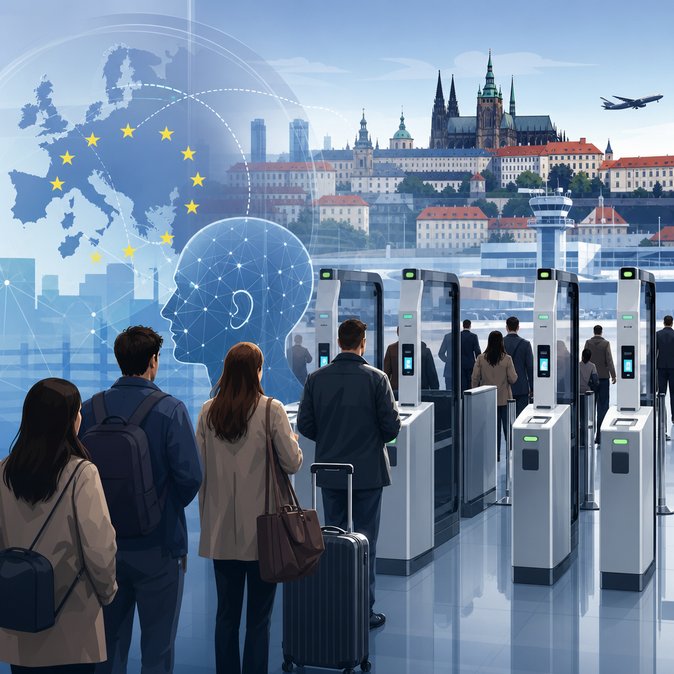
Prague—Thousands of non-EU travellers have already been denied entry or flagged for potential overstays since the European Union switched on its long-awaited Entry/Exit System (EES) in April. A detailed analysis published on 21 May confirms that more than 32 000 refusals have been registered across the Schengen Area, with biometric kiosks now logging every external border crossing in real time. Prague’s Václav Havel Airport, which completed its own EES hardware upgrade in March, reported queue times of up to 45 minutes on the first bank-holiday weekend in May, forcing ground handlers to reopen several manned booths during peak waves. For Czech employers the stakes are high. Under Schengen rules, assignees and frequent business visitors may spend only 90 days within any 180-day period, regardless of how often they re-enter. “The days of lost passport stamps and ‘don’t ask, don’t tell’ are over,” warns Kateřina Pavlíková, mobility lead at Škoda Auto. “If an engineer is booked for a conference in Spain after using up his 90 days in Germany, the system will refuse him automatically—and the project timeline collapses.”
![EU Digital Entry/Exit System Flags Thousands; Czech Firms Told to Update Travel Policies]()
For travellers and corporate mobility managers looking for an extra layer of protection, VisaHQ offers a quick way to run Schengen day-count calculations, verify document requirements and arrange visa extensions online. Its Czech portal (https://www.visahq.com/czech-republic/) bundles these tools with live customer support in English and Czech, making it easier to stay one step ahead of EES auto-refusals.
The Ministry of the Interior has circulated a bilingual briefing urging companies to audit travel calendars, instructing staff to keep screenshots of the EES kiosk receipt and to arrive at Prague Airport at least 30 minutes earlier until summer staffing stabilises. Multinationals are adding EES compliance modules to their learning portals and asking relocation vendors to run quarterly day-count checks. Airlines, meanwhile, fear operational knock-ons. CSA and Smartwings told the Czech Air Transport Association they have budgeted extra ground time for Schengen flights until at least September. Budapest-based Wizz Air has shifted the departure of its morning Prague–Rome service from 06:20 to 06:40 to absorb possible delays at boarding control. With July tourist volumes projected to break 2019 records, Prague Airport is accelerating the installation of 14 additional e-gates and recruiting Czech- and English-speaking ‘EES ambassadors’ to walk passengers through fingerprint scans. “Queues will normalise, but only if travellers—and the companies that send them—understand that the algorithm is unforgiving,” says Pavlíková. Failing to adapt, she adds, could see Czech exporters lose precious face-to-face time with European customers just as the post-pandemic order-book finally rebounds.
For travellers and corporate mobility managers looking for an extra layer of protection, VisaHQ offers a quick way to run Schengen day-count calculations, verify document requirements and arrange visa extensions online. Its Czech portal (https://www.visahq.com/czech-republic/) bundles these tools with live customer support in English and Czech, making it easier to stay one step ahead of EES auto-refusals.
The Ministry of the Interior has circulated a bilingual briefing urging companies to audit travel calendars, instructing staff to keep screenshots of the EES kiosk receipt and to arrive at Prague Airport at least 30 minutes earlier until summer staffing stabilises. Multinationals are adding EES compliance modules to their learning portals and asking relocation vendors to run quarterly day-count checks. Airlines, meanwhile, fear operational knock-ons. CSA and Smartwings told the Czech Air Transport Association they have budgeted extra ground time for Schengen flights until at least September. Budapest-based Wizz Air has shifted the departure of its morning Prague–Rome service from 06:20 to 06:40 to absorb possible delays at boarding control. With July tourist volumes projected to break 2019 records, Prague Airport is accelerating the installation of 14 additional e-gates and recruiting Czech- and English-speaking ‘EES ambassadors’ to walk passengers through fingerprint scans. “Queues will normalise, but only if travellers—and the companies that send them—understand that the algorithm is unforgiving,” says Pavlíková. Failing to adapt, she adds, could see Czech exporters lose precious face-to-face time with European customers just as the post-pandemic order-book finally rebounds.