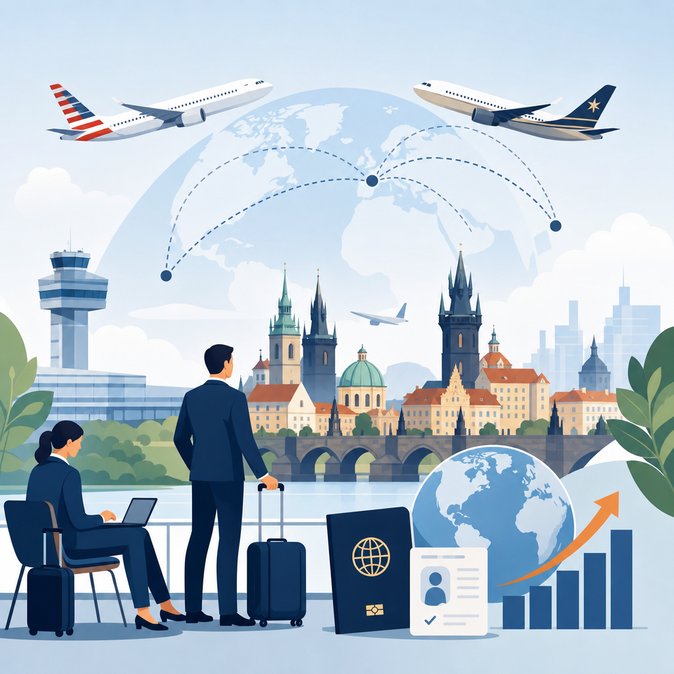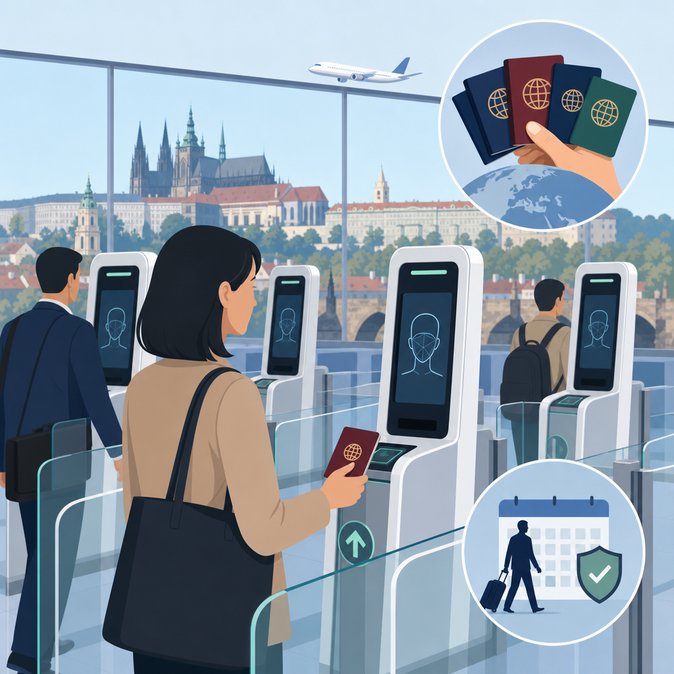
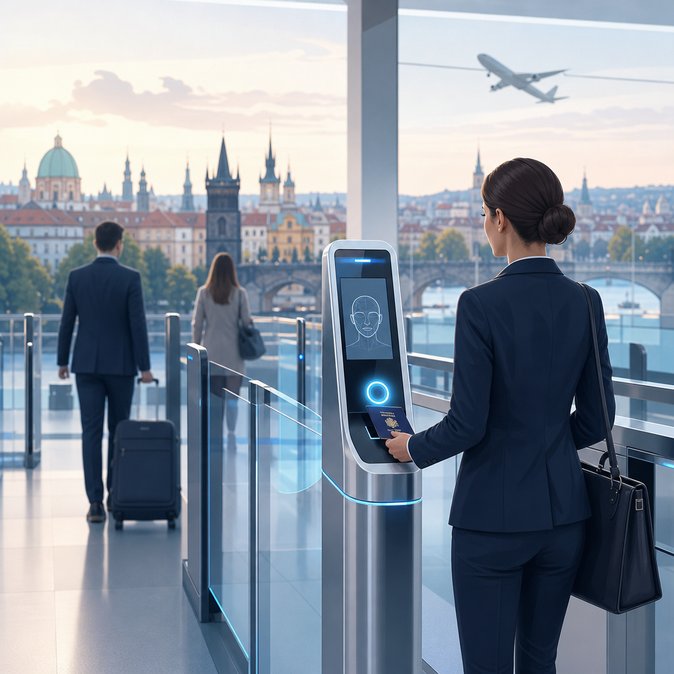
Prague’s Václav Havel Airport has quietly taken a big step toward fully automated border processing. From 15 May 2026—just in time for the summer rush—citizens of the United Kingdom, Japan, Taiwan and South Korea can join EU, EEA and Swiss passport-holders in using the airport’s self-service eGATE lanes when departing the Schengen Area through Terminal 1. The expansion follows April’s EU-wide launch of the Entry/Exit System (EES), which obliges member-state border guards to record biometric data every time a non-EU national crosses an external Schengen border. For eligible passengers aged 15 and over, the new process is simple: scan a biometric passport, face-match against the chip photograph, and walk through—usually in well under 20 seconds. Airport managers expect the technology to slash peak-season queues that have dogged business travellers since long-haul traffic rebounded; Václav Havel Airport handled 3.5 million passengers in Q1 alone and is forecasting a record 20 million for the full year. Corporate travel managers say reliably shorter dwell-times will make same-day meetings in London and Seoul much easier to schedule, helping multinationals base regional teams in Prague without incurring overnight costs. Border-police officials stress that eGATE use is a privilege, not a right. Travellers must still carry a biometric passport with at least six months’ validity, respect the Schengen 90/180-day stay rule, and be prepared for random secondary screening.
![Prague Airport extends biometric eGATE lanes to UK, Japanese, Taiwanese and South-Korean travellers]()
For anyone unsure about visa or ETIAS obligations before gliding through those new eGATEs, VisaHQ can help. Its Czech Republic portal (https://www.visahq.com/czech-republic/) lets individuals and corporate travel departments verify entry requirements, apply for the right visa online and receive real-time status updates—complete with passport-validity reminders and Schengen day-count tools that keep overstays off the radar.
Families with children under 15 as well as travellers with damaged documents will be diverted to staffed booths. For now the gates work only on departure, because incoming EES validity checks are still being calibrated; full two-way operation is expected later this summer. The Interior Ministry has already hinted that the next wave of “low-risk” additions could include the United States, Australia and New Zealand. If approved, Prague would join Amsterdam, Frankfurt and Lisbon in offering broad third-country automated exit—and cement its position as Central Europe’s most efficient international hub. The move also dovetails with the Czech government’s Digital Czechia programme, which aims to make Czech borders “paper-free” by 2028. For businesses, the advice is clear. Ensure travelling staff carry biometric passports, brief them that boarding passes must be retained until after security (no physical eGATE receipt is issued) and remind them that overstays will be flagged automatically under EES. With those basics in place, Prague’s new fast track could save precious minutes—if not hours—during this year’s conference and holiday peak.
For anyone unsure about visa or ETIAS obligations before gliding through those new eGATEs, VisaHQ can help. Its Czech Republic portal (https://www.visahq.com/czech-republic/) lets individuals and corporate travel departments verify entry requirements, apply for the right visa online and receive real-time status updates—complete with passport-validity reminders and Schengen day-count tools that keep overstays off the radar.
Families with children under 15 as well as travellers with damaged documents will be diverted to staffed booths. For now the gates work only on departure, because incoming EES validity checks are still being calibrated; full two-way operation is expected later this summer. The Interior Ministry has already hinted that the next wave of “low-risk” additions could include the United States, Australia and New Zealand. If approved, Prague would join Amsterdam, Frankfurt and Lisbon in offering broad third-country automated exit—and cement its position as Central Europe’s most efficient international hub. The move also dovetails with the Czech government’s Digital Czechia programme, which aims to make Czech borders “paper-free” by 2028. For businesses, the advice is clear. Ensure travelling staff carry biometric passports, brief them that boarding passes must be retained until after security (no physical eGATE receipt is issued) and remind them that overstays will be flagged automatically under EES. With those basics in place, Prague’s new fast track could save precious minutes—if not hours—during this year’s conference and holiday peak.