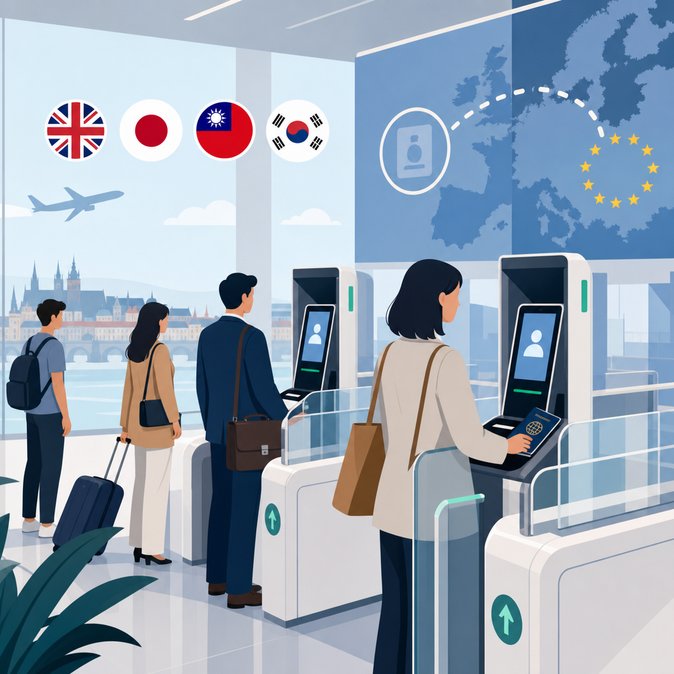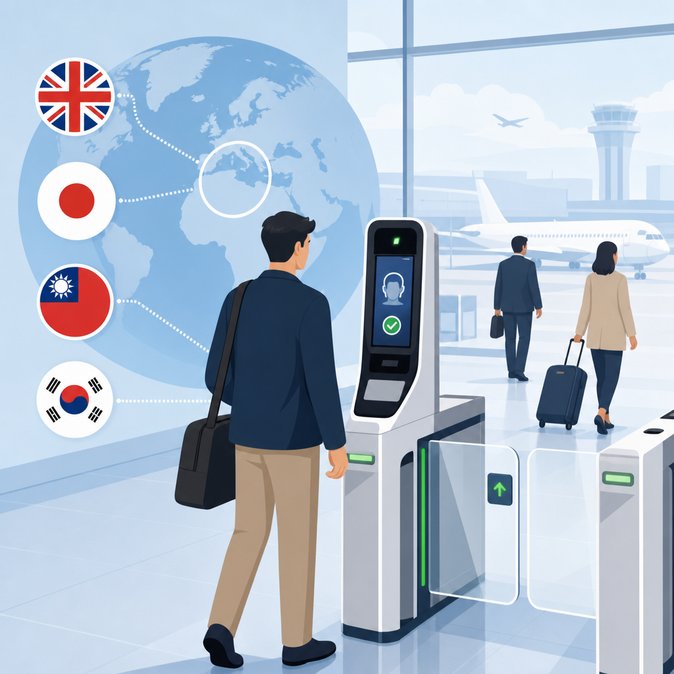
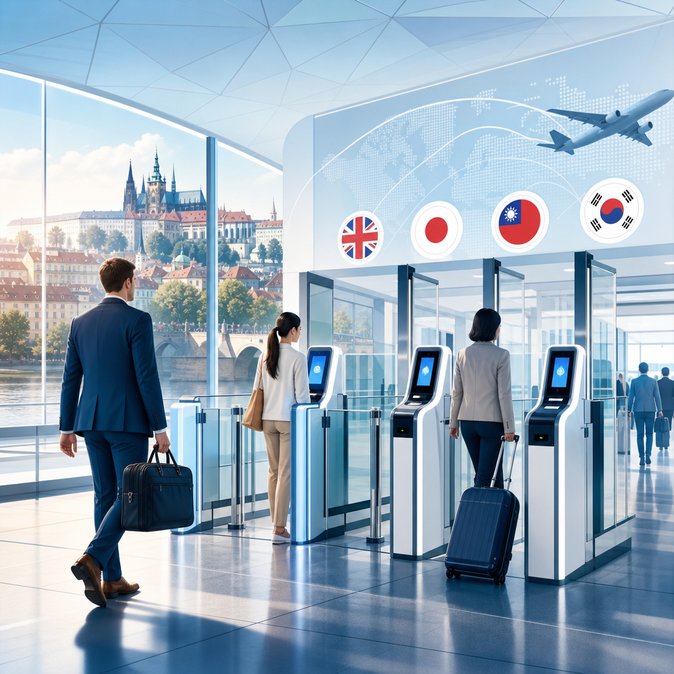
Václav Havel Airport Prague quietly widened its automated passport-control programme on 18 May 2026, allowing citizens of the United Kingdom, Japan, Taiwan and South Korea to pass through eGATE kiosks when departing the Schengen Area. The expansion, first confirmed by the English-language daily Prague Morning, represents the first time that non-EU nationals can use the fast-track system at Czechia’s largest airport. Travellers must hold a biometric passport and be at least 15 years old.
![Prague Airport Expands eGATE Automated Border Control to UK, Japanese, Taiwanese and South-Korean Travellers]()
If you’re unsure whether your documents meet Czech requirements, VisaHQ can help by verifying passport compliance and handling any necessary visa paperwork—its Czech Republic page (https://www.visahq.com/czech-republic/) lets travellers and corporates alike confirm entry rules and arrange expedited services so staff arrive with the right biometric passports for seamless eGATE use.
The airport has installed additional facial-recognition cameras and upgraded backend systems to interface with the EU’s new Entry/Exit System (EES), fully operational since 10 April 2026. According to board member for operations Martin Kučera, the move is designed to “maintain security standards while reducing peak-season queues,” with passenger throughput expected to top 20 million this year. For business travellers and multinational corporates, the change promises shorter dwell times and more predictable departure schedules, particularly on heavily used UK routes. Travel-management companies are already updating employee travel policies to flag eGATE eligibility and to remind staff that the kiosks are currently available only on outbound (non-Schengen) journeys; arriving passengers must still clear manned booths. Czech border police say further third-country national groups could be added later in 2026 once performance data are analysed and additional kiosks come online. The long-awaited step aligns Prague with other major European hubs such as Amsterdam-Schiphol and Madrid-Barajas, which opened e-gates to selected non-EU passports earlier in the EES roll-out. In practical terms, companies sending short-term assignees or conference delegates to Prague should inform them of the new option and ensure they carry a compliant e-passport. Airlines, meanwhile, may need to adjust departure gate closing times as security-screening bottlenecks ease.
If you’re unsure whether your documents meet Czech requirements, VisaHQ can help by verifying passport compliance and handling any necessary visa paperwork—its Czech Republic page (https://www.visahq.com/czech-republic/) lets travellers and corporates alike confirm entry rules and arrange expedited services so staff arrive with the right biometric passports for seamless eGATE use.
The airport has installed additional facial-recognition cameras and upgraded backend systems to interface with the EU’s new Entry/Exit System (EES), fully operational since 10 April 2026. According to board member for operations Martin Kučera, the move is designed to “maintain security standards while reducing peak-season queues,” with passenger throughput expected to top 20 million this year. For business travellers and multinational corporates, the change promises shorter dwell times and more predictable departure schedules, particularly on heavily used UK routes. Travel-management companies are already updating employee travel policies to flag eGATE eligibility and to remind staff that the kiosks are currently available only on outbound (non-Schengen) journeys; arriving passengers must still clear manned booths. Czech border police say further third-country national groups could be added later in 2026 once performance data are analysed and additional kiosks come online. The long-awaited step aligns Prague with other major European hubs such as Amsterdam-Schiphol and Madrid-Barajas, which opened e-gates to selected non-EU passports earlier in the EES roll-out. In practical terms, companies sending short-term assignees or conference delegates to Prague should inform them of the new option and ensure they carry a compliant e-passport. Airlines, meanwhile, may need to adjust departure gate closing times as security-screening bottlenecks ease.