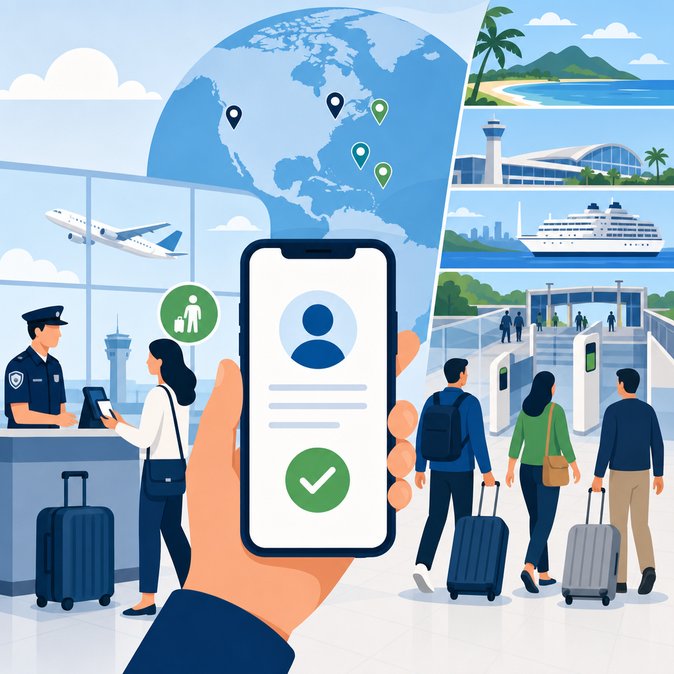
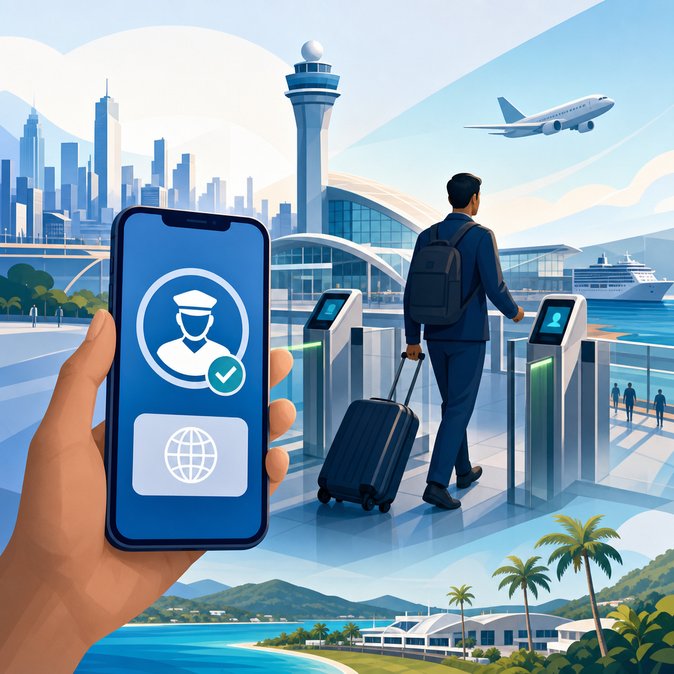
U.S. Customs and Border Protection confirmed on May 20 that its Mobile Passport Control (MPC) program now covers 63 entry points, after quietly activating the service at three pre-departure airports in the U.S. Virgin Islands. The MPC smartphone application lets eligible travelers—U.S. citizens, lawful permanent residents, Canadian visitors with B-1/B-2 visas and returning ESTA holders—submit passport information and customs declarations digitally, then access dedicated express lanes. The expansion brings the technology to 38 mainland international airports, 14 CBP Preclearance sites abroad, the new Virgin Islands locations, four seaports and four pedestrian crossings on the southern border. CBP officials said MPC complements—but does not replace—Trusted Traveler programs such as Global Entry, offering a no-fee alternative for passengers who travel occasionally or are awaiting Global Entry interview slots that remain backlogged in many cities.
![Mobile Passport Control App Reaches 63 U.S. Ports Following Virgin Islands Roll-Out]()
While organizations explore digital tools like MPC to speed arrivals, VisaHQ can help travelers get to the gate in the first place. The company’s online platform (https://www.visahq.com/united-states/) guides U.S.-based individuals and corporate mobility teams through visa and passport requirements worldwide, provides real-time status tracking, and offers dedicated support to ensure documents are approved before departure—so that once travelers land, they can head straight for MPC’s express lanes with confidence.
For corporate mobility teams, encouraging relocating employees and frequent business travelers to download MPC can shave 15–30 minutes off arrival processing, particularly at high-volume hubs like JFK, Miami and LAX where e-gates occasionally malfunction. Travel managers should note that employees must still carry a physical passport and be prepared for random secondary screening. Tourism boards in the Virgin Islands applauded the launch, predicting shorter lines will support a projected 12 percent uptick in summer visitors. Cruise operators also welcome MPC’s arrival at four U.S. seaports, saying faster debarkation could let shore excursions start earlier and reduce vessel berth fees. CBP says further roll-outs are planned for additional seaports and the pedestrian bridge at San Diego’s Cross Border Xpress by year-end. Users of the app have raised privacy questions about biometric storage; CBP stresses that photographs are encrypted and purged from government servers within 12 hours. Nevertheless, global corporations may wish to update data-protection notices to employees who use MPC on company-issued phones, clarifying that any biometric data transmitted is processed by CBP, not the employer.
While organizations explore digital tools like MPC to speed arrivals, VisaHQ can help travelers get to the gate in the first place. The company’s online platform (https://www.visahq.com/united-states/) guides U.S.-based individuals and corporate mobility teams through visa and passport requirements worldwide, provides real-time status tracking, and offers dedicated support to ensure documents are approved before departure—so that once travelers land, they can head straight for MPC’s express lanes with confidence.
For corporate mobility teams, encouraging relocating employees and frequent business travelers to download MPC can shave 15–30 minutes off arrival processing, particularly at high-volume hubs like JFK, Miami and LAX where e-gates occasionally malfunction. Travel managers should note that employees must still carry a physical passport and be prepared for random secondary screening. Tourism boards in the Virgin Islands applauded the launch, predicting shorter lines will support a projected 12 percent uptick in summer visitors. Cruise operators also welcome MPC’s arrival at four U.S. seaports, saying faster debarkation could let shore excursions start earlier and reduce vessel berth fees. CBP says further roll-outs are planned for additional seaports and the pedestrian bridge at San Diego’s Cross Border Xpress by year-end. Users of the app have raised privacy questions about biometric storage; CBP stresses that photographs are encrypted and purged from government servers within 12 hours. Nevertheless, global corporations may wish to update data-protection notices to employees who use MPC on company-issued phones, clarifying that any biometric data transmitted is processed by CBP, not the employer.