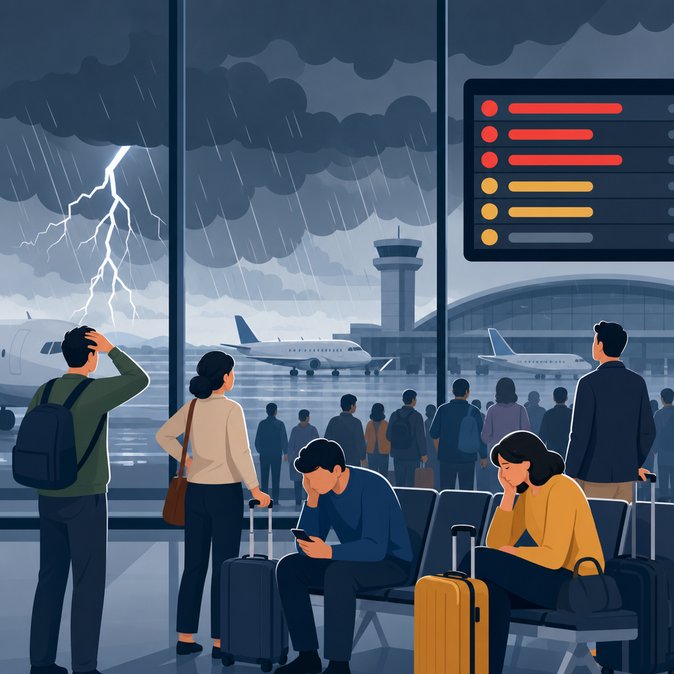
A burst of cancellations and knock-on delays on the evening of 18 May paralysed operations at São Paulo-Guarulhos, Rio de Janeiro/Galeão, Campinas–Viracopos and Belo Horizonte’s Tancredo Neves airports, stranding hundreds of passengers and triggering schedule ripples that were still being felt on 19-20 May. Real-time flight-tracking dashboards logged 25 outright cancellations and well over 100 delays in the space of six hours, affecting LATAM Brasil, Azul, GOL and the Brazilian legs of American Airlines and United Airlines services. Airport and airline sources blamed a “perfect storm” of heavy evening traffic, low-visibility rain bands over the southeast and stand-allocation bottlenecks that forced aircraft to wait for gates. Because Guarulhos and Galeão handle the bulk of Brazil’s long-haul traffic, any disturbance quickly cascades into missed onward connections for business travellers heading to North America and Europe. Cargo operators also reported late departures, sparking concerns about temperature-sensitive pharmaceuticals moving through São Paulo’s logistics zone.
![Wave of Cancellations Paralyzes Brazil’s Major Airports, Disrupting Domestic and International Connections]()
Travelers preparing to navigate Brazil’s busy airports should also verify that their paperwork is in order well before departure. VisaHQ’s online platform (https://www.visahq.com/brazil/) simplifies the process of securing Brazilian tourist or business visas, offers step-by-step guidance on entry requirements, and can even expedite documentation for last-minute trips—providing extra peace of mind when operational hiccups like those of 18 May threaten to upend carefully planned itineraries.
Brazil’s aviation regulator ANAC said it is analysing radar and weather data to determine whether temporary arrival-rate reductions were imposed too late. The agency has been under pressure from industry groups to increase runway throughput at Guarulhos during peak hours, but infrastructure upgrades have lagged demand as passenger volumes surpassed pre-pandemic levels in early 2026. Airlines argue that incremental gains—such as opening a dedicated remote-stand pier at Galeão—would give operations more breathing room during summer thunderstorms. For corporate mobility managers, the episode is a reminder to build extra buffer time into itineraries that rely on domestic feeders to connect with trans-continental flights. Travel-risk consultants recommend at least three-hour connection windows at Guarulhos when flying on separate tickets and urge travellers to keep boarding passes, meal receipts and hotel invoices in case compensation claims are required under Brazil’s consumer-protection code. Mobile apps from Brazil’s three largest carriers now allow same-day rebooking, but many foreign travellers remain unaware of those tools until disruption strikes.

Travelers preparing to navigate Brazil’s busy airports should also verify that their paperwork is in order well before departure. VisaHQ’s online platform (https://www.visahq.com/brazil/) simplifies the process of securing Brazilian tourist or business visas, offers step-by-step guidance on entry requirements, and can even expedite documentation for last-minute trips—providing extra peace of mind when operational hiccups like those of 18 May threaten to upend carefully planned itineraries.
Brazil’s aviation regulator ANAC said it is analysing radar and weather data to determine whether temporary arrival-rate reductions were imposed too late. The agency has been under pressure from industry groups to increase runway throughput at Guarulhos during peak hours, but infrastructure upgrades have lagged demand as passenger volumes surpassed pre-pandemic levels in early 2026. Airlines argue that incremental gains—such as opening a dedicated remote-stand pier at Galeão—would give operations more breathing room during summer thunderstorms. For corporate mobility managers, the episode is a reminder to build extra buffer time into itineraries that rely on domestic feeders to connect with trans-continental flights. Travel-risk consultants recommend at least three-hour connection windows at Guarulhos when flying on separate tickets and urge travellers to keep boarding passes, meal receipts and hotel invoices in case compensation claims are required under Brazil’s consumer-protection code. Mobile apps from Brazil’s three largest carriers now allow same-day rebooking, but many foreign travellers remain unaware of those tools until disruption strikes.