
Portugal’s revised Nationality Law entered into force on 19 May after its publication in the Diário da República, lengthening the residency period required for CPLP nationals—including Brazilians—from five to seven years before they can apply for Portuguese citizenship. Foreigners from outside the European Union now face a 10-year threshold.
![Portugal Raises Residency Requirement to Seven Years, Complicating Citizenship Path for Brazilians]()
At this juncture, many prospective applicants are turning to professional visa facilitators for clarity. VisaHQ, for instance, maintains a dedicated Brazil page (https://www.visahq.com/brazil/) that walks users through the latest Portuguese residence categories and can coordinate document collection, translations, and SEF appointments, helping Brazilians adapt to the new timelines with fewer administrative headaches.
The amendment also tightens jus soli provisions: children born in Portugal to foreign parents will only be considered Portuguese after the family has lived legally in the country for five years, eliminating the automatic pathway previously used by many Brazilian migrants. Applications already filed remain under the old rules, but the Justice Ministry acknowledged an online surge as residents rushed to submit dossiers before midnight on 18 May. The change responds to political pressure over housing shortages and integration capacity in Lisbon and Porto, where Brazilians constitute the largest foreign community at roughly 513,000. Critics argue it will push more people into irregular status while doing little to solve housing supply. For employers that transfer Brazilian staff to Portugal, the longer residency clock affects long-term retention strategies and family planning, as dependants will wait two extra years for full EU mobility rights. Immigration lawyers advise new transferees to keep all tax and social-security records spotless; gaps can reset the residency count. They also suggest exploring Portugal’s Digital Nomad and Tech Visa streams—which remain unaffected—for professionals who need quicker routes to permanent residence rather than citizenship.

At this juncture, many prospective applicants are turning to professional visa facilitators for clarity. VisaHQ, for instance, maintains a dedicated Brazil page (https://www.visahq.com/brazil/) that walks users through the latest Portuguese residence categories and can coordinate document collection, translations, and SEF appointments, helping Brazilians adapt to the new timelines with fewer administrative headaches.
The amendment also tightens jus soli provisions: children born in Portugal to foreign parents will only be considered Portuguese after the family has lived legally in the country for five years, eliminating the automatic pathway previously used by many Brazilian migrants. Applications already filed remain under the old rules, but the Justice Ministry acknowledged an online surge as residents rushed to submit dossiers before midnight on 18 May. The change responds to political pressure over housing shortages and integration capacity in Lisbon and Porto, where Brazilians constitute the largest foreign community at roughly 513,000. Critics argue it will push more people into irregular status while doing little to solve housing supply. For employers that transfer Brazilian staff to Portugal, the longer residency clock affects long-term retention strategies and family planning, as dependants will wait two extra years for full EU mobility rights. Immigration lawyers advise new transferees to keep all tax and social-security records spotless; gaps can reset the residency count. They also suggest exploring Portugal’s Digital Nomad and Tech Visa streams—which remain unaffected—for professionals who need quicker routes to permanent residence rather than citizenship.
More From Brazil
View all
Wave of Cancellations Paralyzes Brazil’s Major Airports, Disrupting Domestic and International Connections
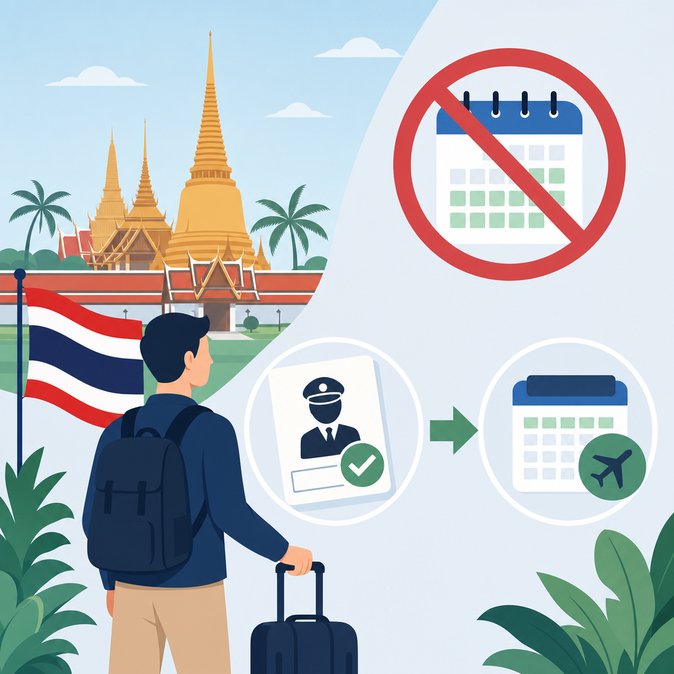
Thailand Cuts Visa-Free Stay to 30 Days for Brazilians as 60-Day Waiver Scrapped for 93 Countries