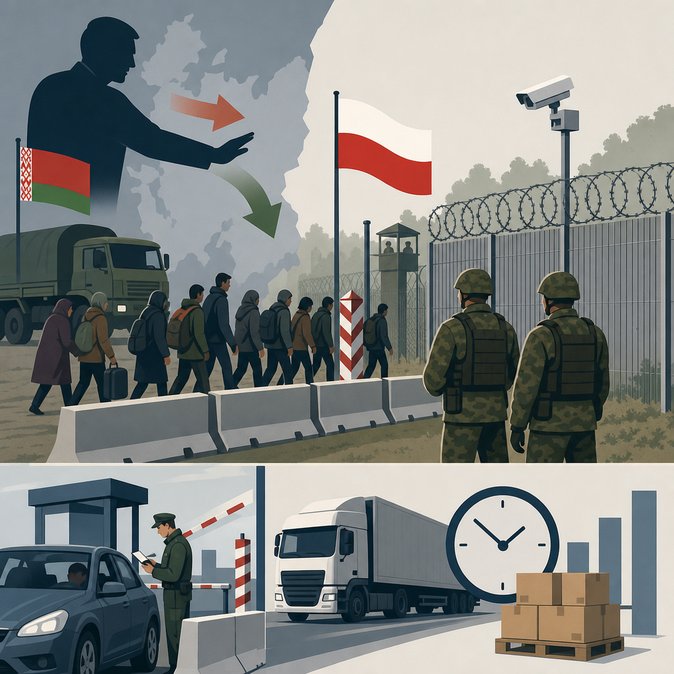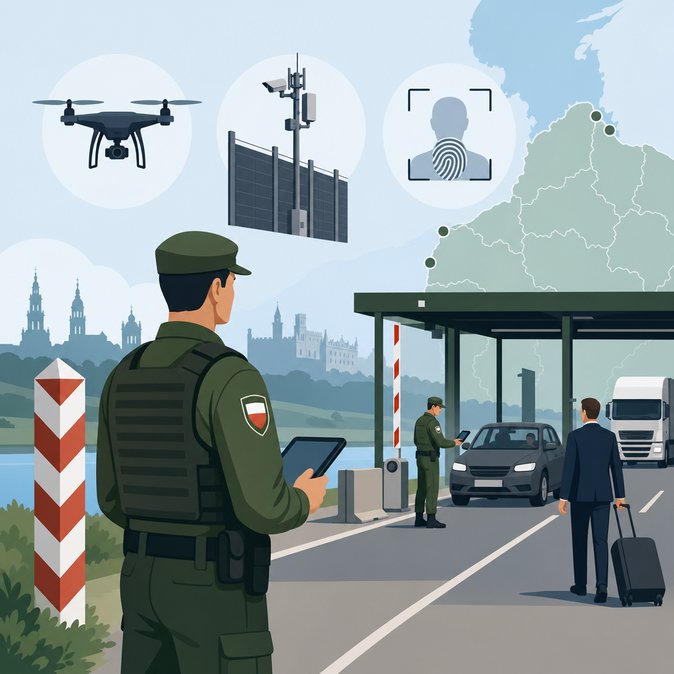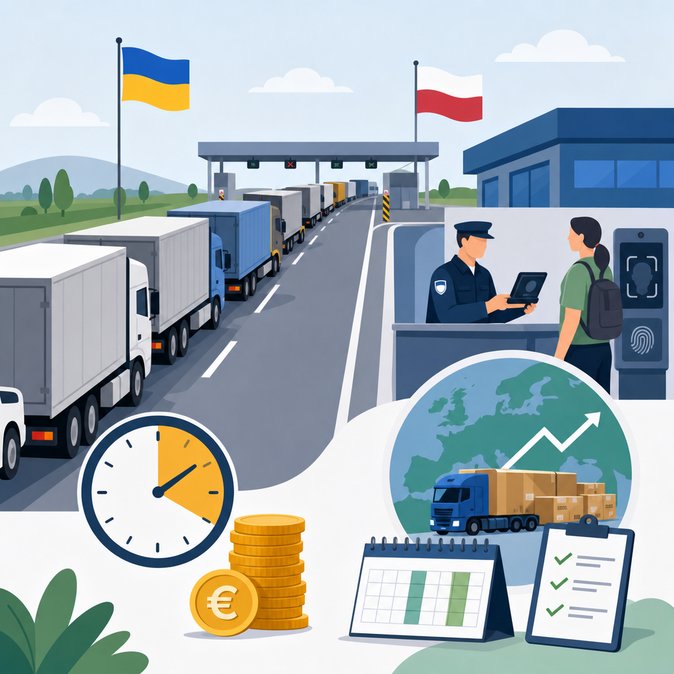
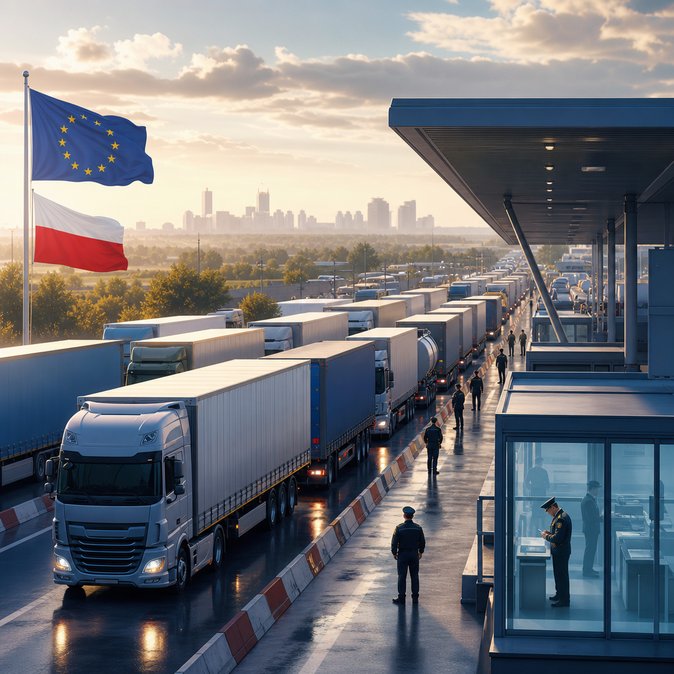
Real-time statistics on the Nakordoni.eu platform at 10:25 CEST on 17 May 2026 indicated 430 cargo vehicles waiting to enter Poland at the Shehyni–Medyka checkpoint—equivalent to a projected 16 hours 30 minutes in queue. Wait times for heavy-goods vehicles have hovered above 15 hours since Easter, but 17 May marked the worst Sunday this quarter, one percent higher than the previous peak. The bottleneck results from three converging factors. First, Poland’s continued passport controls with Germany and Lithuania are absorbing border-guard manpower that might otherwise be redeployed east. Second, Ukraine’s wartime export boom—grain, timber, machinery—has pushed lorry traffic through the comparatively well-paved E40 corridor to Medyka. Third, the EU’s Entry/Exit System (EES), active at the post since March, adds roughly 45 seconds per driver for biometric capture, which scales into hours when several hundred trucks arrive at once.
![Live border data show 16-hour truck delays at Shehyni–Medyka crossing on 17 May, straining Polish-Ukrainian supply chains]()
While infrastructure and staffing constraints dominate headlines, companies should not overlook the paperwork angle: incomplete or incorrectly issued travel documents can trigger secondary inspections that snowball into yet more idle time. VisaHQ’s Poland team (https://www.visahq.com/poland/) helps haulage firms and mobility managers obtain or renew Schengen, C, and D-type visas for drivers, technicians and accompanying staff, bundling application guidance, appointment scheduling and courier pickup into a single online dashboard. The service trims administrative friction so that when a rig finally reaches the booth, officers spend seconds—rather than minutes—verifying credentials, a marginal gain that matters when a 16-hour queue is on the clock.
Long queues translate into steep demurrage bills: Polish logistics association TLP estimates every idle tractor-trailer costs €85 per hour in fuel, driver overtime and spoiled perishables. Manufacturers in Rzeszów’s aviation cluster report delaying just-in-sequence parts deliveries from Lviv, while e-commerce firms have shifted high-value parcels to rail via the Dorohusk corridor despite higher tariffs. Customs brokers advise hauliers to pre-book slots in Ukraine’s eCherha system, carry printed CMR waybills to speed secondary inspections and, where possible, reroute via the Nyzhankovychi–Malhowice crossing, currently at 12-hour waits. Mobility managers moving household goods or project cargo into Poland should schedule pickups mid-week, when Nakordoni historical data show the queue drops to about 24 hours. Shehyni–Medyka’s chronic congestion underscores a wider challenge for Poland’s global-mobility ecosystem: infrastructure modernisation has lagged the surge in east-west trade since 2022. Until additional inspection bays and parking areas come online in 2027, companies should budget for unpredictable transit times and build “border buffers” into supply-chain SLAs.
While infrastructure and staffing constraints dominate headlines, companies should not overlook the paperwork angle: incomplete or incorrectly issued travel documents can trigger secondary inspections that snowball into yet more idle time. VisaHQ’s Poland team (https://www.visahq.com/poland/) helps haulage firms and mobility managers obtain or renew Schengen, C, and D-type visas for drivers, technicians and accompanying staff, bundling application guidance, appointment scheduling and courier pickup into a single online dashboard. The service trims administrative friction so that when a rig finally reaches the booth, officers spend seconds—rather than minutes—verifying credentials, a marginal gain that matters when a 16-hour queue is on the clock.
Long queues translate into steep demurrage bills: Polish logistics association TLP estimates every idle tractor-trailer costs €85 per hour in fuel, driver overtime and spoiled perishables. Manufacturers in Rzeszów’s aviation cluster report delaying just-in-sequence parts deliveries from Lviv, while e-commerce firms have shifted high-value parcels to rail via the Dorohusk corridor despite higher tariffs. Customs brokers advise hauliers to pre-book slots in Ukraine’s eCherha system, carry printed CMR waybills to speed secondary inspections and, where possible, reroute via the Nyzhankovychi–Malhowice crossing, currently at 12-hour waits. Mobility managers moving household goods or project cargo into Poland should schedule pickups mid-week, when Nakordoni historical data show the queue drops to about 24 hours. Shehyni–Medyka’s chronic congestion underscores a wider challenge for Poland’s global-mobility ecosystem: infrastructure modernisation has lagged the surge in east-west trade since 2022. Until additional inspection bays and parking areas come online in 2027, companies should budget for unpredictable transit times and build “border buffers” into supply-chain SLAs.