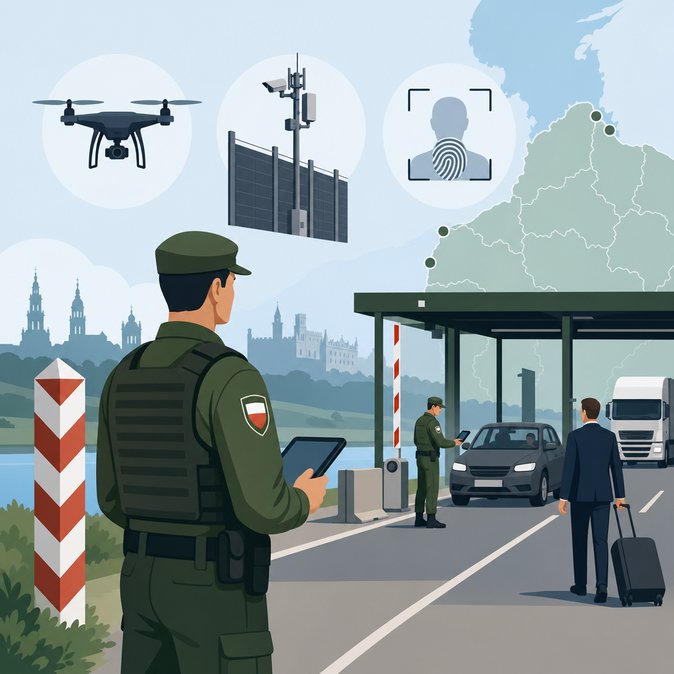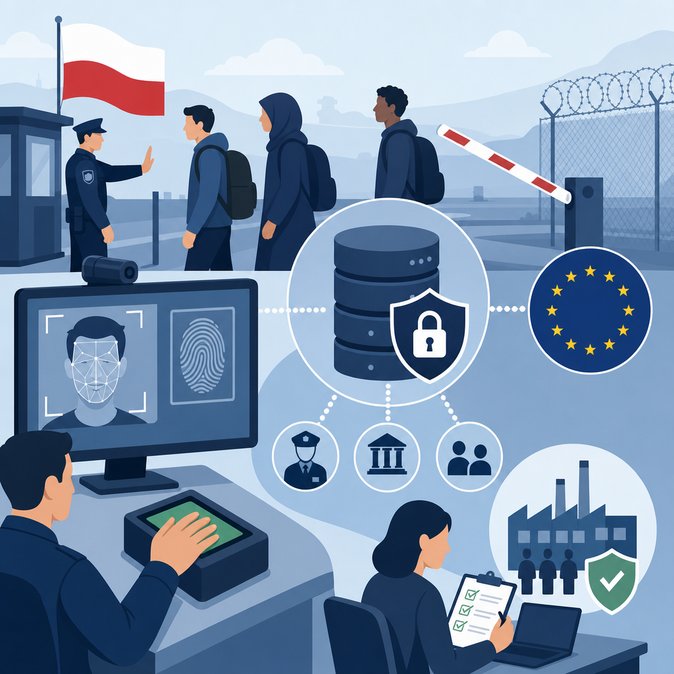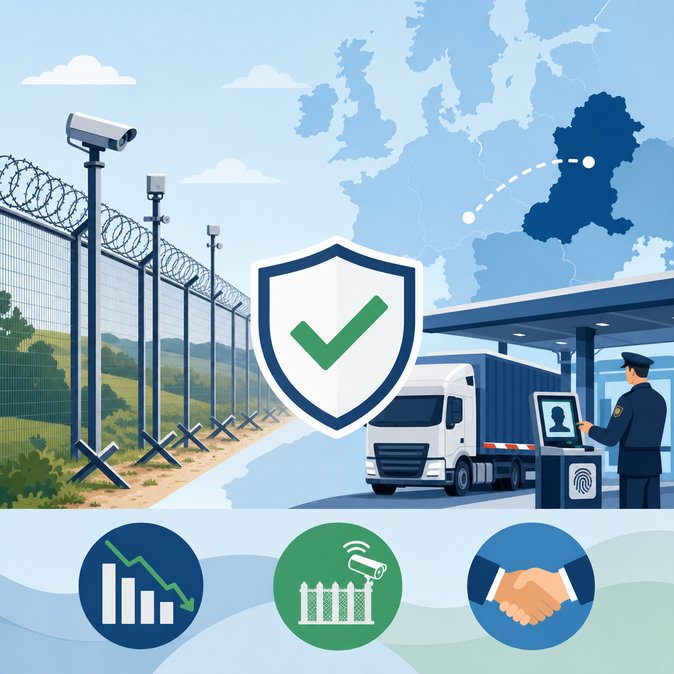
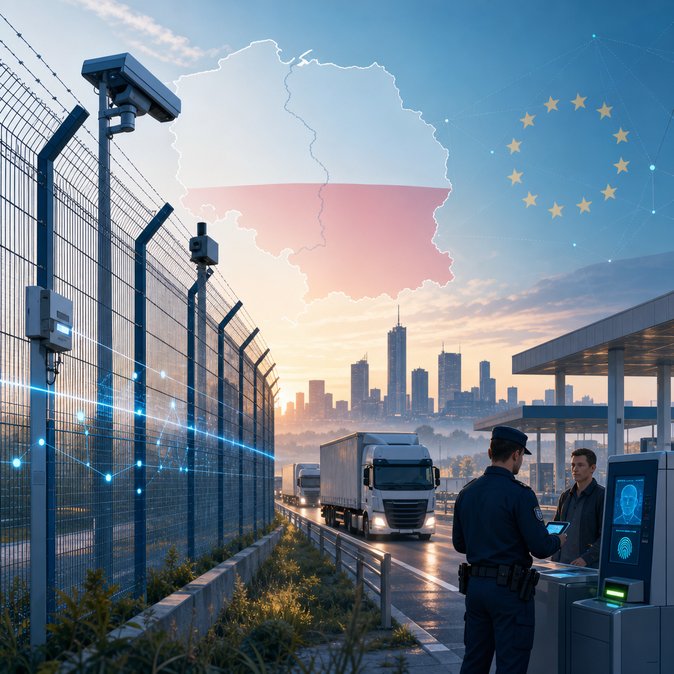
Speaking at the Border Guard Training Centre in Otwock and publishing the data early on 16 May 2026, Prime Minister Donald Tusk announced that not a single person managed to cross illegally from Belarus into Poland between January and March this year. The milestone follows three years of intense pressure on the 418-km border, where Minsk has been accused of orchestrating migrant flows as political leverage. According to figures presented by Interior Minister Marcin Kierwiński, the Guard detected roughly 30,000 attempts during the quarter but intercepted every one. Successful crossings had already fallen from 12,000 in 2023 to 1,700 in 2025; achieving absolute zero, the minister said, shows that Poland’s multi-layer “smart fence”, thermal-vision cameras and rapid-response patrols are now fully effective. Tusk linked the result to a PLN 1.6 billion (€350 million) investment programme launched in 2022, which hard-wired the physical barrier into the EU’s Entry/Exit System and deployed drones with AI-based movement detection. He emphasised that international-protection channels remain open at official checkpoints such as Terespol and Kuźnica, arguing that “secure borders are the only way to restore truly humanitarian standards.”
![Prime Minister Tusk hails ‘zero illegal crossings’ from Belarus in first quarter of 2026]()
Travellers who need to ensure their paperwork is flawless before approaching these increasingly sophisticated checkpoints can rely on VisaHQ’s Poland portal (https://www.visahq.com/poland/). The platform delivers step-by-step visa guidance, real-time rule updates and document-checking services, helping tourists, businesspeople and transport crews move through the EU’s new Entry/Exit System without delays.
Business travellers and logistics firms welcomed the absence of large migrant groups on the border road network, which had caused periodic closures in 2022–25. However, haulage associations warned that the same electronic perimeter can slow legitimate traffic if documentation is incomplete; they advise drivers to carry printed manifests and be prepared for spot biometric verification. Strategically, the announcement strengthens Warsaw’s case for tougher EU action against state-sponsored irregular migration and may influence forthcoming talks on the bloc’s New Pact on Migration and Asylum. Neighbouring Lithuania is already studying Poland’s sensor layout, and Brussels is expected to co-finance additional segments on the Baltic frontier later this year.
Travellers who need to ensure their paperwork is flawless before approaching these increasingly sophisticated checkpoints can rely on VisaHQ’s Poland portal (https://www.visahq.com/poland/). The platform delivers step-by-step visa guidance, real-time rule updates and document-checking services, helping tourists, businesspeople and transport crews move through the EU’s new Entry/Exit System without delays.
Business travellers and logistics firms welcomed the absence of large migrant groups on the border road network, which had caused periodic closures in 2022–25. However, haulage associations warned that the same electronic perimeter can slow legitimate traffic if documentation is incomplete; they advise drivers to carry printed manifests and be prepared for spot biometric verification. Strategically, the announcement strengthens Warsaw’s case for tougher EU action against state-sponsored irregular migration and may influence forthcoming talks on the bloc’s New Pact on Migration and Asylum. Neighbouring Lithuania is already studying Poland’s sensor layout, and Brussels is expected to co-finance additional segments on the Baltic frontier later this year.