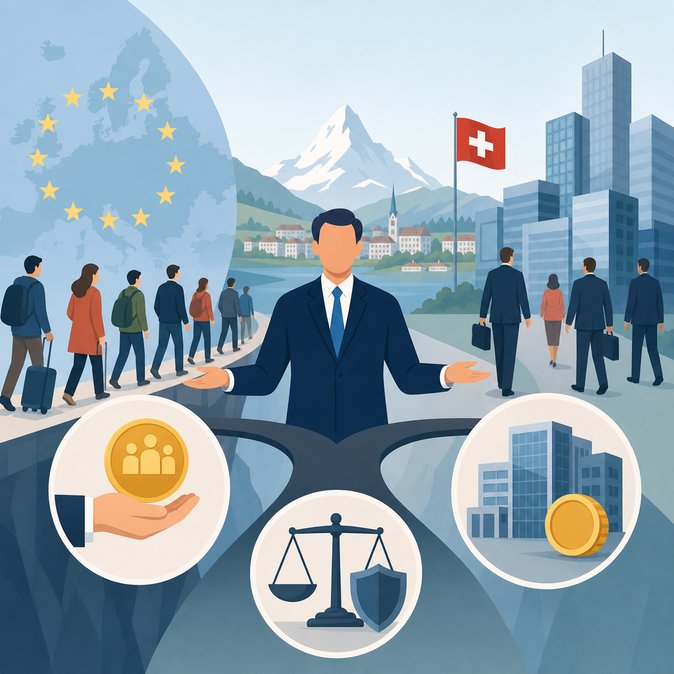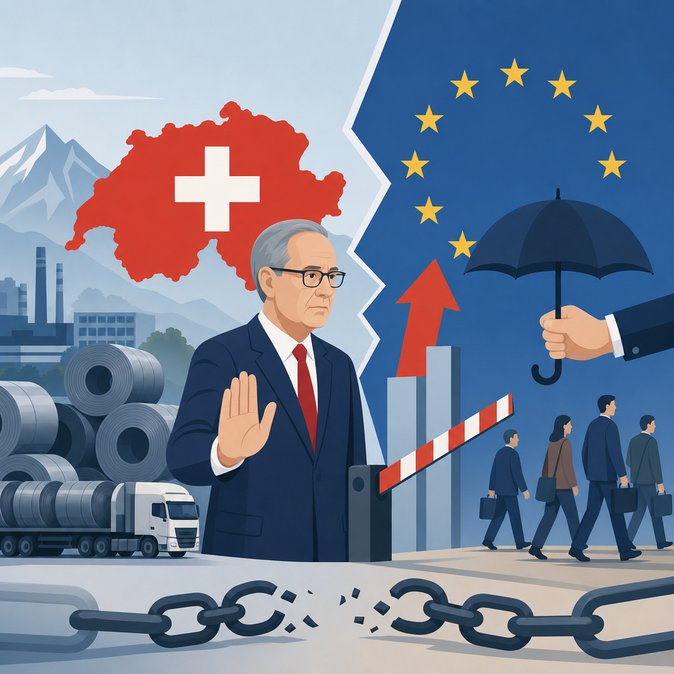
Switzerland’s President Guy Parmelin used a wide-ranging interview published by Blick on 17 May 2026 to fire a warning shot across Brussels’ bow. Two recent European Commission decisions—doubling safeguard tariffs on steel imports from 25 % to 50 % from 1 July and shifting unemployment-benefit responsibility for frontaliers (cross-border commuters) onto the Swiss budget—could, he said, back-fire on the EU itself. Parmelin stressed that Swiss steel—used in aerospace components supplied to EU manufacturers—would become pricier overnight, undermining European supply chains. He also noted that making Bern pay up to CHF 900 million a year in jobless benefits for workers who live in France, Germany or Italy but lose their Swiss job risks a domestic political backlash at a delicate moment. Parliamentary committees are still scrutinising a painstakingly negotiated package of treaties designed to reboot stalled EU-Swiss relations; hostility could scupper the deal and reopen the wounds left by the 2021 framework-agreement collapse. For businesses the stakes are immediate. Exporters must factor in a sudden 25-percentage-point tariff jump, while HR teams employing some 340,000 daily frontaliers face uncertainty over which social-security regime will apply if the EU plan proceeds. Companies that rely on French or Italian staff for critical manufacturing shifts may find payroll costs rising as Switzerland is pressed to renegotiate the 2010 unemployment convention.
![Parmelin cautions Brussels as EU seeks higher tariffs and new costs for cross-border workers]()
At this juncture, firms and individual commuters juggling work permits or other travel documentation might seek expert help. VisaHQ simplifies the process of obtaining Swiss visas and related documents for business travellers and long-term assignees alike; see https://www.visahq.com/switzerland/ for quick online applications and guidance from multilingual specialists who know the Swiss system inside out.
Mobility managers should prepare talking points for assignees who commute from neighbouring regions; additional documentation proving salary insurance coverage may be required when regulations change. Supply-chain leaders, meanwhile, are already exploring contingency sourcing outside the EU customs area to avoid the higher steel duty. Although Parmelin hinted at a willingness to keep talking, he made clear that Bern is ready to submit any final compromise to voters— prolonging uncertainty into 2027. The take-away: Europe’s most complex cross-border labour ecosystem is one policy mis-step away from a major cost shock.

At this juncture, firms and individual commuters juggling work permits or other travel documentation might seek expert help. VisaHQ simplifies the process of obtaining Swiss visas and related documents for business travellers and long-term assignees alike; see https://www.visahq.com/switzerland/ for quick online applications and guidance from multilingual specialists who know the Swiss system inside out.
Mobility managers should prepare talking points for assignees who commute from neighbouring regions; additional documentation proving salary insurance coverage may be required when regulations change. Supply-chain leaders, meanwhile, are already exploring contingency sourcing outside the EU customs area to avoid the higher steel duty. Although Parmelin hinted at a willingness to keep talking, he made clear that Bern is ready to submit any final compromise to voters— prolonging uncertainty into 2027. The take-away: Europe’s most complex cross-border labour ecosystem is one policy mis-step away from a major cost shock.