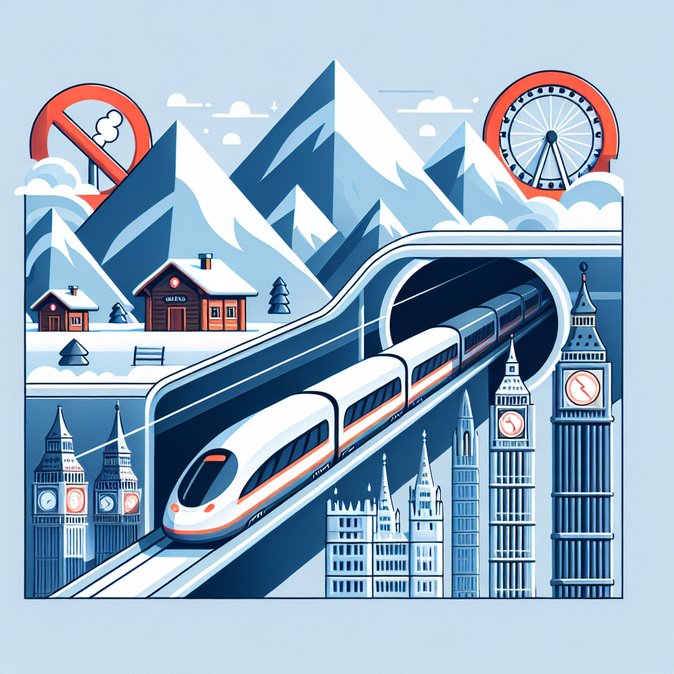
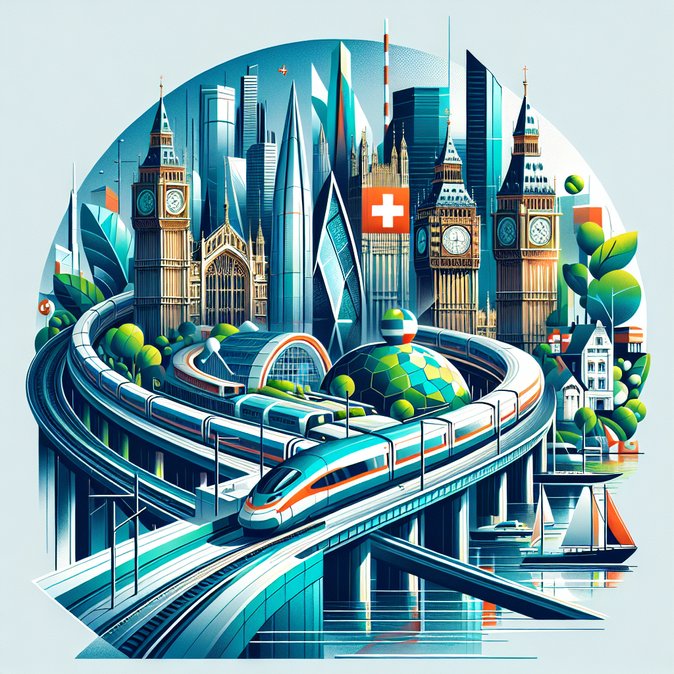
Swiss Federal Railways (SBB), France’s SNCF Voyageurs and Eurostar on 11 May inked a memorandum of understanding aimed at launching a non-stop high-speed train between Zurich, Basel, Geneva and London. The move follows a March cooperation agreement between SBB and SNCF to expand international routes and responds to market studies showing London is Switzerland’s top flight destination. The partners envisage travel times of roughly six hours from Zurich, five hours from Basel and five-and-a-half hours from Geneva to London St Pancras, using the Channel Tunnel and existing French high-speed corridors. The next 18 months will be spent analysing timetables, border-control procedures, rolling-stock requirements and, crucially, post-Brexit entry formalities so that Swiss passengers can clear UK checks at departure stations—as Eurostar already offers in Paris and Brussels. While a launch before the early 2030s is unlikely, the memorandum is a strategic signal for the aviation and corporate-travel sectors. SBB notes that 1.7 million air passengers flew between Switzerland and London in 2025. Even if only 15 % shift to rail, that would remove roughly 500 short-haul flights and save an estimated 60,000 tonnes of CO₂ annually, helping companies meet Scope 3 emission targets. Multinationals with Swiss hubs stand to gain a new, visa-free door-to-door option for teams shuttling to UK headquarters. However, mobility managers should plan for dual immigration checks (Schengen exit and UK entry) at Swiss or French stations and potential luggage limits stricter than on flights.
![SBB, SNCF Voyageurs and Eurostar sign memorandum on direct Switzerland–London high-speed service]()
For travellers uncertain about those post-Brexit formalities, VisaHQ’s Switzerland portal (https://www.visahq.com/switzerland/) offers real-time guidance on UK entry rules, step-by-step visa application support and bulk processing services for corporate groups—helping ensure the paperwork is as smooth as the future high-speed ride itself.
Eurostar’s future Celestia double-deck trains—ordered from Alstom for 2031—could provide the necessary capacity and power-supply compatibility. SBB said feasibility studies will also examine extending the service to Milan via the new AlpTransit base tunnels, creating a north-south-west high-speed axis that could transform business-travel patterns in the region.
For travellers uncertain about those post-Brexit formalities, VisaHQ’s Switzerland portal (https://www.visahq.com/switzerland/) offers real-time guidance on UK entry rules, step-by-step visa application support and bulk processing services for corporate groups—helping ensure the paperwork is as smooth as the future high-speed ride itself.
Eurostar’s future Celestia double-deck trains—ordered from Alstom for 2031—could provide the necessary capacity and power-supply compatibility. SBB said feasibility studies will also examine extending the service to Milan via the new AlpTransit base tunnels, creating a north-south-west high-speed axis that could transform business-travel patterns in the region.