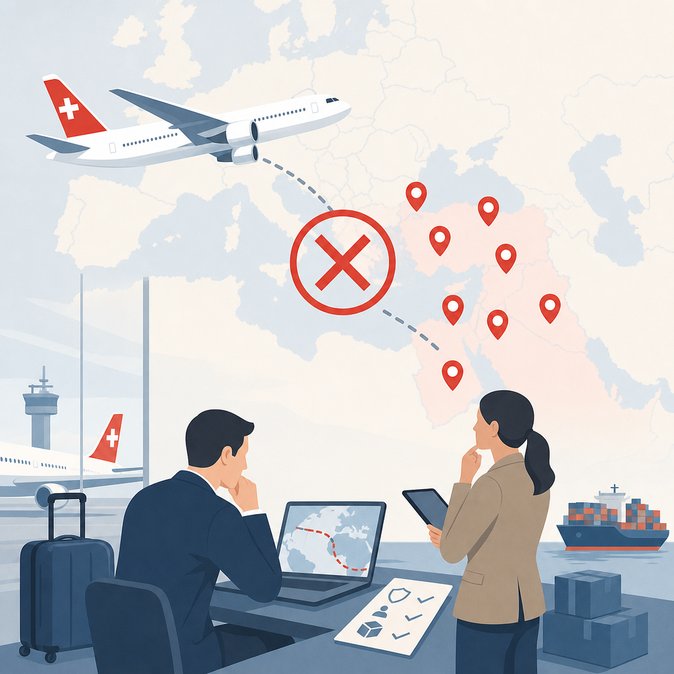
Swiss International Air Lines (SWISS) and other Lufthansa-Group carriers have halted all passenger flights to Tel Aviv, Dubai and eight additional Middle-East destinations, the Swiss Observer reported on Sunday, 17 May 2026. The suspension runs at least until 31 May for Israel and the UAE and until 24 October for a broader list that includes Riyadh, Muscat and Tehran. The carriers cite escalating regional instability and ‘elevated operational risk’ following a series of drone attacks on Gulf oil infrastructure earlier this month. Insurance premiums for over-flights of the eastern Mediterranean and Persian Gulf have reportedly tripled since early May, while jet-fuel prices remain near record highs, making the routes commercially untenable. For Switzerland the fallout is immediate: Zurich and Geneva airports lose roughly 28 weekly frequencies that underpin trade links with the Gulf’s financial hubs. Corporate mobility teams overseeing regional HQs in Dubai or Riyadh must now reroute travellers through Istanbul, Athens or Cairo, adding four to eight hours each way.
![SWISS and Lufthansa suspend Middle-East routes, severing a key corridor for Swiss business travel]()
If those detours raise questions about new transit or entry permits, VisaHQ’s Swiss portal (https://www.visahq.com/switzerland/) can map out visa requirements for each alternative hub and arrange fast, online processing, ensuring passengers stay compliant despite the shifting route network.
The longer itineraries pose compliance headaches under Switzerland’s statutory working-time limits and may trigger revisions to travel-risk assessments under duty-of-care policies. SWISS says affected ticket-holders can rebook or seek refunds, but travel-management companies warn that mid-summer seat availability via alternative carriers is already tight. Companies shipping time-sensitive components—particularly pharma and precision-engineering firms—should review air-cargo contingencies and consider short-term warehousing in EU gateway airports. If the 24 October timeline slips further, industry groups fear Switzerland’s reputation as an aviation hub could be dented, accelerating a post-pandemic shift of long-haul transfer traffic to competing airports in Vienna and Munich.
If those detours raise questions about new transit or entry permits, VisaHQ’s Swiss portal (https://www.visahq.com/switzerland/) can map out visa requirements for each alternative hub and arrange fast, online processing, ensuring passengers stay compliant despite the shifting route network.
The longer itineraries pose compliance headaches under Switzerland’s statutory working-time limits and may trigger revisions to travel-risk assessments under duty-of-care policies. SWISS says affected ticket-holders can rebook or seek refunds, but travel-management companies warn that mid-summer seat availability via alternative carriers is already tight. Companies shipping time-sensitive components—particularly pharma and precision-engineering firms—should review air-cargo contingencies and consider short-term warehousing in EU gateway airports. If the 24 October timeline slips further, industry groups fear Switzerland’s reputation as an aviation hub could be dented, accelerating a post-pandemic shift of long-haul transfer traffic to competing airports in Vienna and Munich.