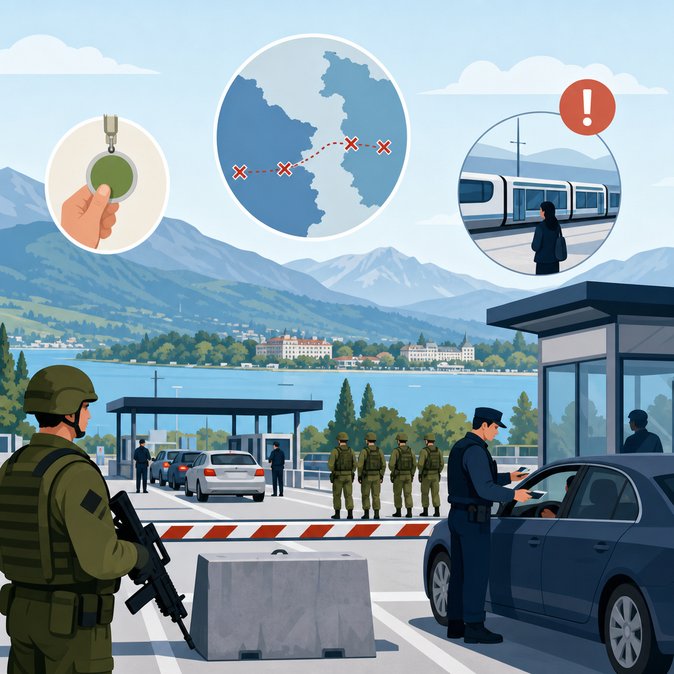
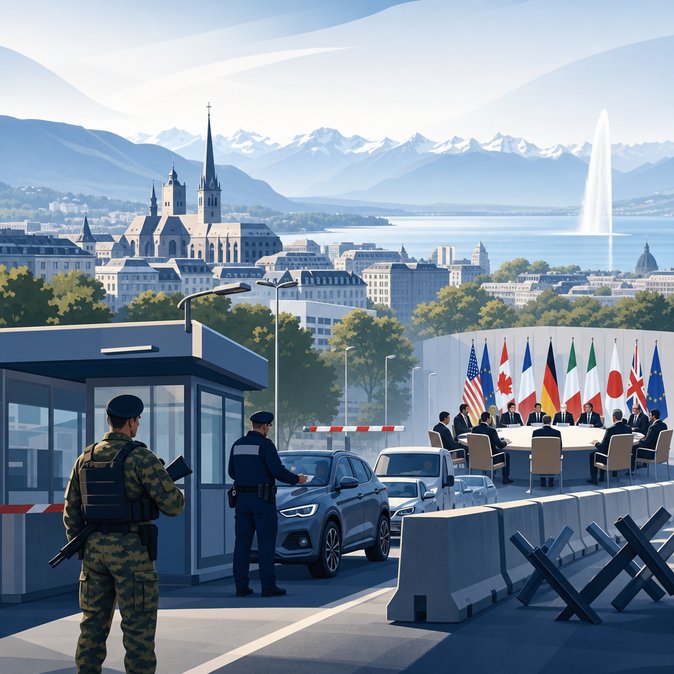
Geneva’s cantonal government has unveiled an extensive security and mobility plan for the G7 leaders’ summit that France will host in nearby Évian-les-Bains from 15 to 17 June. From 12 to 18 June, only seven major crossings (Anières, Moillesulaz, Thônex-Vallard, Bardonnex, Perly, Meyrin and Ferney-Voltaire) will remain open 24/7, all subject to systematic controls by the Federal Office for Customs and Border Security (FOCBS). Roughly 30 smaller road and foot crossings along the Franco-Swiss border will be sealed, and spot checks will extend to Geneva Airport, Cornavin and Annemasse stations and cross-border lake routes. The measures, confirmed in Friday’s government bulletin, follow the Federal Council’s 6 May decision to authorise temporary suspension of Schengen’s internal-border-free regime for the event. Up to 5,000 Swiss Armed Forces personnel and reinforcements from other cantonal police corps will support Geneva’s 1,500 officers. Essential cross-border workers will be issued windshield badges (“macarons”) to access priority lanes, while authorities advise other commuters to work from home and expect significant delays. Public-transport operator TPG has warned of truncated or rerouted bus and tram services on its France-bound lines.
![Geneva to Close 30 Border Posts and Re-Introduce Checks Ahead of June G7 Summit]()
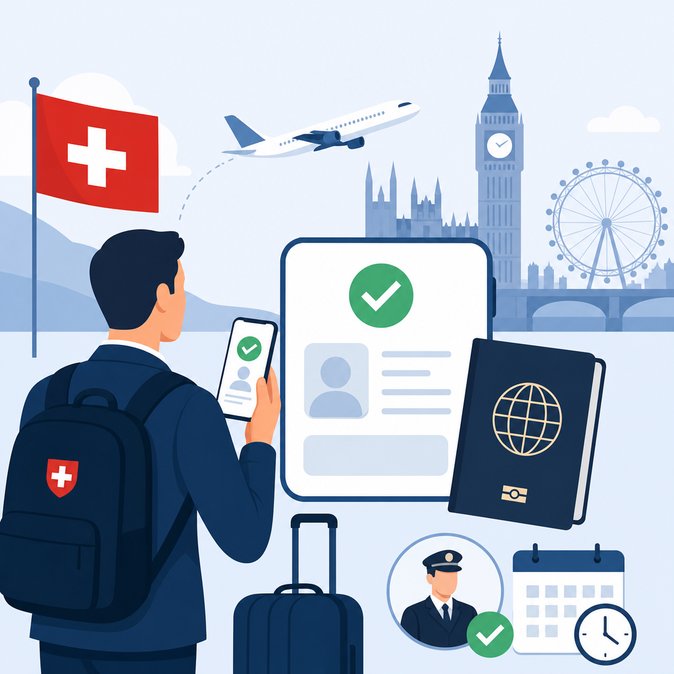
Travellers who find themselves needing updated visas or other travel documents on short notice can turn to VisaHQ for streamlined, up-to-date assistance; the platform’s Switzerland resource page (https://www.visahq.com/switzerland/) consolidates current entry requirements and offers step-by-step application support, removing one layer of complexity during the summit week.
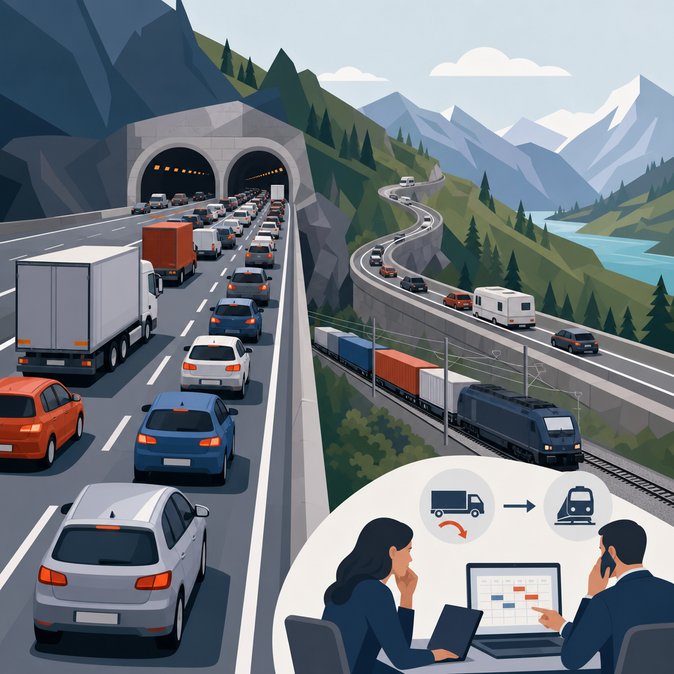
For companies that depend on the daily flow of 115,000 French residents into the canton’s healthcare, hospitality and watchmaking sectors, the week-long restrictions pose a genuine continuity challenge. Mobility managers are urged to validate that essential staff qualify for the fast-track badge, stagger shift patterns and book hotel contingencies on the Swiss side where feasible. Logistics providers face night-time curfews on certain routes, and CMR declarations will be checked manually, adding dwell time for just-in-time deliveries to Geneva’s free-trade zone. Business travellers flying into Geneva should allow extra time for passport inspection even if they hold EU or Swiss biometric documents. Airlines have been asked to display summit-related advisories in booking flows, and ride-hailing firms expect dynamic-pricing spikes due to diverted traffic patterns. Organisations hosting side-events at the UN or CERN have been told to register attendee lists with cantonal police ten days in advance. While the controls are strictly temporary, the operation will serve as a test run for the EU’s delayed Entry/Exit System (EES) due later in 2026. Officials will log wait-time data and evaluate cooperative protocols with French counterparts, potentially shaping how future high-profile gatherings—such as July’s WTO ministerial in Geneva—manage border security without paralysing cross-border labour flows.
Travellers who find themselves needing updated visas or other travel documents on short notice can turn to VisaHQ for streamlined, up-to-date assistance; the platform’s Switzerland resource page (https://www.visahq.com/switzerland/) consolidates current entry requirements and offers step-by-step application support, removing one layer of complexity during the summit week.
For companies that depend on the daily flow of 115,000 French residents into the canton’s healthcare, hospitality and watchmaking sectors, the week-long restrictions pose a genuine continuity challenge. Mobility managers are urged to validate that essential staff qualify for the fast-track badge, stagger shift patterns and book hotel contingencies on the Swiss side where feasible. Logistics providers face night-time curfews on certain routes, and CMR declarations will be checked manually, adding dwell time for just-in-time deliveries to Geneva’s free-trade zone. Business travellers flying into Geneva should allow extra time for passport inspection even if they hold EU or Swiss biometric documents. Airlines have been asked to display summit-related advisories in booking flows, and ride-hailing firms expect dynamic-pricing spikes due to diverted traffic patterns. Organisations hosting side-events at the UN or CERN have been told to register attendee lists with cantonal police ten days in advance. While the controls are strictly temporary, the operation will serve as a test run for the EU’s delayed Entry/Exit System (EES) due later in 2026. Officials will log wait-time data and evaluate cooperative protocols with French counterparts, potentially shaping how future high-profile gatherings—such as July’s WTO ministerial in Geneva—manage border security without paralysing cross-border labour flows.