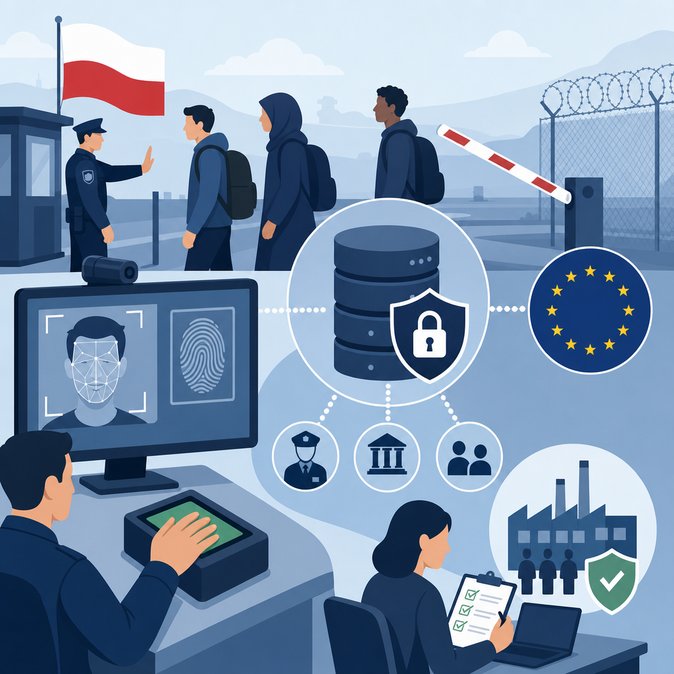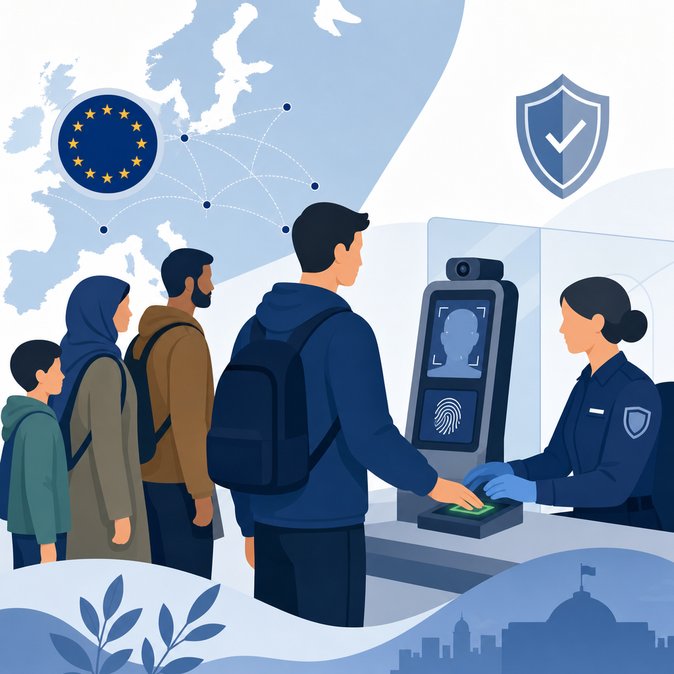
Although the final vote took place late on 15 May, details of Poland’s new Eurodac implementation act were circulated to government stakeholders and industry groups on the morning of 16 May, kicking off a four-week compliance countdown for organisations that assist migrants and asylum seekers. The law passed the Sejm 436-0, a rare display of cross-party unity on migration management. Under the act, Border Guard, police and asylum officers may collect fingerprints and facial images from third-country nationals as young as six who request protection or are caught crossing the EU’s external border irregularly. The data will be piped via a national access point operated by the Police Forensic Laboratory to Eurodac 2.0, the upgraded EU-wide database that becomes mandatory for all member states on 12 June 2026. Deputy Interior Minister Tomasz Szymański told MPs that the reform “eliminates legal grey zones” by unifying more than a dozen scattered provisions and explicitly allowing “proportionate coercive measures” should a person refuse to cooperate. Privacy safeguards, he insisted, meet both Polish law and the EU’s General Data Protection Regulation, with oversight by the domestic Personal Data Protection Office and the European Data Protection Supervisor.
![Polish Parliament green-lights Eurodac bill, paving way for compulsory biometric fingerprinting from 12 June]()
For companies needing hands-on assistance navigating Poland’s shifting immigration landscape, VisaHQ offers an end-to-end service. Via our dedicated Poland page (https://www.visahq.com/poland/) we explain the latest biometric requirements, prepare visa applications and schedule consular appointments, freeing HR teams to focus on strategic mobility planning while remaining fully compliant with Eurodac-related obligations.
For mobility professionals the change matters in two ways. First, non-EU dependants of transferred staff who claim temporary protection will now be fingerprinted on arrival. Second, Polish authorities will gain faster access to EU biometric hits when investigating identity fraud, making it harder for individuals who overstay in one member state to re-enter through another. Corporate travel teams should therefore review onboarding checks and ensure that foreign assignees carry evidence of legal stay elsewhere in the Schengen Area. Law firms note that the act aligns Poland with the EU Pact on Migration and Asylum adopted in April. Similar laws are expected in at least 12 other member states before the June deadline, potentially standardising biometric practice across the bloc within weeks.

For companies needing hands-on assistance navigating Poland’s shifting immigration landscape, VisaHQ offers an end-to-end service. Via our dedicated Poland page (https://www.visahq.com/poland/) we explain the latest biometric requirements, prepare visa applications and schedule consular appointments, freeing HR teams to focus on strategic mobility planning while remaining fully compliant with Eurodac-related obligations.
For mobility professionals the change matters in two ways. First, non-EU dependants of transferred staff who claim temporary protection will now be fingerprinted on arrival. Second, Polish authorities will gain faster access to EU biometric hits when investigating identity fraud, making it harder for individuals who overstay in one member state to re-enter through another. Corporate travel teams should therefore review onboarding checks and ensure that foreign assignees carry evidence of legal stay elsewhere in the Schengen Area. Law firms note that the act aligns Poland with the EU Pact on Migration and Asylum adopted in April. Similar laws are expected in at least 12 other member states before the June deadline, potentially standardising biometric practice across the bloc within weeks.