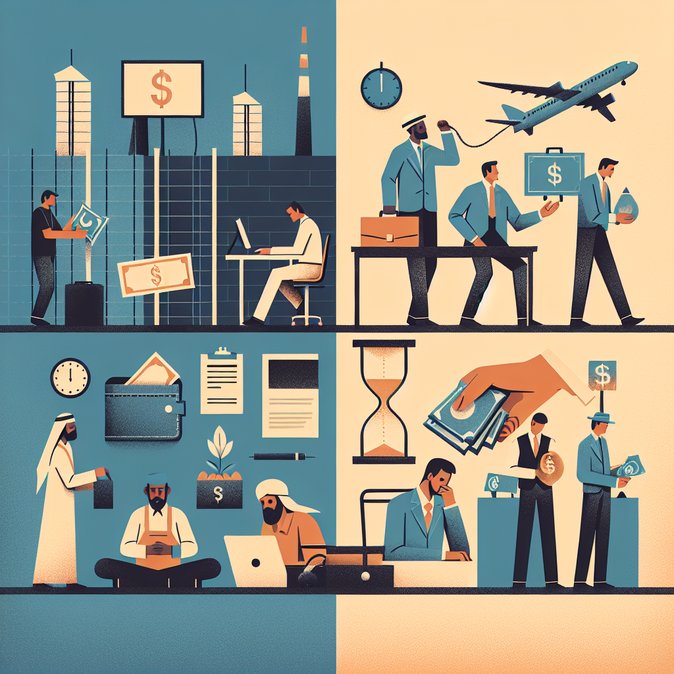
A new study published on 7 May 2026 by the Migrant Justice Institute and reported by ABC Asia paints the most granular picture to date of labour exploitation in Australia’s vast temporary-migration workforce. Researchers surveyed 9,889 migrant workers—80 per cent of whom were international students—across every state and territory. Two-thirds reported being paid below the legal minimum; one-quarter were underpaid by at least A$10 per hour. The authors estimate international students alone are short-changed by about A$61 million every week, or more than A$3 billion annually. While cash-in-hand payments have fallen from 44 per cent in 2016 to 23 per cent, “sham contracting” has surged.
![Landmark 10,000-respondent survey reveals systemic wage theft among Australia’s temporary visa holders]()
Against this backdrop, employers and migrants alike can benefit from clear, up-to-date guidance on Australia’s visa rules and compliance obligations. VisaHQ’s Australia portal (https://www.visahq.com/australia/) offers streamlined application tools, document checklists and expert support that help businesses sponsor workers correctly and help individuals understand their rights under each visa class, reducing the risk of inadvertent breaches that lead to exploitation.
More than one-third of respondents were engaged on Australian Business Numbers, a four-times-higher rate than the general workforce, allowing employers to dodge award wages, superannuation and Fair Work oversight. Casual arrangements compound the problem: casuals were twice as likely as permanent staff to earn below the national minimum. The report links rampant underpayment to Australia’s migration settings. The 48-hour-per-fortnight work cap for student-visa holders, reinstated in January, forces many into off-the-books jobs to make ends meet, thereby skewing the market toward non-compliant employers. Researchers argue that exploitation is now a core business model, not a fringe problem, and warn it distorts competition by letting rogue operators undercut compliant firms. Policy prescriptions include abolishing or raising the student work-hours cap, criminalising ‘sham contracting’ at scale, and granting migrant workers a secure visa to pursue wage-theft claims without fear of cancellation. The Albanese government’s incoming criminal wage-theft offence and Fair Work reforms will help, but the authors say enforcement resources must be dramatically increased to deter wrongdoing. For corporate mobility managers the findings carry reputational and supply-chain implications: clients and vendors that rely on hospitality, retail or cleaning services in Australia may unwittingly profit from systemic underpayment. Global companies are already under pressure from modern-slavery reporting rules, and the survey’s data could trigger new compliance audits. Employers sponsoring temporary skilled workers should also expect closer scrutiny of pay records as regulators pivot to enforcement.

Against this backdrop, employers and migrants alike can benefit from clear, up-to-date guidance on Australia’s visa rules and compliance obligations. VisaHQ’s Australia portal (https://www.visahq.com/australia/) offers streamlined application tools, document checklists and expert support that help businesses sponsor workers correctly and help individuals understand their rights under each visa class, reducing the risk of inadvertent breaches that lead to exploitation.
More than one-third of respondents were engaged on Australian Business Numbers, a four-times-higher rate than the general workforce, allowing employers to dodge award wages, superannuation and Fair Work oversight. Casual arrangements compound the problem: casuals were twice as likely as permanent staff to earn below the national minimum. The report links rampant underpayment to Australia’s migration settings. The 48-hour-per-fortnight work cap for student-visa holders, reinstated in January, forces many into off-the-books jobs to make ends meet, thereby skewing the market toward non-compliant employers. Researchers argue that exploitation is now a core business model, not a fringe problem, and warn it distorts competition by letting rogue operators undercut compliant firms. Policy prescriptions include abolishing or raising the student work-hours cap, criminalising ‘sham contracting’ at scale, and granting migrant workers a secure visa to pursue wage-theft claims without fear of cancellation. The Albanese government’s incoming criminal wage-theft offence and Fair Work reforms will help, but the authors say enforcement resources must be dramatically increased to deter wrongdoing. For corporate mobility managers the findings carry reputational and supply-chain implications: clients and vendors that rely on hospitality, retail or cleaning services in Australia may unwittingly profit from systemic underpayment. Global companies are already under pressure from modern-slavery reporting rules, and the survey’s data could trigger new compliance audits. Employers sponsoring temporary skilled workers should also expect closer scrutiny of pay records as regulators pivot to enforcement.
More From Australia
View all
Hantavirus-hit cruise ship heads for Tenerife with four Australians aboard; Canberra issues travel-health advisory
Australia arrests three ISIS-linked women on arrival; repatriation flight ends years in Syrian camp