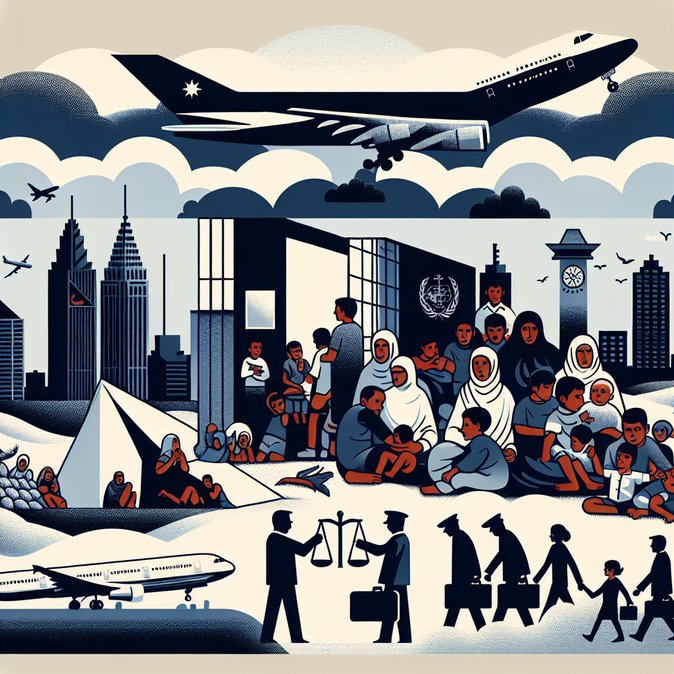
In one of the most complex repatriation operations since Australia began bringing home citizens trapped in former conflict zones, three women and nine children with links to Islamic State landed in Melbourne and Sydney on 7 May 2026. Australian Federal Police (AFP) officers arrested the women as soon as they cleared immigration. Two were later charged with crimes against humanity—including enslavement—while a third faces terrorism-membership and declared-area offences, each carrying sentences of up to 25 years. The arrivals concluded a fortnight-long journey that started when the group was released from al-Roj camp in north-eastern Syria, a facility that still holds an estimated 21 Australian nationals. Qatar’s role was pivotal: the travellers transited through Doha on two closely timed Qatar Airways flights before touching down on opposite sides of the continent. The Department of Foreign Affairs and Trade insists it provided “no facilitation”, leaving Syrian and Qatari authorities to manage exit arrangements. Border-control agencies mounted an extensive, low-profile security cordon. In Melbourne, plain-clothes escorts guided the families through a media scrum into waiting minibuses, while tactical police units ring-fenced public areas. Similar precautions were taken in Sydney.
![ISIS-linked Women and Children Repatriated to Australia Face Terror and Slavery Charges]()
Amid these evolving requirements, VisaHQ can streamline the visa and travel-document process for both individuals and corporate mobility teams, providing real-time compliance checks, application support, and alerts for Australian visas as well as global transit requirements. Learn more at https://www.visahq.com/australia/
Officials say none of the returning minors are targets of investigation, but child-protection assessments have begun in both states. The repatriation has reignited Australia’s domestic debate on how to balance national-security risks with humanitarian obligations to citizens—especially children—stranded in failed states. Muslim-community leaders have urged calm, warning that inflammatory rhetoric could fuel social division. Corporate mobility managers should expect stricter screening for Middle-East transit itineraries in the short term as authorities recalibrate watch-lists and no-fly databases. For multinational employers, the episode is a reminder that citizenship does not guarantee unfettered travel: Temporary Exclusion Orders and terrorism-related arrest warrants can still intercept staff at the border. Firms moving personnel into or out of Australia should therefore maintain real-time checks on employees’ legal status and consult travel-risk teams before booking complex routings via conflict-adjacent regions.

Amid these evolving requirements, VisaHQ can streamline the visa and travel-document process for both individuals and corporate mobility teams, providing real-time compliance checks, application support, and alerts for Australian visas as well as global transit requirements. Learn more at https://www.visahq.com/australia/
Officials say none of the returning minors are targets of investigation, but child-protection assessments have begun in both states. The repatriation has reignited Australia’s domestic debate on how to balance national-security risks with humanitarian obligations to citizens—especially children—stranded in failed states. Muslim-community leaders have urged calm, warning that inflammatory rhetoric could fuel social division. Corporate mobility managers should expect stricter screening for Middle-East transit itineraries in the short term as authorities recalibrate watch-lists and no-fly databases. For multinational employers, the episode is a reminder that citizenship does not guarantee unfettered travel: Temporary Exclusion Orders and terrorism-related arrest warrants can still intercept staff at the border. Firms moving personnel into or out of Australia should therefore maintain real-time checks on employees’ legal status and consult travel-risk teams before booking complex routings via conflict-adjacent regions.