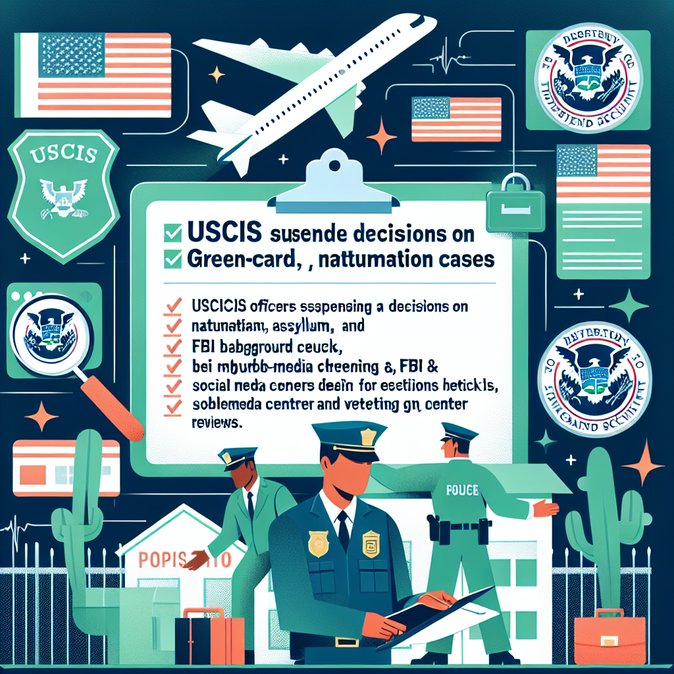
U.S. Citizenship and Immigration Services (USCIS) has quietly ordered adjudicators to pause final decisions on a wide swath of domestic immigration filings while officers run new layers of security checks. The policy, revealed in a May 7 agency memorandum, applies to adjustment-of-status, naturalization, asylum and many employment authorization applications. Officers must now re-submit fingerprints through upgraded FBI databases, run social-media sweeps and send certain files to a new Vetting Center dubbed “Operation PARRIS.” The freeze is not a filing ban—petitions keep moving through intake—but applicants cannot receive approvals (or denials) until the enhanced checks clear.
![USCIS Puts Thousands of Immigration Cases on Hold as ‘Strengthened Screening & Vetting’ Kicks In]()
For applicants and employers trying to make sense of these shifting requirements, VisaHQ offers step-by-step guidance, document preparation and deadline-tracking tools to help keep filings on course as timelines stretch. Their U.S. portal (https://www.visahq.com/united-states/) consolidates real-time processing updates and personalized checklists, providing a reliable compass while USCIS works through its additional vetting layers.
The hold is mandatory for nationals of 39 countries listed in Presidential Proclamations 10949 and 10998 and retroactive for benefits granted as far back as January 2021. Immigration lawyers report interviews and oath ceremonies being postponed nationwide, with some field offices shelving hundreds of files. USCIS says the slowdown is temporary and necessary to close security gaps, but has given no timeline. Employers complain that routine green-card and EAD renewals are stalling, threatening work authorization for foreign staff. Universities worry that OPT participants could lose employment eligibility if EAD cards expire mid-process. The agency’s shift illustrates a broader move toward “maximum vetting” under the Trump administration’s second term. Case holds, shorter EAD validity periods and re-checks of old approvals point to a security-first mindset that places processing speed a distant second. Companies should plan for longer lead-times on mobility assignments, budget for interim work-permit extensions and caution foreign staff against international travel while applications are pending. Practitioners expect a wave of Administrative Procedure Act lawsuits if the pauses drag on. Early injunctions have already forced USCIS to decide a handful of long-stalled cases, signaling that courts may intervene if processing times become indefinite.

For applicants and employers trying to make sense of these shifting requirements, VisaHQ offers step-by-step guidance, document preparation and deadline-tracking tools to help keep filings on course as timelines stretch. Their U.S. portal (https://www.visahq.com/united-states/) consolidates real-time processing updates and personalized checklists, providing a reliable compass while USCIS works through its additional vetting layers.
The hold is mandatory for nationals of 39 countries listed in Presidential Proclamations 10949 and 10998 and retroactive for benefits granted as far back as January 2021. Immigration lawyers report interviews and oath ceremonies being postponed nationwide, with some field offices shelving hundreds of files. USCIS says the slowdown is temporary and necessary to close security gaps, but has given no timeline. Employers complain that routine green-card and EAD renewals are stalling, threatening work authorization for foreign staff. Universities worry that OPT participants could lose employment eligibility if EAD cards expire mid-process. The agency’s shift illustrates a broader move toward “maximum vetting” under the Trump administration’s second term. Case holds, shorter EAD validity periods and re-checks of old approvals point to a security-first mindset that places processing speed a distant second. Companies should plan for longer lead-times on mobility assignments, budget for interim work-permit extensions and caution foreign staff against international travel while applications are pending. Practitioners expect a wave of Administrative Procedure Act lawsuits if the pauses drag on. Early injunctions have already forced USCIS to decide a handful of long-stalled cases, signaling that courts may intervene if processing times become indefinite.