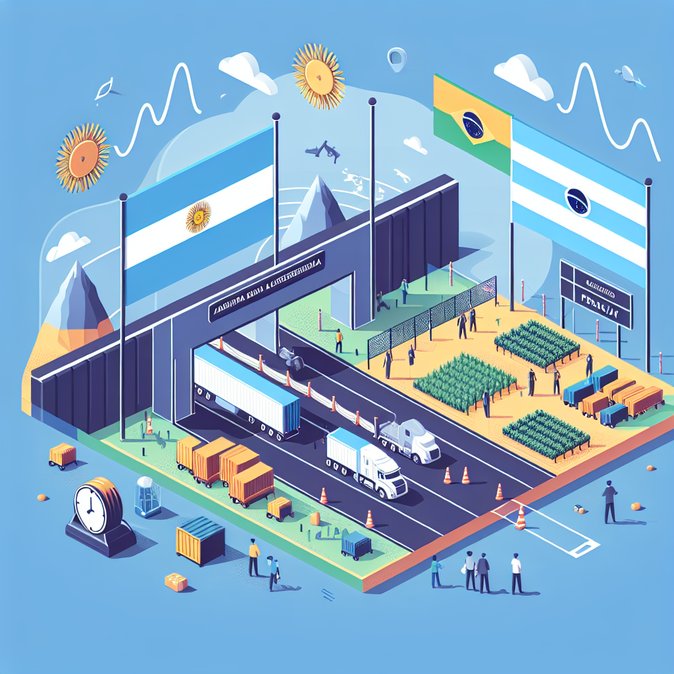
Brazil’s Federal Revenue Service (Receita Federal) announced on 29 April 2026 that customs, agricultural and migration inspections on the Tancredo Neves Bridge between Foz do Iguaçu (Paraná) and Puerto Iguazú (Misiones) will be integrated into a single facility on the Brazilian side. The so-called Área de Controle Integrado (ACI) will start operating when the new Foz do Iguaçu dry port opens in December 2026. Today, truck drivers must stop first at Argentine control booths and then repeat paperwork with Brazilian agencies. Under the ACI model, officers from both countries will sit shoulder-to-shoulder, performing joint x-ray scanning, phytosanitary checks and passport stamping in one go.
![Brazil and Argentina to launch one-stop cargo and migration checks at Foz do Iguaçu border]()
Companies and individuals planning cross-border movements can also streamline their travel documentation in advance. VisaHQ’s digital platform (https://www.visahq.com/brazil/) guides users through Brazil’s visa and permit requirements in a few clicks, helping exporters, business travelers and assignees stay ahead of regulatory shifts like the new ACI procedures and avoid unexpected delays.
Receita officials say the system has already cut dwell times by 40 % at a pilot site on the Santa Catarina-Misiones border. For logistics managers the change promises concrete gains: fewer line-ups, lower demurrage and reduced risk of documentation errors that can trigger heavy fines. Multinationals exporting automotive parts, chemicals and perishables through the Mercosur corridor should start mapping new standard operating procedures and update driver briefings by October, when dry-run simulations begin. The announcement also hints at future passenger benefits. Receita confirmed talks with Paraguay to replicate the model at the Friendship Bridge, which handles 38 % of all Brazilian land departures. If successful, the initiative could become a template for other Mercosur crossings, supporting smoother commuter traffic and faster assignment moves within the bloc.

Companies and individuals planning cross-border movements can also streamline their travel documentation in advance. VisaHQ’s digital platform (https://www.visahq.com/brazil/) guides users through Brazil’s visa and permit requirements in a few clicks, helping exporters, business travelers and assignees stay ahead of regulatory shifts like the new ACI procedures and avoid unexpected delays.
Receita officials say the system has already cut dwell times by 40 % at a pilot site on the Santa Catarina-Misiones border. For logistics managers the change promises concrete gains: fewer line-ups, lower demurrage and reduced risk of documentation errors that can trigger heavy fines. Multinationals exporting automotive parts, chemicals and perishables through the Mercosur corridor should start mapping new standard operating procedures and update driver briefings by October, when dry-run simulations begin. The announcement also hints at future passenger benefits. Receita confirmed talks with Paraguay to replicate the model at the Friendship Bridge, which handles 38 % of all Brazilian land departures. If successful, the initiative could become a template for other Mercosur crossings, supporting smoother commuter traffic and faster assignment moves within the bloc.