
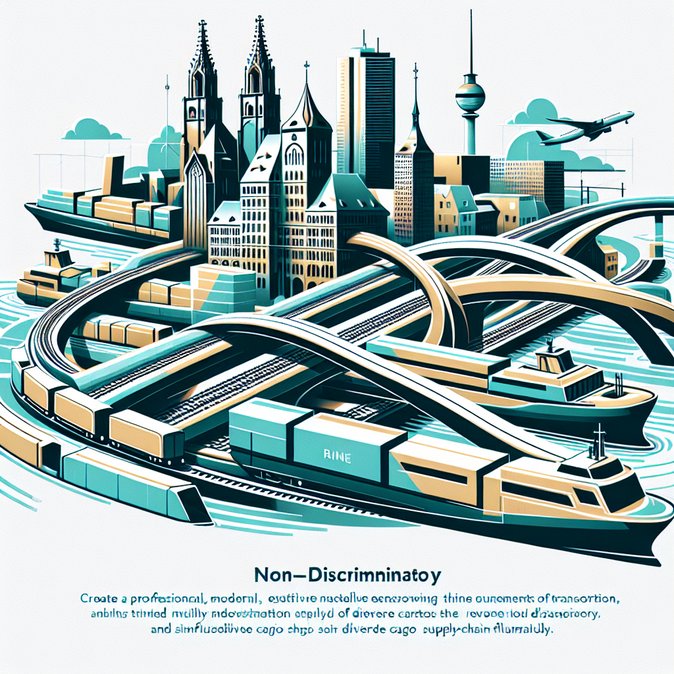
Switzerland’s Rail Transport Commission (RailCom) has added the country’s Rhine ports to the list of infrastructure it supervises for fair access, following amendments to the Goods Carriage Act that entered into force on 1 January 2026. In a press release issued on 27 April, RailCom detailed how it will police non-discriminatory entry to rail-linked quays and terminals in Basel, Birsfelden and Kleinhüningen, critical gateways for containerised cargo moving between northern seaports and Swiss industry.
![RailCom Takes Charge of Rhine-Port Access as Switzerland Widens Non-Discriminatory Transport Rules]()
For international logistics companies dispatching engineers or relocation specialists to Basel’s river terminals, making sure those staff can enter Switzerland with the correct paperwork is just as vital as securing the right train paths. VisaHQ streamlines that administrative side, providing up-to-date visa guidance, document checklists and online application handling for Swiss entry permits and 200-plus other destinations—learn more at https://www.visahq.com/switzerland/
The watchdog’s 2025 activity report, also published on Monday, highlights two precedent-setting rulings: one against a discount scheme at an intermodal terminal that disadvantaged rival operators, and another upholding the capacity-allocation body’s decision to prioritise freight over a passenger operator on a contested train path. For supply-chain managers and relocation firms moving household goods, the extension of RailCom’s remit promises more predictable slot allocations and potentially lower last-mile costs via Switzerland’s dense rail network. The move aligns with the Federal Council’s broader “modal shift” strategy, which aims to keep trans-Alpine freight on rail and relieve road congestion that complicates cross-border removals into southern Germany and northern Italy. RailCom is also spearheading the rail use-case within the forthcoming national Mobility Data Infrastructure (MODI) programme, pledging to open real-time infrastructure data to operators by 2027. Access to such data is expected to help logistics planners anticipate bottlenecks and to integrate door-to-door routing tools for assignees. Industry groups welcomed the decision but cautioned that genuine modal shift will require investment in sidings and digital-capacity-management systems. They urged the Federal Office of Transport to accelerate approval of ETCS Level 2 signalling on key freight corridors to ensure interoperability with neighbouring EU networks.
For international logistics companies dispatching engineers or relocation specialists to Basel’s river terminals, making sure those staff can enter Switzerland with the correct paperwork is just as vital as securing the right train paths. VisaHQ streamlines that administrative side, providing up-to-date visa guidance, document checklists and online application handling for Swiss entry permits and 200-plus other destinations—learn more at https://www.visahq.com/switzerland/
The watchdog’s 2025 activity report, also published on Monday, highlights two precedent-setting rulings: one against a discount scheme at an intermodal terminal that disadvantaged rival operators, and another upholding the capacity-allocation body’s decision to prioritise freight over a passenger operator on a contested train path. For supply-chain managers and relocation firms moving household goods, the extension of RailCom’s remit promises more predictable slot allocations and potentially lower last-mile costs via Switzerland’s dense rail network. The move aligns with the Federal Council’s broader “modal shift” strategy, which aims to keep trans-Alpine freight on rail and relieve road congestion that complicates cross-border removals into southern Germany and northern Italy. RailCom is also spearheading the rail use-case within the forthcoming national Mobility Data Infrastructure (MODI) programme, pledging to open real-time infrastructure data to operators by 2027. Access to such data is expected to help logistics planners anticipate bottlenecks and to integrate door-to-door routing tools for assignees. Industry groups welcomed the decision but cautioned that genuine modal shift will require investment in sidings and digital-capacity-management systems. They urged the Federal Office of Transport to accelerate approval of ETCS Level 2 signalling on key freight corridors to ensure interoperability with neighbouring EU networks.