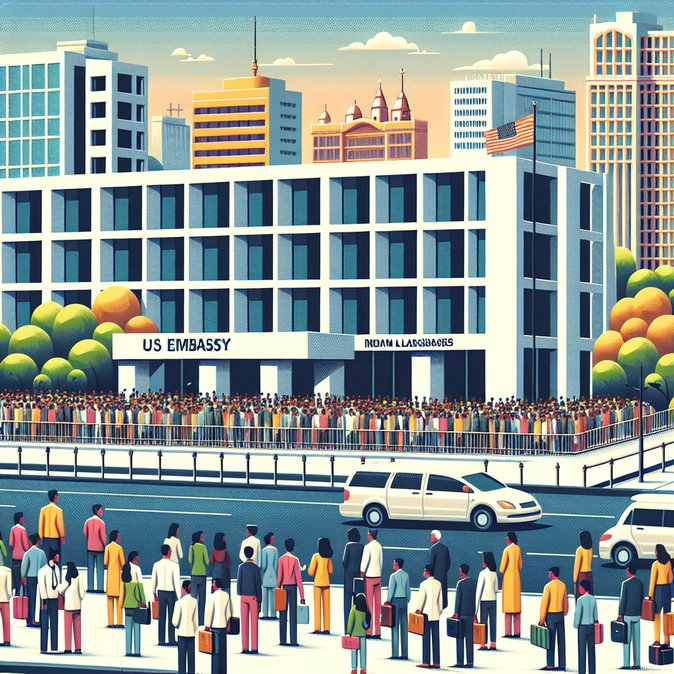
After four months of near-paralysis, US visa scheduling portals lit up overnight with new appointment dates for work and student visas. According to immigration attorneys quoted by the Financial Express, consular posts in New Delhi, Mumbai, Chennai, Hyderabad and Kolkata have begun “batch-dropping” interview slots for H-1B, H-4 and initial F-1 applicants. The openings follow a backlog that stretched some appointments into early 2027 after additional social-media vetting was introduced in December 2025. Early data shows dozens of H-1B slots released for July–August and a similar volume of F-1 dates for June, critical for students targeting the Fall 2026 intake. Appointment inventory is appearing unpredictably—sometimes at 02:00–04:00 IST, sometimes mid-afternoon—and disappears within minutes, suggesting automated bots are again scraping the system.
![US Consulates quietly release fresh H-1B and F-1 interview slots across India]()
Amid this volatility, travellers may find it helpful to lean on an experienced intermediary. VisaHQ’s India team can monitor slot drops in real time, assist with DS-160 preparation, and make sure payment and courier details are locked in correctly—minimising the risk of an auto-cancelled appointment. Learn more at https://www.visahq.com/india/
Consulates have not issued a public statement, but the Murthy Law Firm confirms the pattern across client accounts and expects more drops every 7–10 days as staffing levels normalise. For Indian tech employers the partial reopening is significant. Hundreds of H-1B professionals who travelled home for weddings or medical emergencies have been stranded since December when their interviews were cancelled en masse. Re-entry delays have forced companies to invoke work-from-India arrangements or shift projects to near-shore hubs in Mexico and Poland. Fresh slots should allow at least some of those workers—and their H-4 dependents—to return before peak US holiday travel in late August. Students, meanwhile, face a mixed picture. First-time F-1 applicants with no prior refusals can now secure biometric and interview dates, but candidates with a previous denial still see ‘No Appointments Available’. Education consultants advise students to prepare documentation in advance, monitor the portal outside conventional refresh times, and beware paid slot-grabbing services that violate US Travel Docs terms of use. Mobility managers should alert travellers that the system remains fragile. Once a slot is booked it can be auto-cancelled if the DS-160 is incomplete or if payment reconciliation lags; companies should therefore fund MRV fees promptly and lock in courier details at the time of booking. Those already in the US are still urged to defer non-urgent travel until consular capacity stabilises—a process experts believe will run into Q4 2026.

Amid this volatility, travellers may find it helpful to lean on an experienced intermediary. VisaHQ’s India team can monitor slot drops in real time, assist with DS-160 preparation, and make sure payment and courier details are locked in correctly—minimising the risk of an auto-cancelled appointment. Learn more at https://www.visahq.com/india/
Consulates have not issued a public statement, but the Murthy Law Firm confirms the pattern across client accounts and expects more drops every 7–10 days as staffing levels normalise. For Indian tech employers the partial reopening is significant. Hundreds of H-1B professionals who travelled home for weddings or medical emergencies have been stranded since December when their interviews were cancelled en masse. Re-entry delays have forced companies to invoke work-from-India arrangements or shift projects to near-shore hubs in Mexico and Poland. Fresh slots should allow at least some of those workers—and their H-4 dependents—to return before peak US holiday travel in late August. Students, meanwhile, face a mixed picture. First-time F-1 applicants with no prior refusals can now secure biometric and interview dates, but candidates with a previous denial still see ‘No Appointments Available’. Education consultants advise students to prepare documentation in advance, monitor the portal outside conventional refresh times, and beware paid slot-grabbing services that violate US Travel Docs terms of use. Mobility managers should alert travellers that the system remains fragile. Once a slot is booked it can be auto-cancelled if the DS-160 is incomplete or if payment reconciliation lags; companies should therefore fund MRV fees promptly and lock in courier details at the time of booking. Those already in the US are still urged to defer non-urgent travel until consular capacity stabilises—a process experts believe will run into Q4 2026.