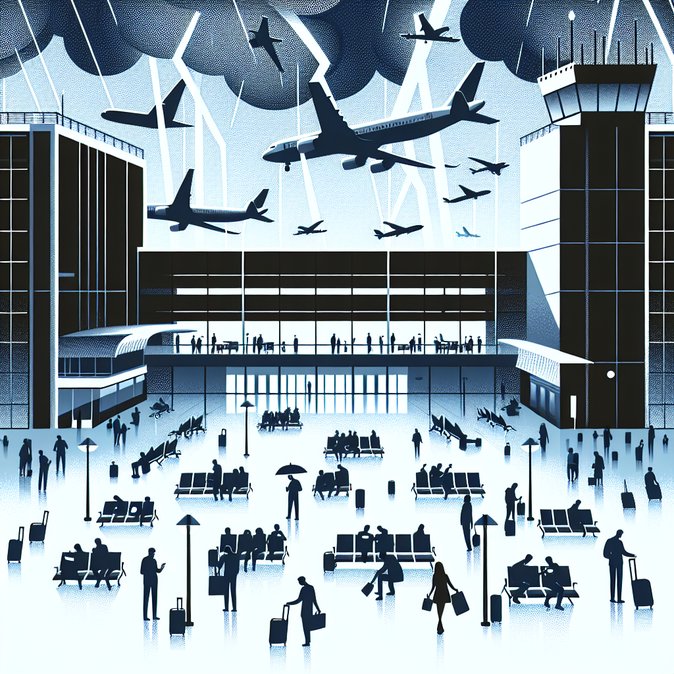
India’s largest airline IndiGo issued an early-morning passenger advisory on April 18, 2026, cautioning that thunderstorms over the National Capital Region could trigger cascading delays across its domestic and international network. According to the airline’s post on X (formerly Twitter) and a detailed statement carried by several news outlets, pockets of heavy rain, lightning and 30–40 km/h gusts were forecast by the India Meteorological Department for the evening of 17 April and the first half of 18 April. IndiGo said it was “closely monitoring the weather and doing our best to get you where you need to be, safely and smoothly,” urging passengers to check flight status on its website or app before leaving for the airport and to allow extra time for road transfers. Delhi’s Indira Gandhi International Airport (DEL) is the primary hub for IndiGo as well as a critical connecting point for many business travellers heading onward to Bengaluru, Mumbai, Singapore, Dubai and London.
For passengers whose disrupted itineraries suddenly require a change of visa dates or entirely new travel documents, VisaHQ can step in to handle the paperwork quickly. The company’s easy-to-use platform (https://www.visahq.com/india/) allows individual travellers and corporate mobility teams to apply for, renew or expedite Indian and foreign visas online, shaving days off traditional processing times and letting flyers focus on re-booking their flights rather than queuing at consulates.
![IndiGo warns travellers of weather-related flight disruptions in Delhi]()
Even short-lived runway closures in Delhi often ripple through the carrier’s tightly-banked schedule, creating missed connections for expatriate managers and project teams. For mobility managers, the advisory is a reminder to build flexibility into same-day itineraries during India’s pre-monsoon season (April–June). Companies with assignees flying out of Delhi this weekend were advised to:
• Monitor flight trackers and airline apps for gate changes or rolling delays.
• Hold buffer inventory of hotel rooms near DEL in case of overnight mis-connects.
• Remind travellers that rebooking on rivals may require a fresh Goods and Services Tax (GST) invoice for expense compliance.
Although the IMD predicts a return to clear skies from April 20, maximum temperatures will remain in the 39-42 °C range—conditions that can re-ignite heat-convection storms with little notice. Mobility planners should therefore continue to factor weather volatility into duty-of-care, especially for itineraries involving elderly dependants or small children.
For passengers whose disrupted itineraries suddenly require a change of visa dates or entirely new travel documents, VisaHQ can step in to handle the paperwork quickly. The company’s easy-to-use platform (https://www.visahq.com/india/) allows individual travellers and corporate mobility teams to apply for, renew or expedite Indian and foreign visas online, shaving days off traditional processing times and letting flyers focus on re-booking their flights rather than queuing at consulates.

Even short-lived runway closures in Delhi often ripple through the carrier’s tightly-banked schedule, creating missed connections for expatriate managers and project teams. For mobility managers, the advisory is a reminder to build flexibility into same-day itineraries during India’s pre-monsoon season (April–June). Companies with assignees flying out of Delhi this weekend were advised to:
• Monitor flight trackers and airline apps for gate changes or rolling delays.
• Hold buffer inventory of hotel rooms near DEL in case of overnight mis-connects.
• Remind travellers that rebooking on rivals may require a fresh Goods and Services Tax (GST) invoice for expense compliance.
Although the IMD predicts a return to clear skies from April 20, maximum temperatures will remain in the 39-42 °C range—conditions that can re-ignite heat-convection storms with little notice. Mobility planners should therefore continue to factor weather volatility into duty-of-care, especially for itineraries involving elderly dependants or small children.