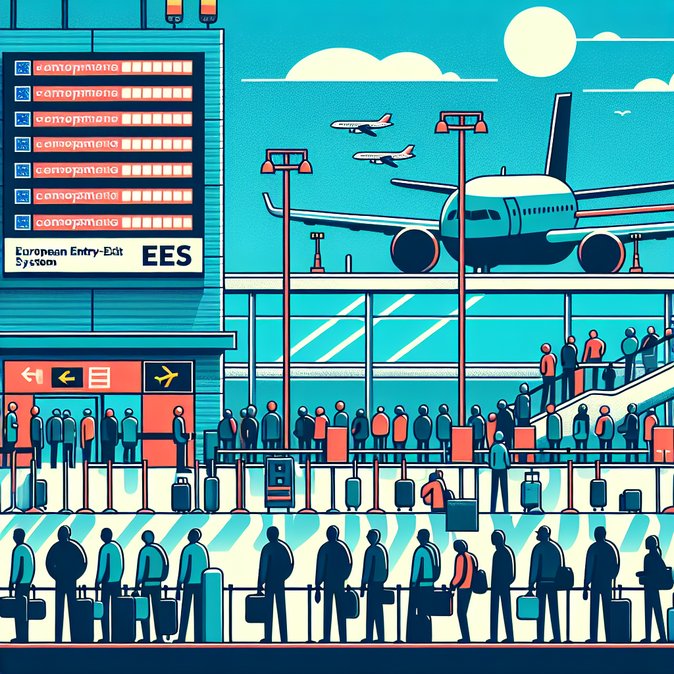
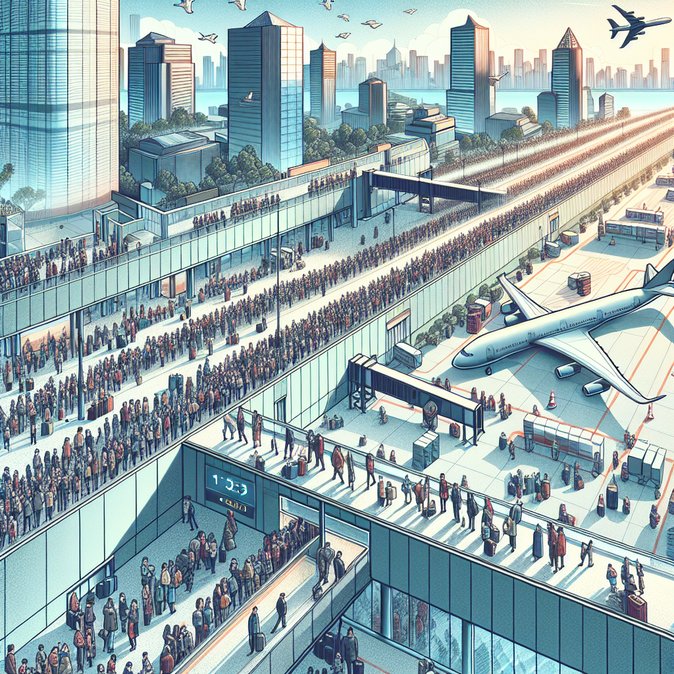
Five days after the EU’s biometric Entry/Exit System (EES) became mandatory, Italian airports are experiencing some of the longest border-control waits in the bloc. Airports Council International Europe (ACI Europe) told The Guardian on 15 April that passengers in Milan, Rome and Venice are facing queues of up to three hours as police collect fingerprints and facial images from non-EU travellers. On Sunday, more than 100 EasyJet customers missed their Milan–Manchester flight when the aircraft had to leave with just 34 people on board. Ryanair chief executive Michael O’Leary described the situation as a “shambles”, urging Brussels to postpone strict enforcement until after the summer rush.
![EU Entry/Exit System Triggers Three-Hour Queues at Italian Airports, Industry Calls for Flexibility]()
At this juncture, travellers and corporate mobility teams looking for practical support may find it useful to consult VisaHQ’s Italy portal (https://www.visahq.com/italy/). The platform provides real-time updates on EES requirements, step-by-step guidance on visa and passport validity checks, and optional courier services for any necessary documentation—helping ensure that employees reach the airport fully prepared and minimising the risk of last-minute surprises.
The European Commission insists that average first-time registration takes only 70 seconds, but acknowledges “technical issues” in “a few member states”, including Italy. Trade bodies want the power to suspend registration requirements temporarily when queues exceed set thresholds; they argue that without relief measures, summer traffic could overwhelm terminals already staffing-constrained by strike action and seasonal absenteeism. For corporate mobility teams, the new bottlenecks pose practical challenges. Travel policies drafted last year assumed a 90-minute departure window at Rome-Fiumicino; companies such as Accenture and Leonardo are now revising guidance to advise assignees to arrive at least three hours before departure. Relocation consultants say delayed residence-permit appointments are also being reported as Questura offices divert staff to airport duty. Airlines warn that prolonged queues will cascade into schedule disruptions. Missed outbound flights leave empty seats on return legs, forcing carriers to reposition crew or cancel rotations. Business-class no-shows also dent ancillary revenue. Corporate travel buyers are therefore advocating flexible change fees and automatic rebooking when boarding passes are issued but travellers cannot clear passport control in time. The Interior Ministry has promised to deploy 300 additional border police and open more automated e-gates at Milan Malpensa before 1 May. Travel managers should monitor airport advisories closely and brief staff on EES procedures, including the need for a full-face photograph without glasses or headgear and fingerprint scans of four fingers. Frequent travellers can expect faster processing once their initial enrolment is complete.
At this juncture, travellers and corporate mobility teams looking for practical support may find it useful to consult VisaHQ’s Italy portal (https://www.visahq.com/italy/). The platform provides real-time updates on EES requirements, step-by-step guidance on visa and passport validity checks, and optional courier services for any necessary documentation—helping ensure that employees reach the airport fully prepared and minimising the risk of last-minute surprises.
The European Commission insists that average first-time registration takes only 70 seconds, but acknowledges “technical issues” in “a few member states”, including Italy. Trade bodies want the power to suspend registration requirements temporarily when queues exceed set thresholds; they argue that without relief measures, summer traffic could overwhelm terminals already staffing-constrained by strike action and seasonal absenteeism. For corporate mobility teams, the new bottlenecks pose practical challenges. Travel policies drafted last year assumed a 90-minute departure window at Rome-Fiumicino; companies such as Accenture and Leonardo are now revising guidance to advise assignees to arrive at least three hours before departure. Relocation consultants say delayed residence-permit appointments are also being reported as Questura offices divert staff to airport duty. Airlines warn that prolonged queues will cascade into schedule disruptions. Missed outbound flights leave empty seats on return legs, forcing carriers to reposition crew or cancel rotations. Business-class no-shows also dent ancillary revenue. Corporate travel buyers are therefore advocating flexible change fees and automatic rebooking when boarding passes are issued but travellers cannot clear passport control in time. The Interior Ministry has promised to deploy 300 additional border police and open more automated e-gates at Milan Malpensa before 1 May. Travel managers should monitor airport advisories closely and brief staff on EES procedures, including the need for a full-face photograph without glasses or headgear and fingerprint scans of four fingers. Frequent travellers can expect faster processing once their initial enrolment is complete.
More From Italy
View all
Flight Disruptions Mount: 356 Delays and 54 Cancellations Recorded Across Five Italian Hubs on 15 April
Nationwide Transport Strike Set for 20–25 April Could Disrupt All International Freight Movements to and from Italy