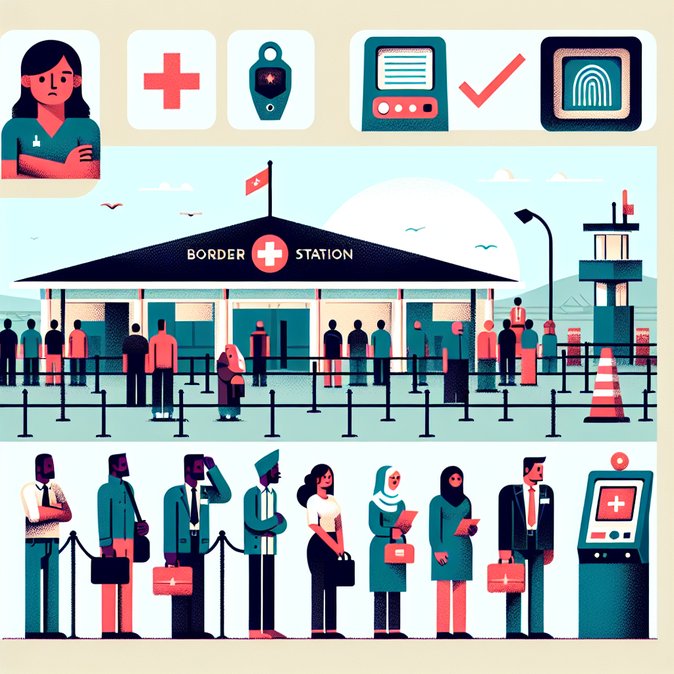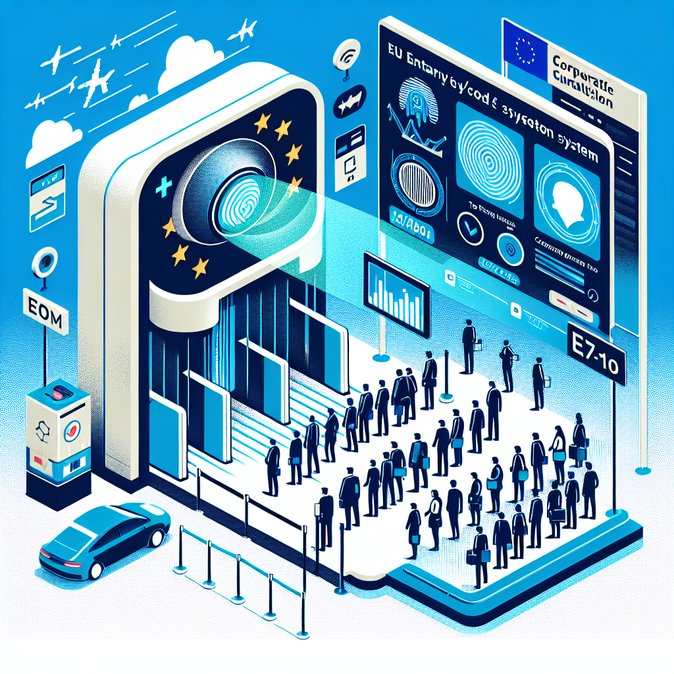
France has formally brought all of its external border crossings—airports, seaports, and the Channel Tunnel—into the European Union’s new Entry/Exit System (EES). The milestone, confirmed on 16 April 2026, means that manual passport stamps are no longer issued to most non-EU visitors. Instead, travellers’ passports are scanned and matched with live fingerprints and facial images taken at automated kiosks. The information is shared instantly with a central EU database that records the exact date and location of each arrival and departure. The EES is designed to enforce the Schengen short-stay rule—that non-EU nationals may remain only 90 days in any rolling 180-day period—by generating automatic overstay alerts.
For multinational companies that rotate staff through Paris, Lyon or Toulouse on short-term assignments, the system removes the margin for error that existed under the paper-stamp regime. Employers must now track employees’ travel more accurately to avoid inadvertent overstays that could trigger fines or future entry bans.
![France completes switch to EU Entry/Exit System, bringing biometric border checks to business travellers]()
Whether you manage a corporate travel programme or plan a single family holiday, VisaHQ can help you stay ahead of these changes. Its dedicated France page (https://www.visahq.com/france/) offers live updates on EES and ETIAS implementation, automated reminders of Schengen-day balances, and an easy interface for ordering any supporting visas or residence-permit renewals—saving travellers and HR teams precious time at the border.
From the traveller’s perspective, the process is a double-edged sword. At quiet times the self-service kiosks shave minutes off the inspection, but in peak periods the biometric capture has lengthened queues. French airports group ADP estimates that enrolling first-time passengers takes 45–90 seconds—three times longer than a stamp—prompting Charles-de-Gaulle and Orly to redeploy staff and add signage for a bilingual ‘business lane’. Frequent travellers benefit from ‘subsequent-visit’ e-gates; once the initial biometrics are on file, processing time drops sharply. Corporate mobility teams should update travel policies immediately. Managers are advised to brief assignees on the new procedure, schedule extra time at departure airports for the first post-rollout trip, and remind employees to carry proof of residence permits if they hold French titres de séjour—long-stay visa and residence-permit holders are exempt from EES registration. Carriers are also under ‘carrier liability’ rules to verify that passengers have enrolled, so airlines may deny boarding to non-compliant travellers. Looking ahead, the EU will overlay the EES with ETIAS, a pre-travel authorisation similar to the US ESTA, by late 2026. France’s successful switchover puts it on the front line of that second digital border project. Companies that move people through France regularly should therefore integrate passport-data capture into their mobility software and monitor for further announcements on ETIAS launch dates and airline testing windows.
For multinational companies that rotate staff through Paris, Lyon or Toulouse on short-term assignments, the system removes the margin for error that existed under the paper-stamp regime. Employers must now track employees’ travel more accurately to avoid inadvertent overstays that could trigger fines or future entry bans.

Whether you manage a corporate travel programme or plan a single family holiday, VisaHQ can help you stay ahead of these changes. Its dedicated France page (https://www.visahq.com/france/) offers live updates on EES and ETIAS implementation, automated reminders of Schengen-day balances, and an easy interface for ordering any supporting visas or residence-permit renewals—saving travellers and HR teams precious time at the border.
From the traveller’s perspective, the process is a double-edged sword. At quiet times the self-service kiosks shave minutes off the inspection, but in peak periods the biometric capture has lengthened queues. French airports group ADP estimates that enrolling first-time passengers takes 45–90 seconds—three times longer than a stamp—prompting Charles-de-Gaulle and Orly to redeploy staff and add signage for a bilingual ‘business lane’. Frequent travellers benefit from ‘subsequent-visit’ e-gates; once the initial biometrics are on file, processing time drops sharply. Corporate mobility teams should update travel policies immediately. Managers are advised to brief assignees on the new procedure, schedule extra time at departure airports for the first post-rollout trip, and remind employees to carry proof of residence permits if they hold French titres de séjour—long-stay visa and residence-permit holders are exempt from EES registration. Carriers are also under ‘carrier liability’ rules to verify that passengers have enrolled, so airlines may deny boarding to non-compliant travellers. Looking ahead, the EU will overlay the EES with ETIAS, a pre-travel authorisation similar to the US ESTA, by late 2026. France’s successful switchover puts it on the front line of that second digital border project. Companies that move people through France regularly should therefore integrate passport-data capture into their mobility software and monitor for further announcements on ETIAS launch dates and airline testing windows.