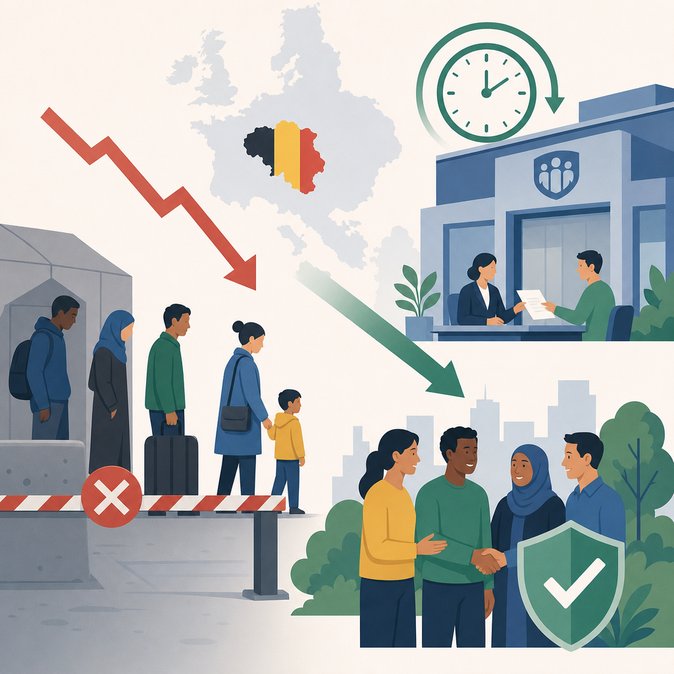
Belgium’s tightening of asylum and reception policies is already reshaping migration flows, according to figures disclosed on the current-affairs programme ‘WNL Op Zondag’ on 1 June 2026. Defence Minister Theo Francken – who previously served as State Secretary for Migration – told the Dutch broadcaster that asylum requests lodged in Belgium between January and April dropped 30.5 % compared with the same period last year. The government credits the decline to emergency measures introduced in mid-2025: curbs on benefits for recognised refugees who overstay reception facilities, stricter screening of ‘Dublin’ re-applications by migrants already granted protection in another EU country, and an assertive information campaign aimed at people-smuggling networks. Francken’s message – “Belgium is not the land of milk and honey” – reflects a deliberate strategy to reduce what officials call “secondary movements” towards Belgium’s comparatively generous welfare system. For mobility managers, lower asylum pressure could indirectly ease bottlenecks in Belgium’s overstretched Foreigners’ Office, which handles both protection claims and work-permit residence cards. In 2025 the agency struggled with 10- to 12-week delays issuing single-permit cards, complicating staff moves for multinational companies.
![Asylum Applications in Belgium Fall 30 % in First Four Months of 2026 After Tougher Rules]()
Navigating this evolving landscape can be complex; services like VisaHQ provide clear, up-to-date guidance on Belgian visa types, document requirements and appointment scheduling, helping both employers and individuals stay compliant as rules change (see https://www.visahq.com/belgium/).
A sustained fall in humanitarian caseload may free up capacity for economic-migration files. Neighbouring governments are watching. Dutch MP Ruben Brekelmans told the same broadcast that several Belgian tactics – particularly faster terminations of reception benefits – are “interesting” for the Netherlands, though domestic legal hurdles remain. If replicated elsewhere, such measures could recalibrate asylum routes within the Benelux and shift pressure back to Mediterranean states where most irregular entries occur. Advocacy groups caution that Belgium’s approach risks pushing recognised refugees into homelessness if affordable housing is unavailable, and could trigger more appeals in the already backlogged Council for Alien Law Litigation. Employers relying on humanitarian-parole hiring schemes should monitor whether the tougher stance dampens access to certain talent pools, such as Syrian IT developers previously channelled through resettlement programmes.

Navigating this evolving landscape can be complex; services like VisaHQ provide clear, up-to-date guidance on Belgian visa types, document requirements and appointment scheduling, helping both employers and individuals stay compliant as rules change (see https://www.visahq.com/belgium/).
A sustained fall in humanitarian caseload may free up capacity for economic-migration files. Neighbouring governments are watching. Dutch MP Ruben Brekelmans told the same broadcast that several Belgian tactics – particularly faster terminations of reception benefits – are “interesting” for the Netherlands, though domestic legal hurdles remain. If replicated elsewhere, such measures could recalibrate asylum routes within the Benelux and shift pressure back to Mediterranean states where most irregular entries occur. Advocacy groups caution that Belgium’s approach risks pushing recognised refugees into homelessness if affordable housing is unavailable, and could trigger more appeals in the already backlogged Council for Alien Law Litigation. Employers relying on humanitarian-parole hiring schemes should monitor whether the tougher stance dampens access to certain talent pools, such as Syrian IT developers previously channelled through resettlement programmes.