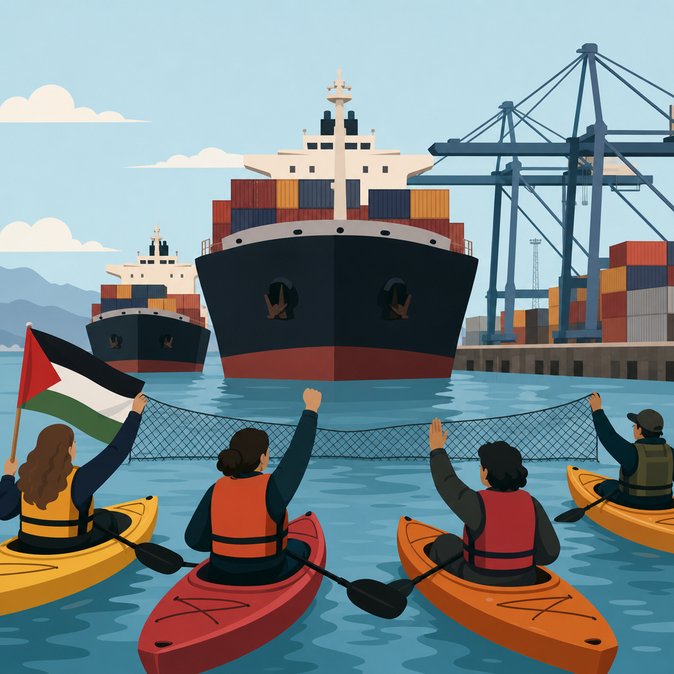
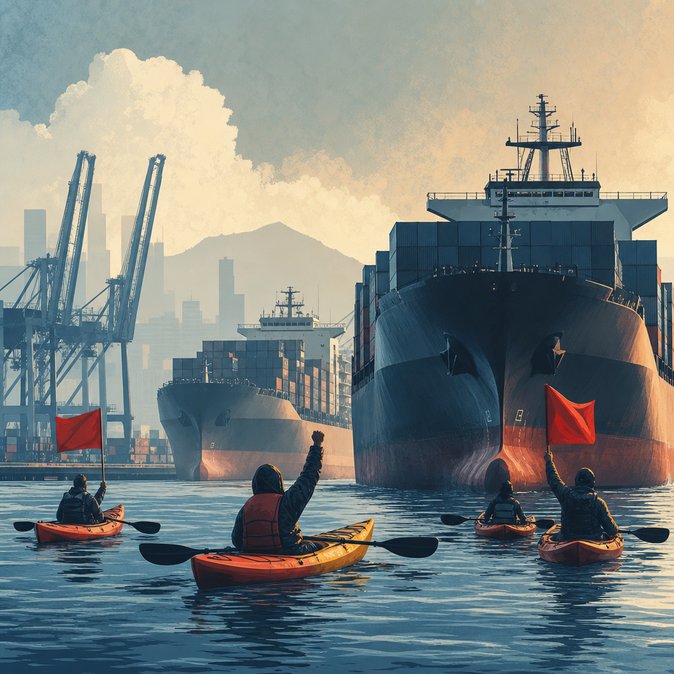
In the early hours of 30 May five small boats operated by the “Thousand Madleens Coalition” slipped into the Calabrian mega-port of Gioia Tauro and forced two MSC container ships—one reportedly carrying 16 boxes of ballistic steel—off their berths. The protest forms part of the international “Block the Boat” campaign, which seeks to stop alleged arms transfers to Israel via European ports. While port authority officials stressed that commercial operations resumed by mid-afternoon, the temporary stand-off delayed onward feeder services to Central-Northern Italy and caused shipping line Evergreen to reroute a scheduled call to Taranto.
![Activists Blockade Gioia Tauro, Stalling MSC Arms-Linked Cargo]()
For corporate risk teams needing to deploy auditors or compliance staff to Italy on short notice, VisaHQ offers a streamlined way to secure the necessary Schengen visas. Their Italy portal (https://www.visahq.com/italy/) provides quick application processing, document validation, and live updates—helping companies ensure that key personnel can reach hubs like Gioia Tauro without administrative delays when crises erupt.
For shippers the bigger worry is reputational: forensic tracking by NGOs has already prompted importers in Germany and Denmark to cancel contracts tied to Israeli defence supply chains. The incident also exposes procedural gaps in Italy’s dual-use export screening, governed by Law 185/1990. Parliamentary opposition parties have demanded an inquiry, arguing that inadequate customs risk analysis allows sensitive cargoes to transit without advance public notice. A draft amendment tabled last week would oblige carriers to disclose military-coded HS items 72 hours before calling at any Italian port. Companies moving goods through Gioia Tauro—Europe’s ninth-largest trans-shipment hub—should expect more activist “kayak flotillas” and possible customs holds on Middle-East-bound containers. Legal teams should review end-use certificates and ensure compliance with EU Common Position 2008/944 on arms exports to mitigate litigation and media fallout.
For corporate risk teams needing to deploy auditors or compliance staff to Italy on short notice, VisaHQ offers a streamlined way to secure the necessary Schengen visas. Their Italy portal (https://www.visahq.com/italy/) provides quick application processing, document validation, and live updates—helping companies ensure that key personnel can reach hubs like Gioia Tauro without administrative delays when crises erupt.
For shippers the bigger worry is reputational: forensic tracking by NGOs has already prompted importers in Germany and Denmark to cancel contracts tied to Israeli defence supply chains. The incident also exposes procedural gaps in Italy’s dual-use export screening, governed by Law 185/1990. Parliamentary opposition parties have demanded an inquiry, arguing that inadequate customs risk analysis allows sensitive cargoes to transit without advance public notice. A draft amendment tabled last week would oblige carriers to disclose military-coded HS items 72 hours before calling at any Italian port. Companies moving goods through Gioia Tauro—Europe’s ninth-largest trans-shipment hub—should expect more activist “kayak flotillas” and possible customs holds on Middle-East-bound containers. Legal teams should review end-use certificates and ensure compliance with EU Common Position 2008/944 on arms exports to mitigate litigation and media fallout.