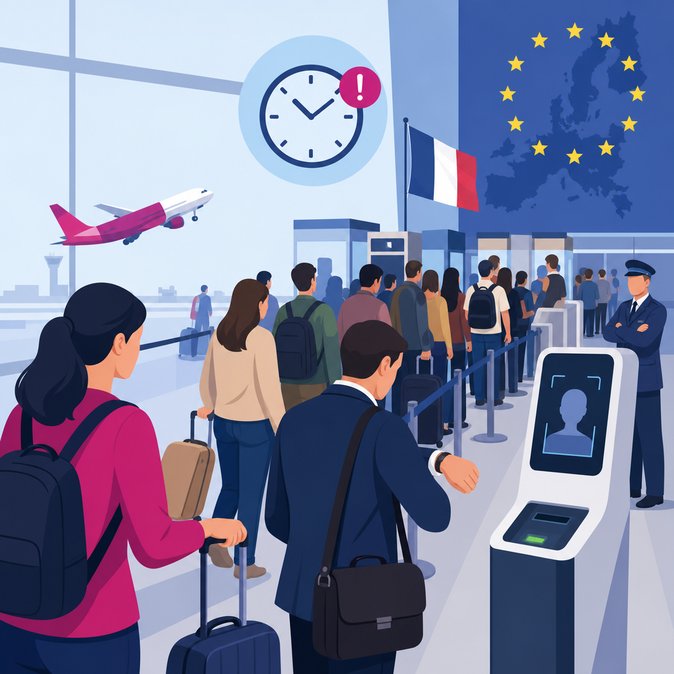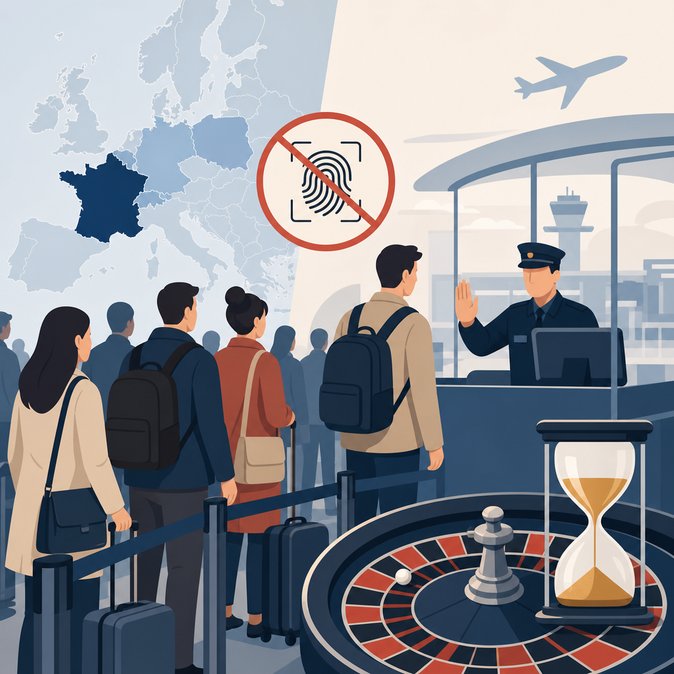
In an article published at 10:25 BST on 30 May 2026, The Independent describes how the EU’s new Entry/Exit System could spark “summer holiday chaos” for British travellers, noting that France and Greece have already eased or paused biometric enrolment to ease congestion. Wizz Air UK said some passengers have missed flights because the additional step at passport control sometimes triples processing times. French border police invoked partial suspension at the Port of Dover on 23 May, and insiders concede the measure may be repeated across busy Channel crossings if kiosk outages persist.
![Independent Warns of ‘Border Roulette’ as France Partially Suspends EES Checks]()
For travellers who want a clearer picture of these shifting requirements before they leave home, VisaHQ offers a straightforward way to stay ahead of any sudden changes. Its France-dedicated portal (https://www.visahq.com/france/) aggregates the latest entry-exit advisories, visa guidelines and appointment-booking tools, giving both holiday-makers and corporate mobility managers timely alerts whenever French authorities tweak biometric rules.
Although the European Commission insists a full registration should take only 70 seconds, airport surveys show spikes far above that when staffing is thin. The report highlights data from Frontex showing 44.5 million entries and exits logged since October 2025, yet only 35 % of those records include the required biometrics – evidence, analysts say, of de facto flexibility by member states including France. Industry groups are lobbying Paris to keep suspensions through August to protect tourism revenue. For mobility managers the message is clear: build contingency time into itineraries, brief employees on unpredictable procedures, and monitor local notices from Police aux Frontières, which can activate or lift suspensions with just two hours’ notice. If France cannot stabilise its kiosks before the Olympic football qualifiers in July, carriers fear reputational damage and potential route shifts to Brussels or Amsterdam, where trial biometric corridors have shown faster throughput.
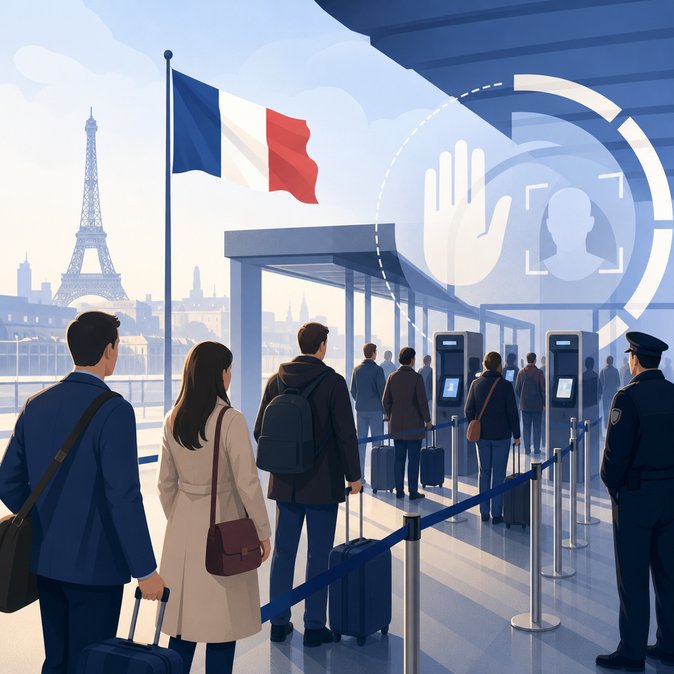
For travellers who want a clearer picture of these shifting requirements before they leave home, VisaHQ offers a straightforward way to stay ahead of any sudden changes. Its France-dedicated portal (https://www.visahq.com/france/) aggregates the latest entry-exit advisories, visa guidelines and appointment-booking tools, giving both holiday-makers and corporate mobility managers timely alerts whenever French authorities tweak biometric rules.
Although the European Commission insists a full registration should take only 70 seconds, airport surveys show spikes far above that when staffing is thin. The report highlights data from Frontex showing 44.5 million entries and exits logged since October 2025, yet only 35 % of those records include the required biometrics – evidence, analysts say, of de facto flexibility by member states including France. Industry groups are lobbying Paris to keep suspensions through August to protect tourism revenue. For mobility managers the message is clear: build contingency time into itineraries, brief employees on unpredictable procedures, and monitor local notices from Police aux Frontières, which can activate or lift suspensions with just two hours’ notice. If France cannot stabilise its kiosks before the Olympic football qualifiers in July, carriers fear reputational damage and potential route shifts to Brussels or Amsterdam, where trial biometric corridors have shown faster throughput.