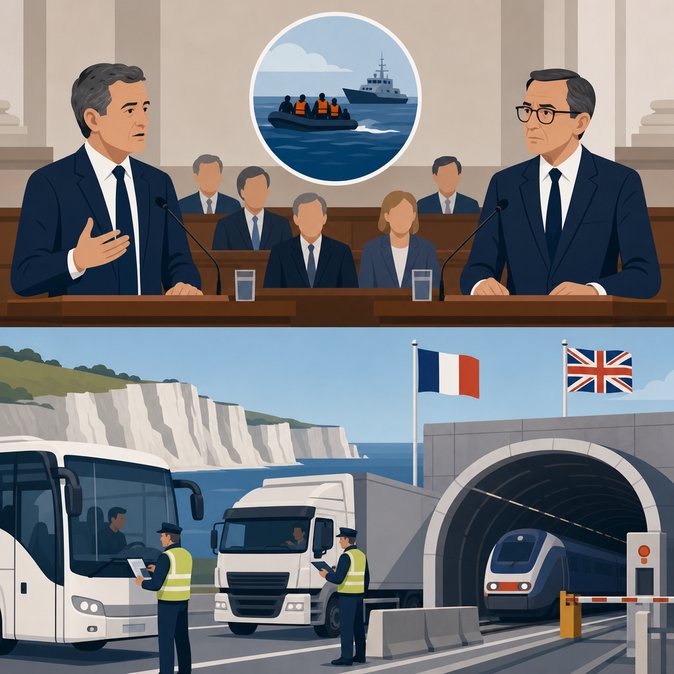
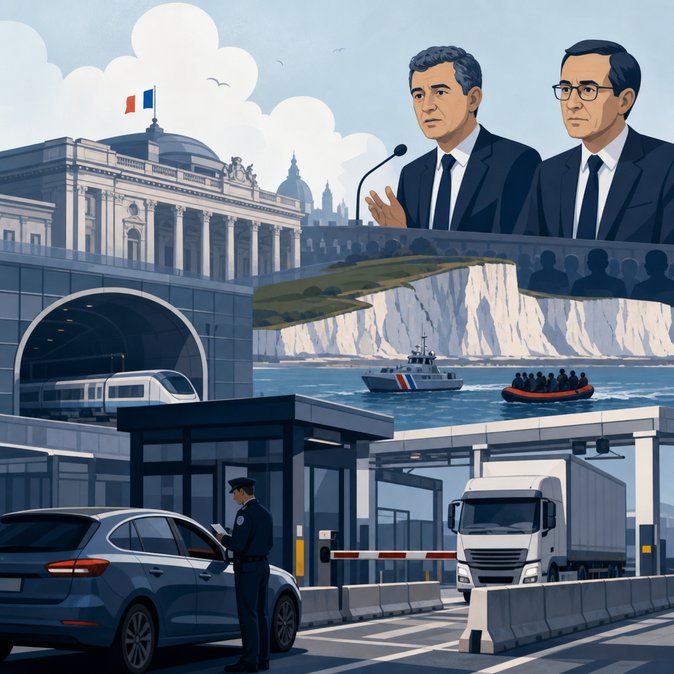
Paris – The Touquet accords, the 2003 treaty that moved the UK’s border checks onto French soil, returned to centre-stage on 28 May when a special National Assembly inquiry summoned current justice minister Gérald Darmanin and former interior minister Bruno Retailleau. Both men defended the accords as an imperfect but life-saving framework that allows French police and gendarmes to intercept migrants before they attempt the perilous English Channel crossing. Darmanin told MPs that French patrols had rescued more than 6,000 people in 2025 alone and stressed that “the objective is humanitarian first and foremost – we are trying to stop the Channel becoming an open-air cemetery.” Retailleau echoed the point, arguing that without the Touquet controls “you would simply reopen a major migration route at Calais.” Lawmakers probed whether the treaty should be renegotiated now that the UK is outside the EU. Darmanin complained of “extremely difficult” relations with British counterparts and urged the Commission to take the lead in any future deal, pointing out that Brexit left a legal vacuum on migration cooperation. Retailleau added that the French goal is to “re-Europeanise” the file, noting that one-third of irregular movements into Europe funnel through northern France. For mobility managers the hearing signals that tighter French controls around Calais, Dunkirk and the Eurotunnel will remain in place this summer. Companies moving staff or equipment through the Short Strait should continue to expect spot checks, maritime patrol delays and occasional closure of embarkation zones when small-boat traffic peaks. HR teams arranging cross-Channel assignments are advised to build extra transit time into schedules and to monitor prefecture alerts.
![French Parliament Reassesses Touquet Accords Amid Ongoing Channel Migrant Crisis]()
Visa and travel documentation can also prove stumbling blocks as the UK and France refine their border protocols. Corporate travel planners or individual passengers unsure about the latest requirements can turn to VisaHQ’s France portal (https://www.visahq.com/france/) for up-to-date guidance, digital application tools and live customer support that streamline everything from short-stay Schengen visas to work permits.
Strategically, the debate shows Paris linking humanitarian rescue with migration enforcement – a narrative likely to justify sustained budget for border technology and joint patrol funding. Any eventual re-negotiation with the UK would probably hard-wire biometric Entry/Exit System (EES) data-sharing, making advance passenger screening even more important for corporate shuttle services.
Visa and travel documentation can also prove stumbling blocks as the UK and France refine their border protocols. Corporate travel planners or individual passengers unsure about the latest requirements can turn to VisaHQ’s France portal (https://www.visahq.com/france/) for up-to-date guidance, digital application tools and live customer support that streamline everything from short-stay Schengen visas to work permits.
Strategically, the debate shows Paris linking humanitarian rescue with migration enforcement – a narrative likely to justify sustained budget for border technology and joint patrol funding. Any eventual re-negotiation with the UK would probably hard-wire biometric Entry/Exit System (EES) data-sharing, making advance passenger screening even more important for corporate shuttle services.