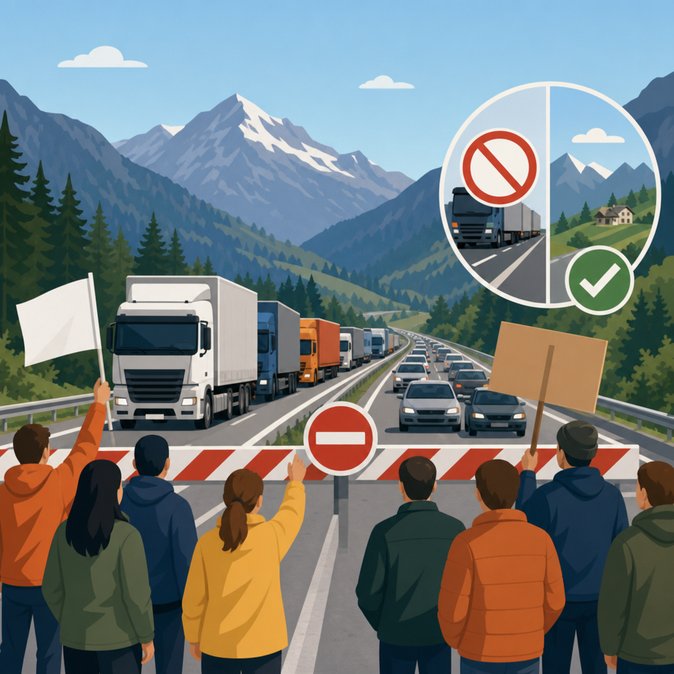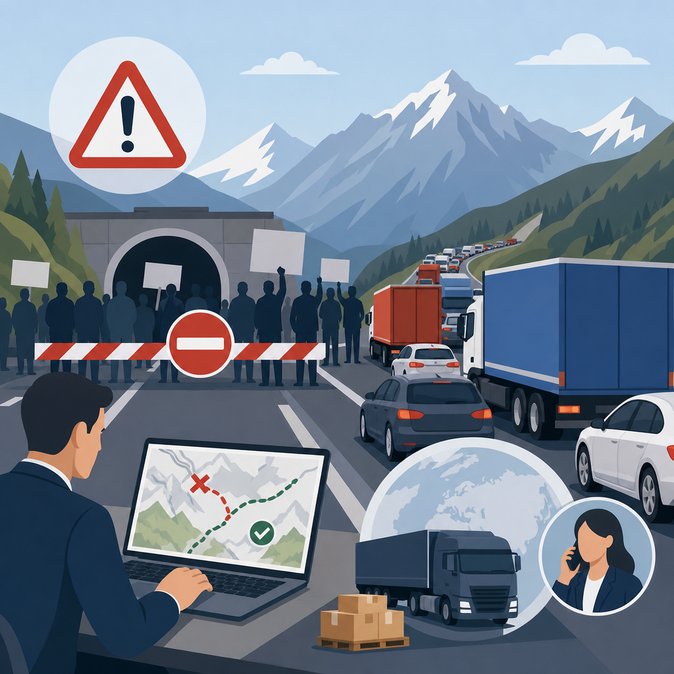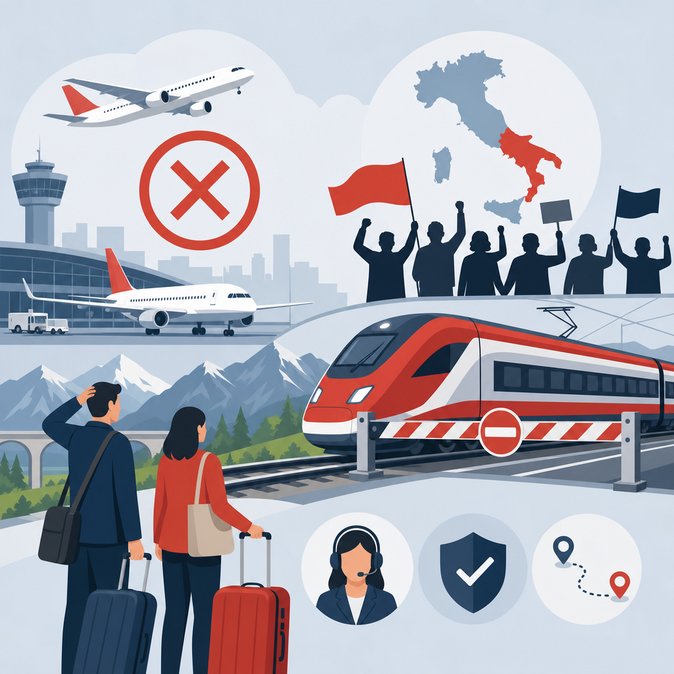
A 24-hour general strike led by CUB Trasporti is paralysing Italy’s airports, railways and motorways today, 29 May, and the shockwaves are being felt on the Austrian side of the Alps. According to passenger-rights platform AirAdvisor, roughly 1,150 flights—almost half of Italy’s departures—have been cancelled outside the legally protected windows (07:00-10:00 and 18:00-21:00), affecting some 179,000 travellers. Among them are Austrian Airlines rotations between Vienna (VIE) and Milan, Rome and Venice, as well as numerous Ryanair, Wizz Air and easyJet services linking regional Austrian airports to northern Italy. ÖBB reports that cross-border Railjet trains RJX 184 and 185 between Vienna and Bolzano are curtailed to run only as far as Innsbruck, while Nightjet sleeper services to Rome and La Spezia are suspended. Vienna International Airport advises passengers booked on Italy-bound or Italy-originating flights to check real-time status and, where possible, rebook to dates outside the strike period.
![Nation-wide Italian transport strike spills over to Austria: Vienna flights and Railjet services hit]()
If last-minute rerouting forces travellers to pass through non-Schengen hubs such as London or Istanbul, unexpected visa requirements can emerge. VisaHQ’s Austrian portal (https://www.visahq.com/austria/) can swiftly clarify transit rules, process emergency applications and ensure mobile employees remain compliant despite the turmoil—an invaluable safety net for both corporate travel desks and independent flyers caught up in the strike.
Under EU 261, airlines must offer refunds or rerouting and provide meals and accommodation, but they often reject compensation claims by citing ‘extraordinary circumstances’. Air-passenger advocates note that courts have repeatedly ruled that airline-sector strikes do **not** automatically exempt carriers from paying compensation. For mobility managers the combined aviation and rail disruption poses significant risks to cross-border project teams and supply chains. Companies should trigger contingency plans, switch to road transport where feasible—bearing in mind Saturday’s Brenner closure—and remind travellers to keep receipts for duty-of-care reimbursement claims. The walk-out underscores how industrial action in one member state can rapidly cascade through the integrated Alpine travel network. Businesses with regular shuttle traffic between Austrian headquarters and Italian plants may want to build additional schedule resilience or explore remote-work alternatives during the peak summer bargaining season.
If last-minute rerouting forces travellers to pass through non-Schengen hubs such as London or Istanbul, unexpected visa requirements can emerge. VisaHQ’s Austrian portal (https://www.visahq.com/austria/) can swiftly clarify transit rules, process emergency applications and ensure mobile employees remain compliant despite the turmoil—an invaluable safety net for both corporate travel desks and independent flyers caught up in the strike.
Under EU 261, airlines must offer refunds or rerouting and provide meals and accommodation, but they often reject compensation claims by citing ‘extraordinary circumstances’. Air-passenger advocates note that courts have repeatedly ruled that airline-sector strikes do **not** automatically exempt carriers from paying compensation. For mobility managers the combined aviation and rail disruption poses significant risks to cross-border project teams and supply chains. Companies should trigger contingency plans, switch to road transport where feasible—bearing in mind Saturday’s Brenner closure—and remind travellers to keep receipts for duty-of-care reimbursement claims. The walk-out underscores how industrial action in one member state can rapidly cascade through the integrated Alpine travel network. Businesses with regular shuttle traffic between Austrian headquarters and Italian plants may want to build additional schedule resilience or explore remote-work alternatives during the peak summer bargaining season.