The Department of Home Affairs has quietly taken the next step in its paper-to-pixels border transformation, extending the Digital Incoming Passenger Card (IPC) pilot to selected Qantas services arriving at Melbourne Tullamarine Airport from Auckland and Queenstown.
![Australia widens digital Incoming Passenger Card pilot to Qantas flights into Melbourne]()
For travellers needing to double-check visa requirements before they fly, VisaHQ offers an intuitive online portal that complements Qantas’s new digital process. The platform lets Australian-bound passengers verify entry rules, secure electronic visas where available, and monitor applications in real time—features that dovetail neatly with the streamlined Digital IPC rollout for business and leisure flyers alike. Explore the service at https://www.visahq.com/australia/
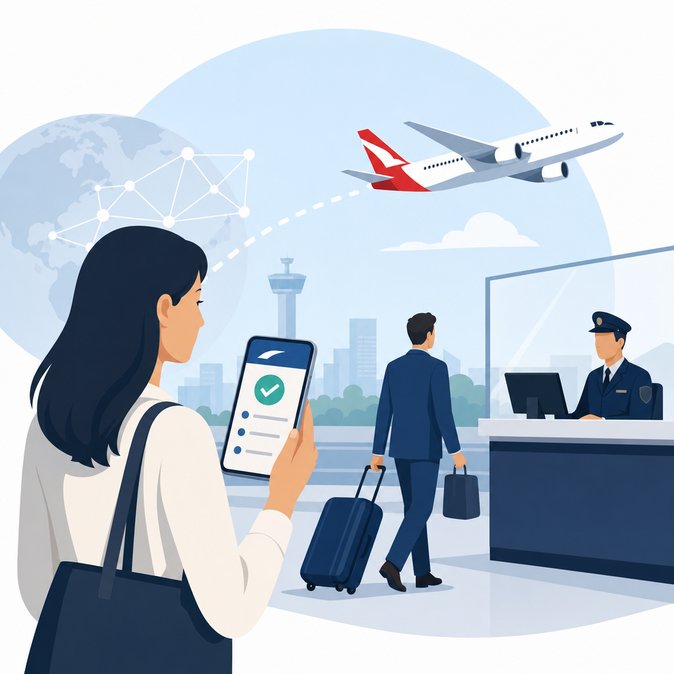
From 27 May, travellers on flights QF154 and QF178 can complete arrival formalities via the Qantas app up to 72 hours before departure—no handwriting, no duplicate health or customs data, and, crucially, real-time risk triage by border agencies before the wheels even lift off. The digital card builds on last year’s Australia Travel Declaration trial on Jetstar’s Singapore–Darwin route and feeds directly into the Advanced Passenger Processing (APP) system used by the Australian Border Force and the Department of Agriculture, Fisheries and Forestry (DAFF). Officials say early results show a 40 per cent reduction in primary-line processing times and a doubling of biosecurity interceptions thanks to pre-screening of declared goods. For airlines, the upside is a faster turn-around and higher passenger satisfaction scores; Qantas has already signalled it wants the feature across its entire international network by year-end, pending regulatory sign-off. Airports benefit too: Melbourne Airport estimates each fully digital wide-body arrival frees up to four smart-gate kiosks for other flights during the peak morning bank. Business-travel programmes should update traveller communications immediately. Employees booked on eligible Qantas sectors will need to download or update the airline’s mobile app, verify their identity once, and submit customs, health and visa details well ahead of their flight. Failure to do so could revert passengers to the manual channel and erode the time savings the scheme promises. Data privacy is another consideration: information is stored on government servers for up to 90 days and shared between agencies under the Migration Act, so corporates may wish to review their data-protection disclosures.

For travellers needing to double-check visa requirements before they fly, VisaHQ offers an intuitive online portal that complements Qantas’s new digital process. The platform lets Australian-bound passengers verify entry rules, secure electronic visas where available, and monitor applications in real time—features that dovetail neatly with the streamlined Digital IPC rollout for business and leisure flyers alike. Explore the service at https://www.visahq.com/australia/
From 27 May, travellers on flights QF154 and QF178 can complete arrival formalities via the Qantas app up to 72 hours before departure—no handwriting, no duplicate health or customs data, and, crucially, real-time risk triage by border agencies before the wheels even lift off. The digital card builds on last year’s Australia Travel Declaration trial on Jetstar’s Singapore–Darwin route and feeds directly into the Advanced Passenger Processing (APP) system used by the Australian Border Force and the Department of Agriculture, Fisheries and Forestry (DAFF). Officials say early results show a 40 per cent reduction in primary-line processing times and a doubling of biosecurity interceptions thanks to pre-screening of declared goods. For airlines, the upside is a faster turn-around and higher passenger satisfaction scores; Qantas has already signalled it wants the feature across its entire international network by year-end, pending regulatory sign-off. Airports benefit too: Melbourne Airport estimates each fully digital wide-body arrival frees up to four smart-gate kiosks for other flights during the peak morning bank. Business-travel programmes should update traveller communications immediately. Employees booked on eligible Qantas sectors will need to download or update the airline’s mobile app, verify their identity once, and submit customs, health and visa details well ahead of their flight. Failure to do so could revert passengers to the manual channel and erode the time savings the scheme promises. Data privacy is another consideration: information is stored on government servers for up to 90 days and shared between agencies under the Migration Act, so corporates may wish to review their data-protection disclosures.