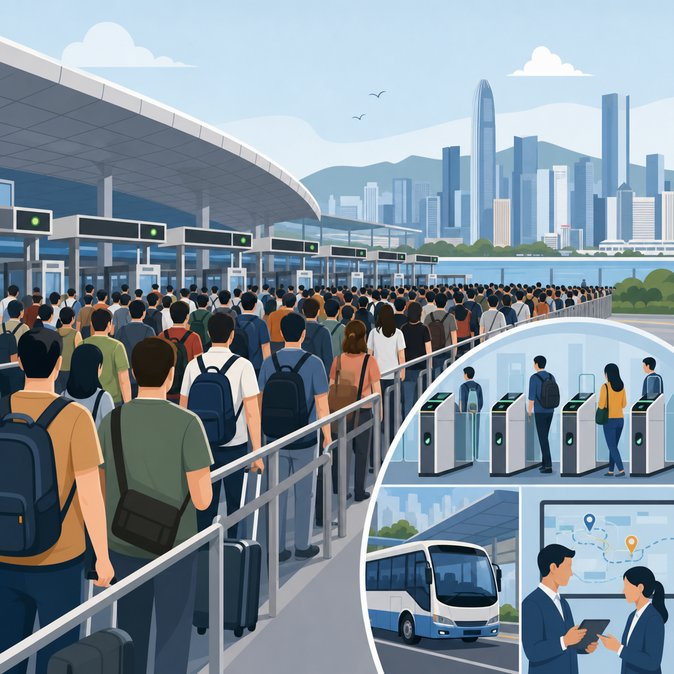
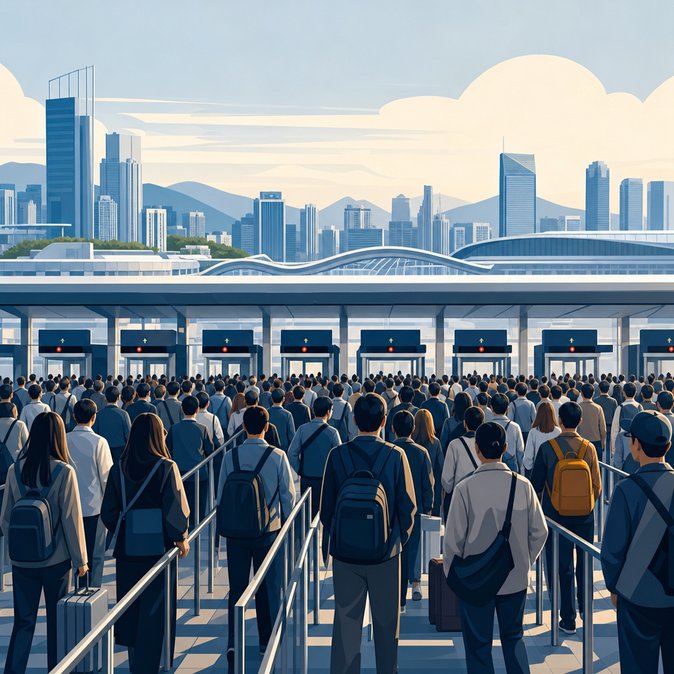
Travellers pouring back into Hong Kong on Monday night after the three-day Buddha’s Birthday holiday faced scenes reminiscent of the pre-pandemic ‘Golden Week’ crush. According to figures released on 26 May by the Immigration Department, more than 673,000 residents re-entered the city on 25 May, with a staggering 90 % funnelling through the Lo Wu, Lok Ma Chau Spur Line and Shenzhen Bay land crossings. Lo Wu alone handled 165,000 arrivals, while Lok Ma Chau managed 129,000 and Shenzhen Bay 124,000. Queues snaked for hours; some travellers reported three-hour waits before reaching immigration counters.
![Border Checkpoint Chaos as 673,000 Hongkongers Return After Buddha’s Birthday Long Weekend]()
For those keen to sidestep at least the paperwork portion of their journey, VisaHQ’s Hong Kong platform (https://www.visahq.com/hong-kong/) offers fast online processing of China visas, multi-entry permits and e-Channel eligibility checks, enabling both tourists and cross-border professionals to arrive at control points with one less hurdle to clear.
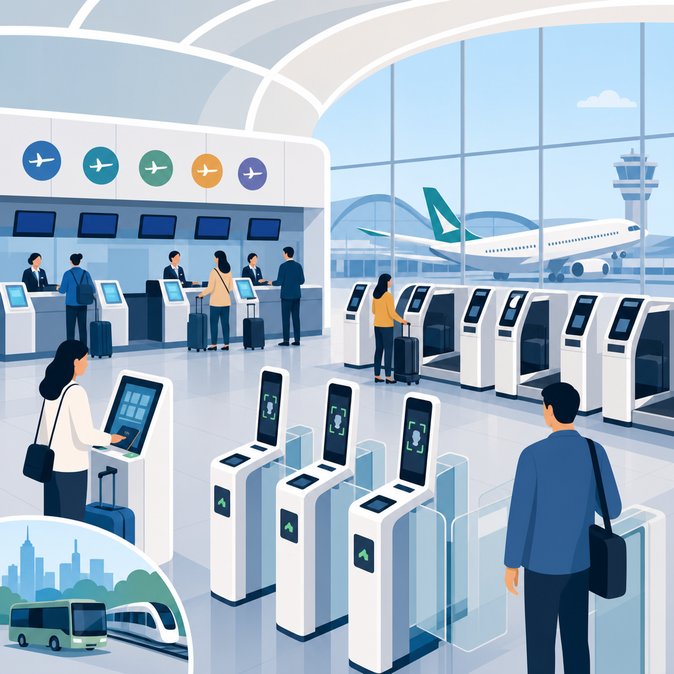
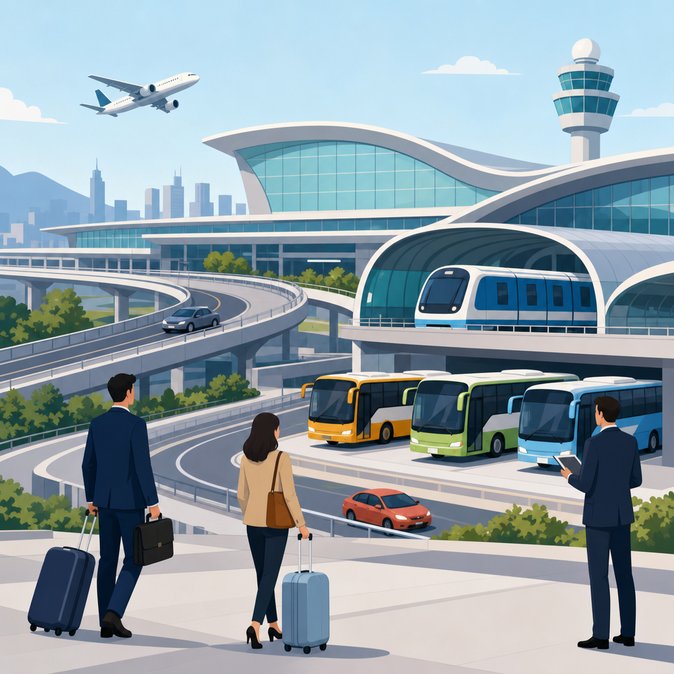
The late-night closure of Shenzhen Bay left several hundred people temporarily stranded on the mainland side. Transport analysts say pent-up demand for cross-border shopping and tourism—magnified by a HK $1 = RMB 0.93 exchange rate and ongoing hotel discounts—overwhelmed checkpoint staffing models designed for a slower, post-Covid recovery. For international businesses, the gridlock is a cautionary tale. Cross-border commuters living in Shenzhen’s talent hubs increasingly underpin Hong Kong teams in fintech, life sciences and design. HR managers should advise staff to stagger return times around future holiday peaks or use the High-Speed Rail West Kowloon terminus, which has processed up to 30,000 passengers per hour with less congestion. Freight forwarders moving time-sensitive prototypes between the twin cities likewise need revised contingency windows. Officials promised to ‘refine passenger flow management’ and hinted at fast-tracking the extension of automated facial-recognition e-Channels to all returnees—a system now limited to frequent-traveller schemes. They will also explore temporary shuttle buses that link less-used crossings such as Heung Yuen Wai to urban transport nodes. The episode underscores a wider regional mobility challenge: the Greater Bay Area’s economic integration is outpacing physical and human-resource infrastructure. Unless staffing, digital clearance and last-mile transport improve, frequent cross-border business trips—essential for joint R&D and client servicing—risk costly delays that erode the very competitiveness the GBA aims to build.
For those keen to sidestep at least the paperwork portion of their journey, VisaHQ’s Hong Kong platform (https://www.visahq.com/hong-kong/) offers fast online processing of China visas, multi-entry permits and e-Channel eligibility checks, enabling both tourists and cross-border professionals to arrive at control points with one less hurdle to clear.
The late-night closure of Shenzhen Bay left several hundred people temporarily stranded on the mainland side. Transport analysts say pent-up demand for cross-border shopping and tourism—magnified by a HK $1 = RMB 0.93 exchange rate and ongoing hotel discounts—overwhelmed checkpoint staffing models designed for a slower, post-Covid recovery. For international businesses, the gridlock is a cautionary tale. Cross-border commuters living in Shenzhen’s talent hubs increasingly underpin Hong Kong teams in fintech, life sciences and design. HR managers should advise staff to stagger return times around future holiday peaks or use the High-Speed Rail West Kowloon terminus, which has processed up to 30,000 passengers per hour with less congestion. Freight forwarders moving time-sensitive prototypes between the twin cities likewise need revised contingency windows. Officials promised to ‘refine passenger flow management’ and hinted at fast-tracking the extension of automated facial-recognition e-Channels to all returnees—a system now limited to frequent-traveller schemes. They will also explore temporary shuttle buses that link less-used crossings such as Heung Yuen Wai to urban transport nodes. The episode underscores a wider regional mobility challenge: the Greater Bay Area’s economic integration is outpacing physical and human-resource infrastructure. Unless staffing, digital clearance and last-mile transport improve, frequent cross-border business trips—essential for joint R&D and client servicing—risk costly delays that erode the very competitiveness the GBA aims to build.